
One number on your semen analysis report is enough to catch your attention immediately. However, the real story often lies hidden in the combination of results. Millions of sperm in a sample means little if only a few of those cells move effectively. At the same time, a result outside the normal recommended range doesn’t …

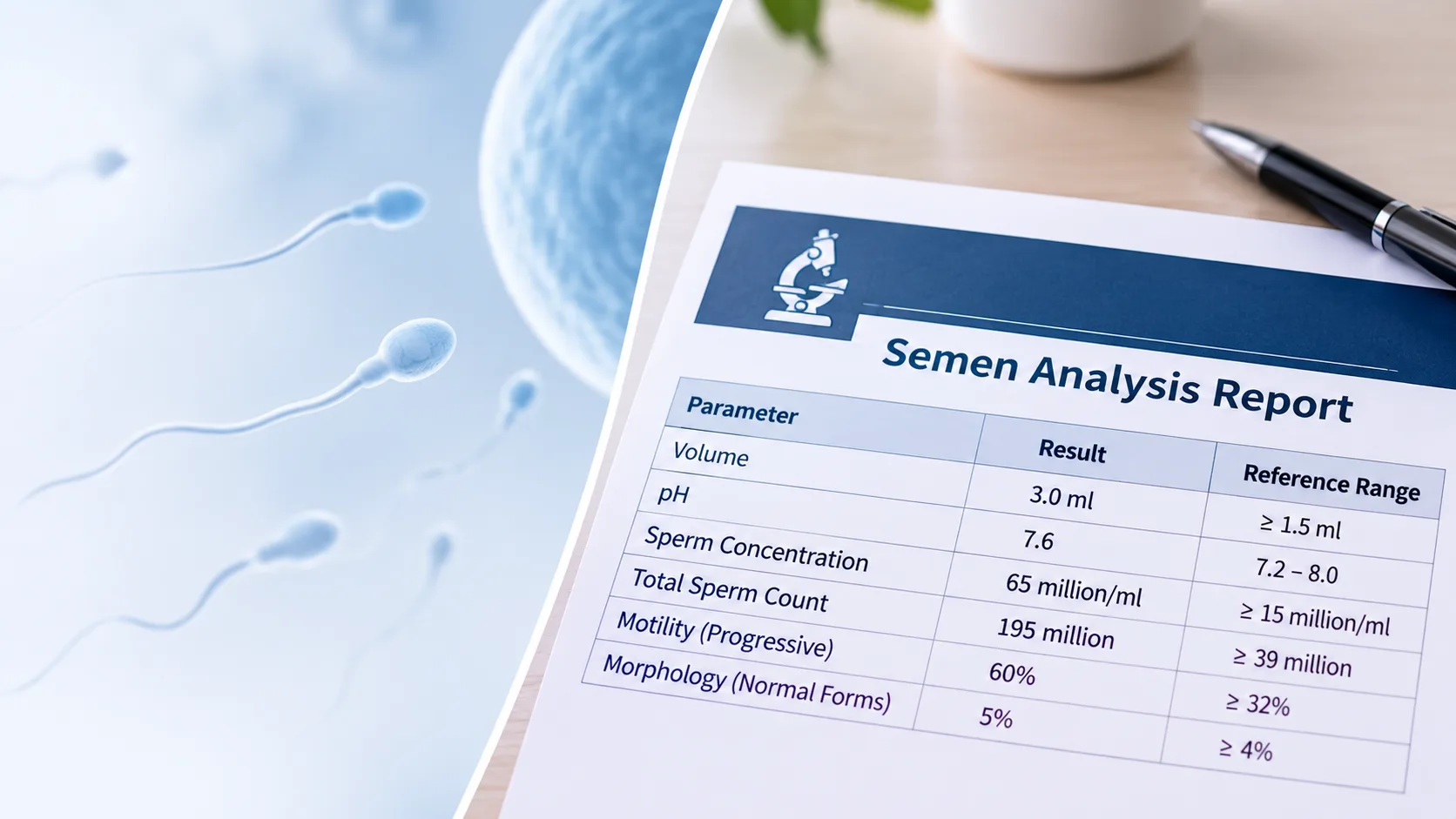
One number on your semen analysis report is enough to catch your attention immediately. However, the real story often lies hidden in the combination of results. Millions of sperm in a sample means little if only a few of those cells move effectively. At the same time, a result outside the normal recommended range doesn’t automatically mean you cannot experience fatherhood.
The report’s sole purpose is to provide detailed insights into your sperm concentration, motility, morphology, semen volume, and other key metrics of the male reproductive health. Thus, the key here is to know how these figures work together, what the reference values actually indicate, and when an unusual result deserves clinical intervention. So, let’s get started!
What is a semen analysis test?
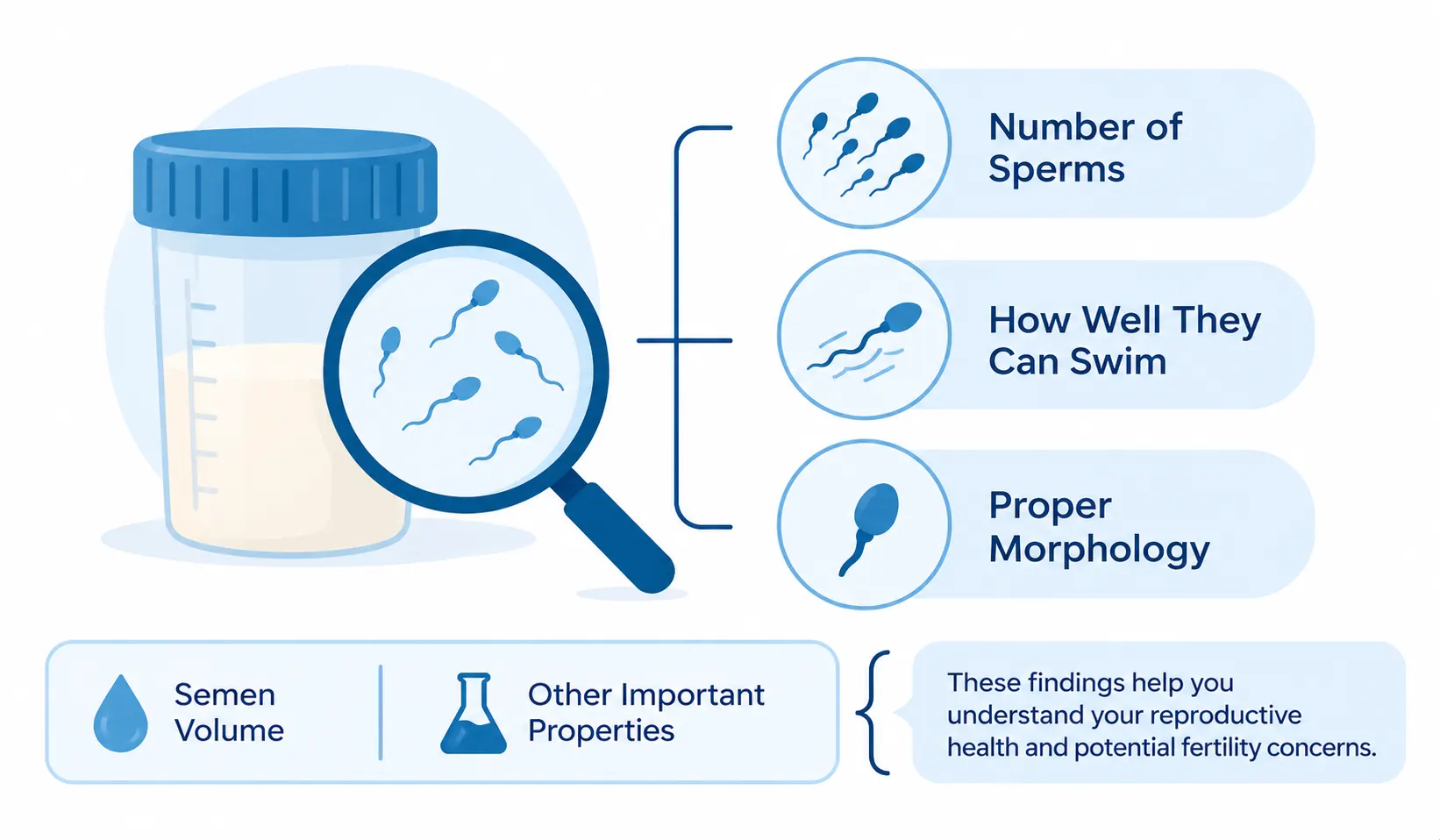
This analytical approach looks beyond how much semen you produce and focuses on examining the male reproductive cells in it. That’s why it helps doctors assess:
- The number of sperms present
- How well they can swim
- How many of them have the proper morphology
In addition, they can also know the semen volume and other properties necessary to examine your reproductive health. If you are trying to conceive, these findings will offer a starting point for understanding possible fertility concerns. One thing to note here is that the report won’t deliver a simple fertile-or-infertile verdict.
How to read a semen analysis report?
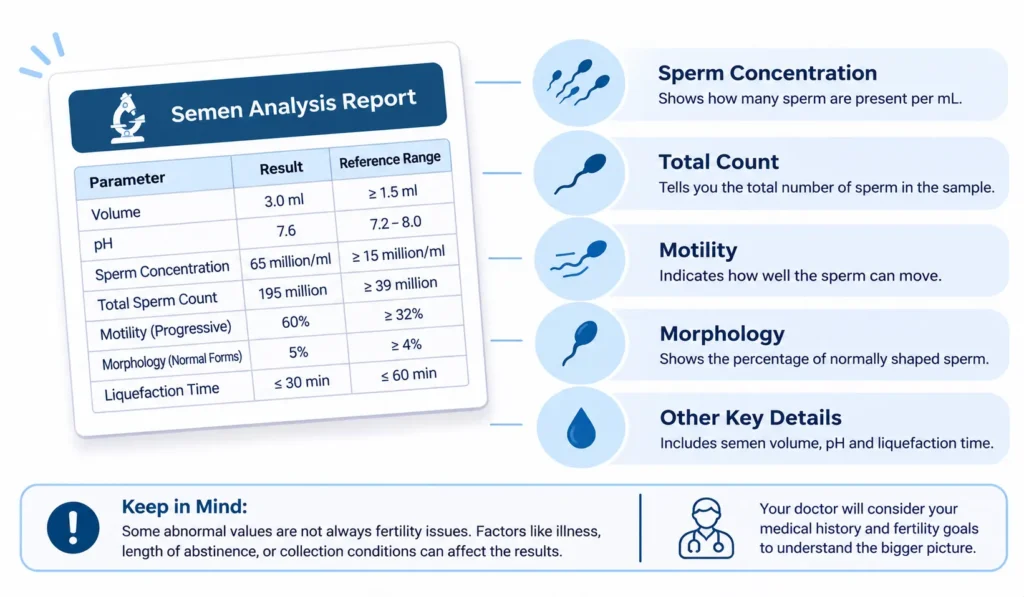
Understanding your semen analysis becomes easier if you don’t get bogged down with individual values. Compare your results to the lab reference values given on the report (usually next to each parameter). Sperm concentration gives an idea of how many cells there are in your semen per mL. Total count, on the other hand, gives an indication of how many sperm you have in the sample.
Motility indicates how well the cells are able to move in a fluid medium. On the contrary, morphology speaks of the proportion of cells that have the correct shape. Volume, pH, and liquefaction time will provide further information about your reproductive health.
Take note of any values that are out of range, but not all abnormal values are fertility issues. The quality of your sperm can vary from sample to sample. Illness, length of abstinence period, and collection conditions will all impact your results. Your doctor will take into consideration your medical history and fertility goals to make sense of your results. The AUA/ASRM guideline also recommends one or more semen analyses at the start of an evaluation, since a single result can vary.
Semen analysis normal range: WHO reference values
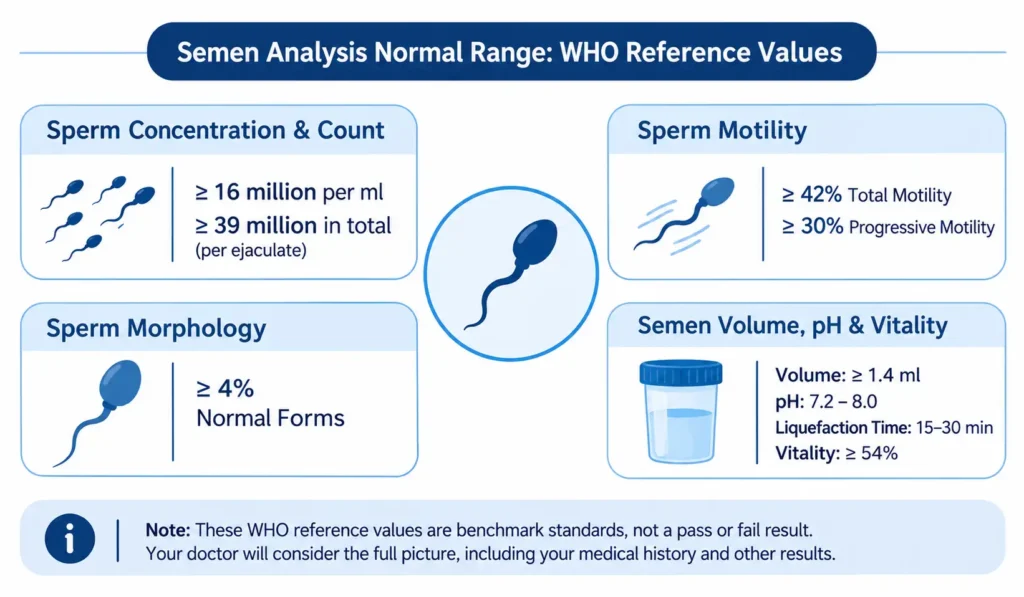
The WHO has published its sixth edition of the reference range manual in 2021 for semen analysis. Lower reference limits have been set after reviewing results from men whose partners conceived naturally within 12 months. Remember that these are simply benchmark standards, not a verdict for ‘pass’ or ‘fail’.
Sperm concentration and sperm count normal range
This refers to the number of sperm per ml. The WHO reference values show that there needs to be at least 16 million sperm per ml and a total of 39 million sperm in an ejaculate to consider it as healthy. However, there’s a catch! Having a good cell concentration doesn’t automatically mean you will have a higher total sperm count.
Sperm motility normal range and progressive motility
The sperm must be able to move well. The WHO has set minimum reference values of 42% and 30% for total and progressive motility, respectively. Total motility is measured by looking at how many sperm are moving. Progressive motility looks at how many are moving forwards. Whilst non-progressive sperm will contribute to the total motility, they may not be as effective at reaching the egg.
Sperm morphology normal range
Sperm morphology looks at the shape. These include normal head, midpiece, and tail forms. Under the WHO strict criteria, the minimum level of normal forms will be 4%. Often people are surprised by this number. However, this does not mean that the rest can’t be fertile. Morphology should be looked at along with sperm count, motility, and other clinical findings.
Semen volume, pH, liquefaction time, and vitality
Sperm count is only a part of the result you get back from your semen analysis. Volume will tell you how much you’re producing, and pH will tell you how acidic/alkaline your semen is. Semen will normally liquefy after ejaculation within 15-30 minutes, making it easier for the sperm to move around.
Vitality will tell you how many live cells you have. According to the WHO reference range, you should have 1.4ml or more (volume). You should also have 54% vitality. This helps your doctor identify any trends in your results.
Abnormal semen analysis report: What the term means
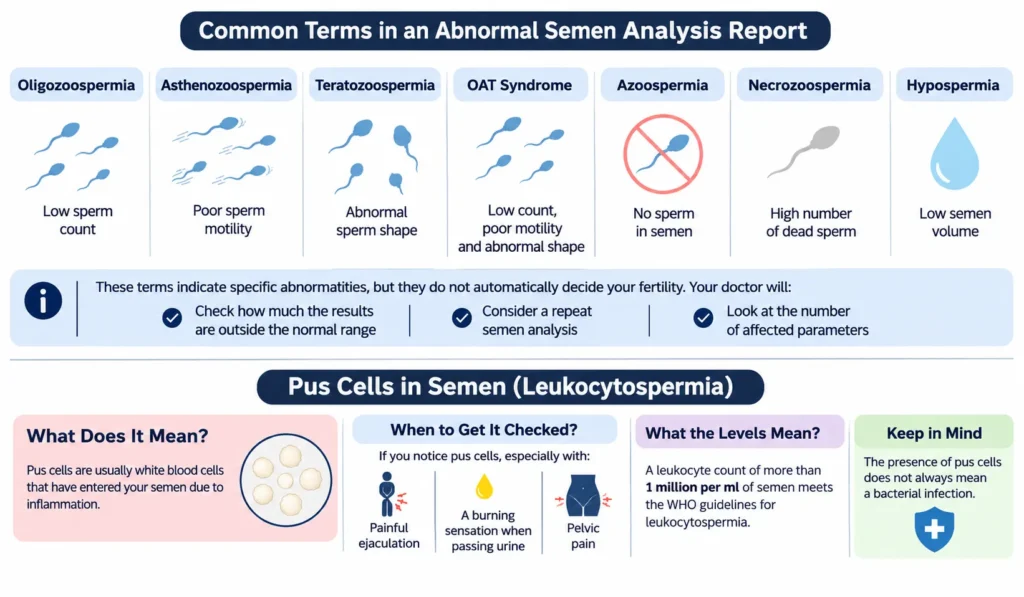
When you receive your semen analysis report, there may be some words which are completely new to you. Remember that each word has a completely different meaning in a clinical setting and may not mean low or zero fertility. For example:
- When your sperm concentration is significantly lower than the WHO-recommended range, it’s oligozoospermia
- Only a few sperm moving properly, as they should, on the other hand, is asthenozoospermia
- Irregular shapes of the sperm in your semen samples mean you have got teratozoospermia
- When you have all of the above three conditions together, your doctor will write ”OAT syndrome” in the diagnosis report
- Azoospermia means a complete absence of sperm in your ejaculated semen
- Necrozoospermia, on the contrary, indicates an unusually high volume of dead cells
- Hypospermia signals a lower semen volume than what a normal, healthy male ejaculates
It’s evident that these terminologies indicate very specific abnormalities, and not the dictator of your fertility outcome. Your doctor will further work on:
- Checking how far the results deviate from the recommended normal range
- What a repeat semen analysis would show
- The number of parameters that are affected together
Many of these patterns, along with their causes, are covered in more detail in this guide on sperm abnormalities in men.
Pus cells in semen (Leukocytospermia)
If you notice any pus cells on your semen analysis, this should be investigated, especially if you are experiencing symptoms such as:
- Painful ejaculation
- A burning sensation when passing urine
- Pelvic pain
Pus cells are usually white blood cells that have entered your semen as a result of inflammation. If there is a confirmed leukocyte count of more than 1 million per ml of semen, then this will meet the WHO guidelines for leukocytospermia. However, simply because there are pus cells present doesn’t automatically mean that there is a bacterial infection.
What do your semen analysis results mean for fertility?
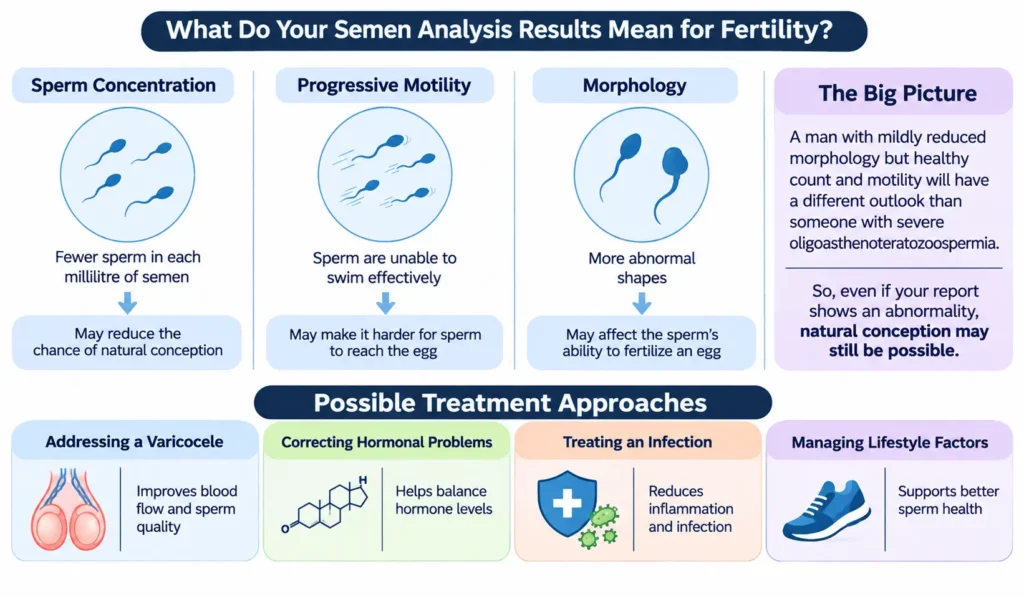
When your partner cannot conceive on time, your doctor will recommend getting your semen analyzed. However, what’s actually causing problems with natural conception will depend on which sperm parameters are affected and to what extent in terms of severity.
A low sperm concentration, for example, means fewer cells are available in each millimeter of ejaculated semen. Poor progressive motility, however, creates another challenge. It means that your body is producing enough living sperms but they are unable to swim through the vaginal canal and reach the egg for fertilization.
Therefore, a man with mildly reduced morphology but healthy sperm concentration and motility will have a completely different clinical outlook from someone with severe oligoasthenoteratozoospermia.
Therefore, if your semen analysis report shows any type of abnormality, you cannot rule out the probability of natural conception altogether. Depending on what’s exactly causing the issue, your doctor can recommend different treatment approaches, like:
- Addressing a varicocele
- Correcting hormonal problems
- Treating an identified infection
- Managing lifestyle factors
Once the cause is identified, the right male infertility treatment depends on which parameters are affected and how severely.
When to see a fertility specialist?
If there are multiple issues being found on repeated semen analysis, then you should see a fertility specialist as soon as possible. The longer you leave it the more complex things will become. You may also want to seek advice from a professional if:
- No sperm is seen
- You have a history of cryptorchidism
- Testicular operations
- Chemotherapy
- Sexual dysfunction.
If treatments such as chemotherapy are planned, sperm freezing can be discussed beforehand to preserve fertility.
As a general rule, if you have been trying for 12 months (or 6 months if your female partner is over 35 years old), then it is advised to seek an infertility assessment.
At that age, low AMH and pregnancy chances are often reviewed as part of the same assessment. It is important that both parties are assessed together. Because female factors contribute as well, it also helps to understand common female fertility problems and how they are treated.
Why choose Puja IVF for infertility treatment in Patna?

If there are any fertility issues related to male fertility irregular ovulation or difficulty getting pregnant we will look in detail at the causes. We will work with you to create an individualised treatment plan.
We offer a range of fertility treatments including IUI, IVF and ICSI. You will receive detailed information on the options available to you and what would be best for you. For a full overview of the process, see the complete guide to IVF treatment.
Conclusion
Your chances of becoming a parent are not determined by having an abnormal number. Rather, it’s important to understand why the number is low and if any other sperm parameters are affected. Don’t jump to any conclusions; instead, take your semen analysis to a fertility specialist.
This will give you a clear diagnosis, so you will understand how to move forward with trying to conceive naturally or with assistance. If assisted conception is needed, this comparison of the difference between IUI, IVF and ICSI explains which option suits which situation.
FAQs
1. What is a normal semen analysis report?
WHO 6th edition lower reference limits are: volume 1.4 mL or more, concentration 16 million/mL or more, total count 39 million or more, total motility 42%, progressive motility 30%, normal morphology 4% and vitality 54%. These are benchmarks from fertile men, not a pass/fail line.
2. Can sperm count and motility be improved?
Often, yes, depending on the cause. Quitting smoking, limiting alcohol, keeping the testicles cool, maintaining a healthy weight and treating issues like varicocele or infection can help. Sperm take about two to three months to develop, so changes take that long to show on a repeat test. Take supplements only on a doctor’s advice.
3. What can lower sperm count?
Common causes include smoking, heavy alcohol use, prolonged heat exposure, varicocele, infections, obesity and chemotherapy or radiation. Anabolic steroids and testosterone supplements can shut down sperm production, sometimes completely.
4. How long do sperm take to regenerate?
Producing a new batch takes about two to three months. That is why lifestyle or treatment changes are usually checked with a repeat test after that time.
5. How long can sperm survive after ejaculation?
In the female reproductive tract, sperm can survive for about three to five days under favorable conditions, such as around ovulation. Outside the body, they die within minutes once they dry.
6. Does time of day affect semen results?
Samples collected early in the morning may show slightly higher counts, but the difference rarely changes your chances of pregnancy. Timing sex around your partner’s ovulation matters more.