
We often see that many men come to our clinic to learn about their sperm count. But we do not focus only on your sperm numbers. But also, your sperm shape and structure are as important as the numbers. Many of our patients raise questions: “If millions of sperm are present, why does only one …

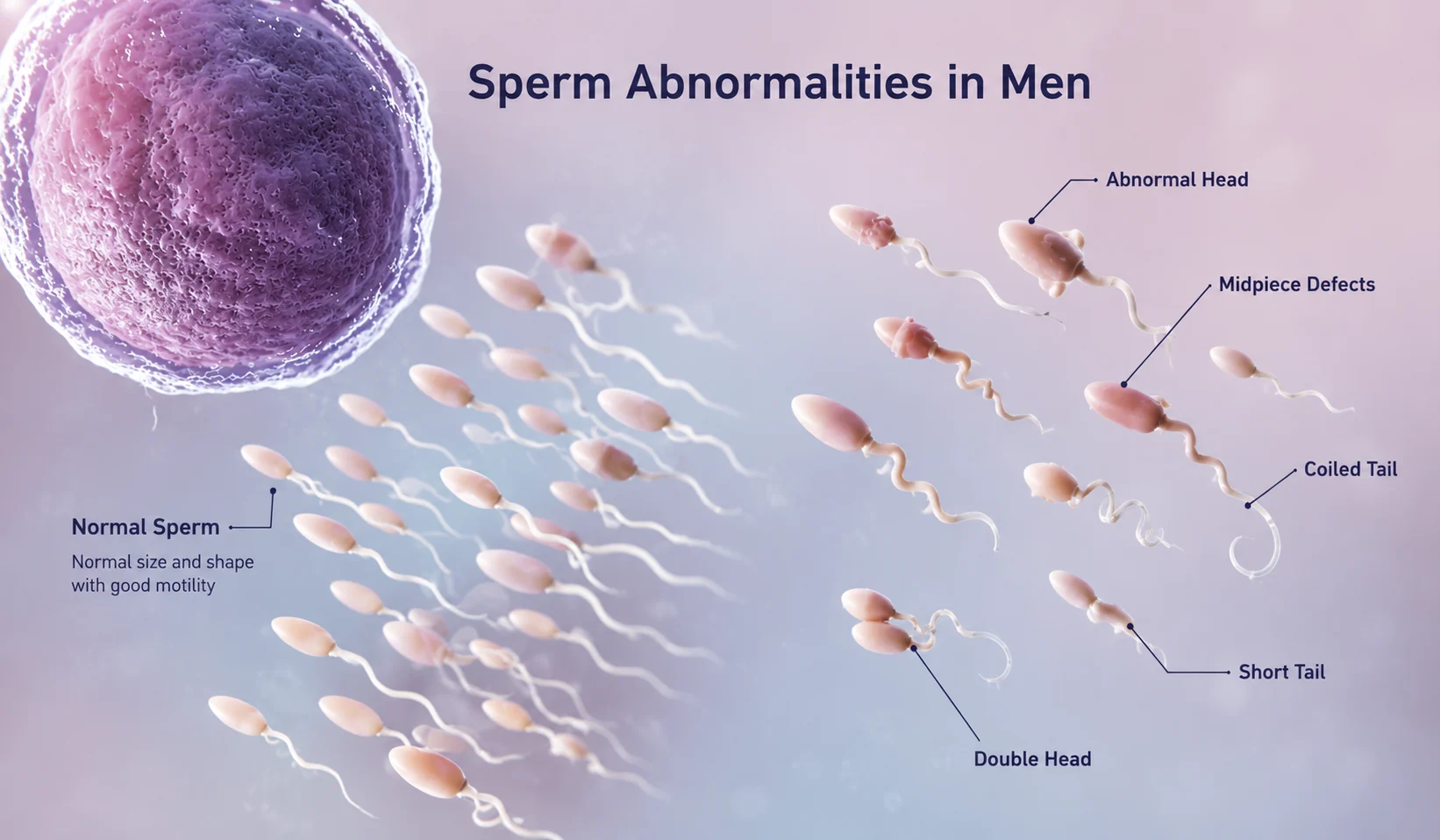
We often see that many men come to our clinic to learn about their sperm count. But we do not focus only on your sperm numbers. But also, your sperm shape and structure are as important as the numbers.
Many of our patients raise questions: “If millions of sperm are present, why does only one reach the egg? If my sperm count is normal, why are we still having difficulty conceiving?”
These all questions may sometimes lie in sperm abnormalities.
As doctors, we believe that having the right information can make your fertility journey easier to understand.
In this guide, we talk about types of sperm abnormalities, causes, and treatment options that can help identify possible concerns early and support better fertility outcomes.
What Is Sperm Morphology?
Sperm morphology refers to the shape and size of your sperm cells.
There are three primary components of healthy sperm cells:
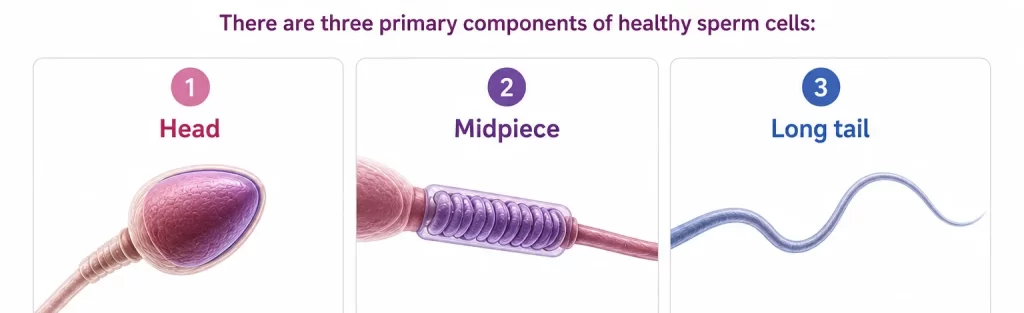
| Sperm Component | Structure | Role |
| Head | Smooth and oval in shape, with an acrosome cap | Contains DNA and facilitates sperm penetration into the egg |
| Midpiece | Linking head and tail, contains energy-producing structures | Provides energy for sperm movement |
| Long tail | Long and straight | Enables movement towards the egg |
The acrosome is a cap-like structure covering around 40 to 70 % of the surface area of the sperm’s head. It produces enzymes necessary for sperm penetration through the egg.
Types of Sperm Abnormalities
There are different types of sperm abnormalities based on where the problem occurs in the sperm, such as the head, midsection, or tail region of your sperm.
1. Head Defects
The sperm head defects are referred to as sperm deformity in the head part, which is essential for fertilizing the egg. This includes:
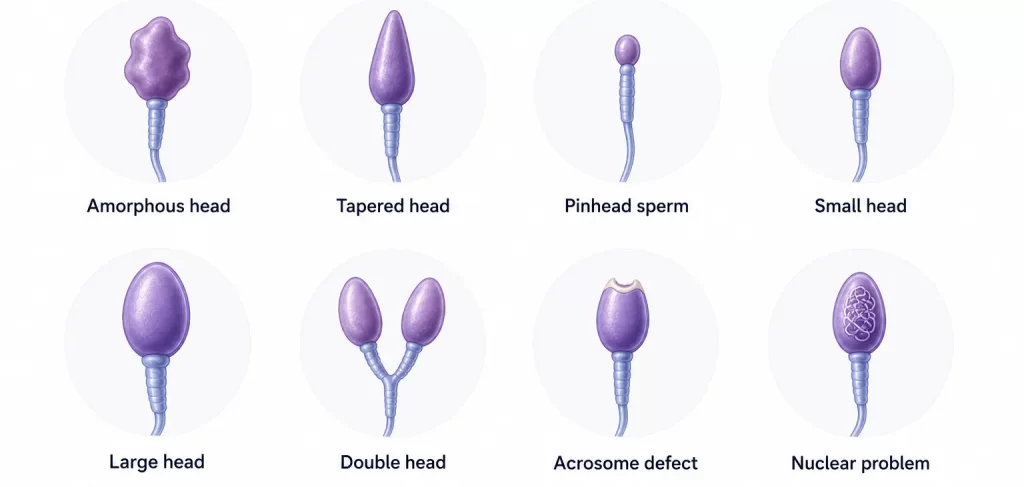
| Head Defects | Description |
| Amorphous head | Head shape looks irregular |
| Tapered head | The head is narrow, like a cone |
| Pinhead sperm | Very tiny head, less genetic material |
| Small head | Head smaller than normal size |
| Large head | The head is bigger than normal size |
| Double head | Sperm have two heads |
| Acrosome defect | The cap on the head is missing or abnormal |
| Nuclear problem | Changes in the DNA inside the head |
2. Midpiece Defects
The sperm midpiece gives energy to sperm to reach the egg, but with defects, the sperm’s ability to move is compromised. The common midpiece defects are:
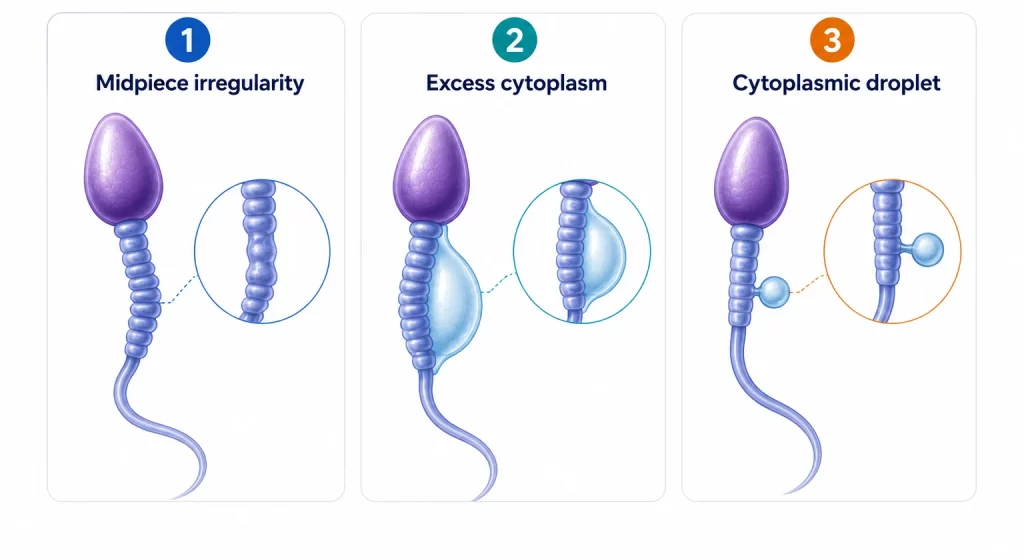
| Midpiece Defects | Description |
| Midpiece irregularity | The midpiece does not have a normal shape |
| Excess cytoplasm | Extra material attached to the sperm |
| Cytoplasmic droplet | A small extra droplet is attached to the sperm |
3. Tail Defects
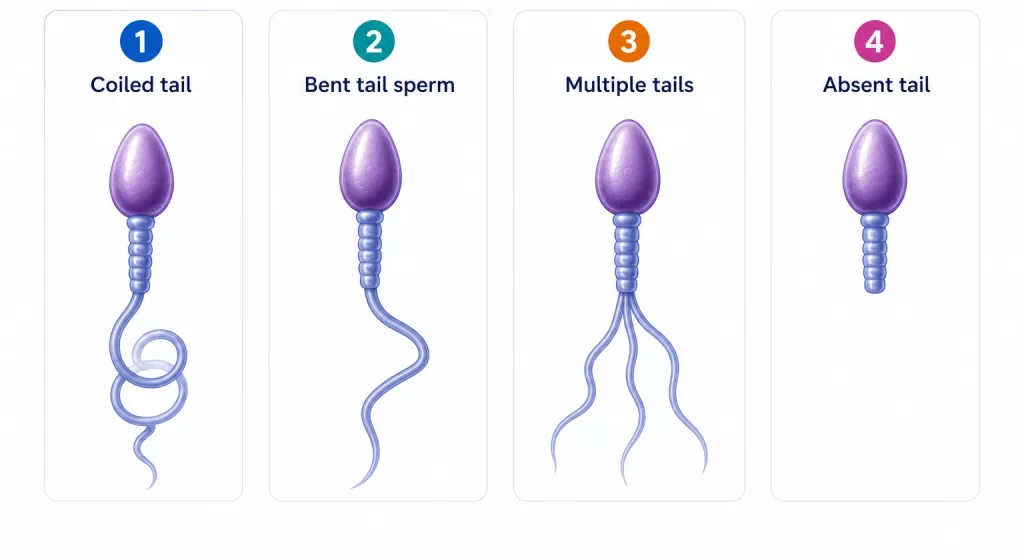
Tail defects impair a sperm’s ability to swim properly toward the egg. These defects are:
| Tail Defect | Description |
| Coiled tail | Tail is curled instead of straight |
| Bent tail sperm | The tail has an abnormal bend |
| Multiple tails | Sperm have more than one tail |
| Absent tail | Sperm have no tails |
Let’s look at how these defects are formed and which factors are responsible for it.
Causes of Abnormal Sperm Morphology
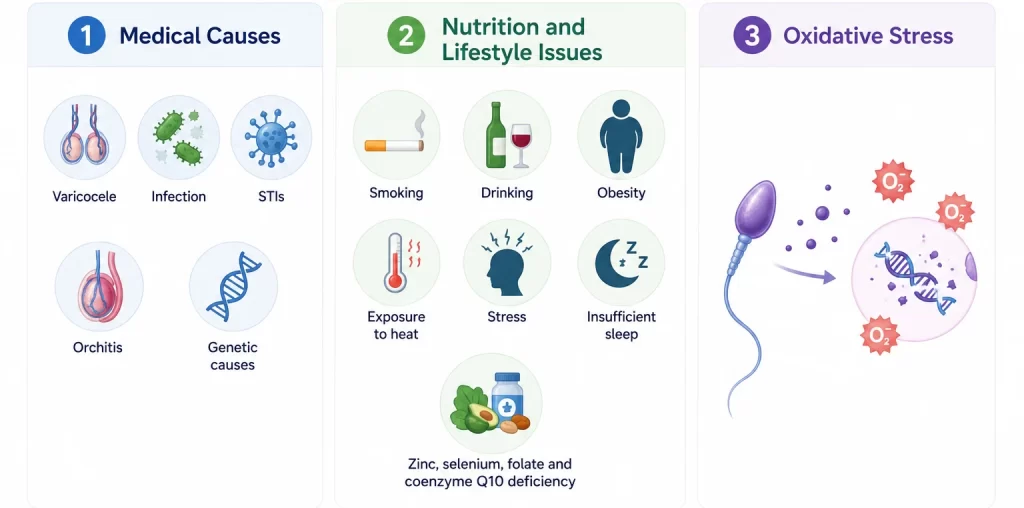
There are various factors that can alter the shape and size of your sperm. The causes of abnormal sperm morphology are as follows:
1. Medical Causes:
These include medical issues that can interfere with either your sperm production or function:
- Varicocele: Swelling in the veins in your testicles.
- Infection: Any infection in your reproductive system may interfere with sperm production.
- STIs: Certain sexually transmitted infections can affect your fertility.
- Orchitis: Inflammation of the testicles and interference with sperm production.
- Genetic causes: Genetic changes that affect sperm production.
2. Nutrition and Lifestyle Issues:
Your daily activities, as well as your diet, can also affect your sperm’s health. These include:
- Smoking and drinking
- Obesity
- Exposure to heat
- Stress
- Insufficient sleep
- Zinc, selenium, folate and coenzyme Q10 deficiency
3. Oxidative Stress:
As per research, oxidative stress can interfere with your sperm’s health by causing damage to DNA.
How Is It Diagnosed?
A semen analysis is done at Puja IVF Centre, Patna, to assess your sperm quality. In the course of a semen analysis, we evaluate your:
- Morphology
- Concentration
- Motility
- Semen Volume
The morphology of your sperm is determined based on Kruger’s strict criteria, which helps us in understanding the number of normally shaped sperms.
The World Health Organization recommends that normally shaped sperms are above 4% of the total sperms. If the number is lower, we may perform additional tests to better understand your fertility.
Treatment Options
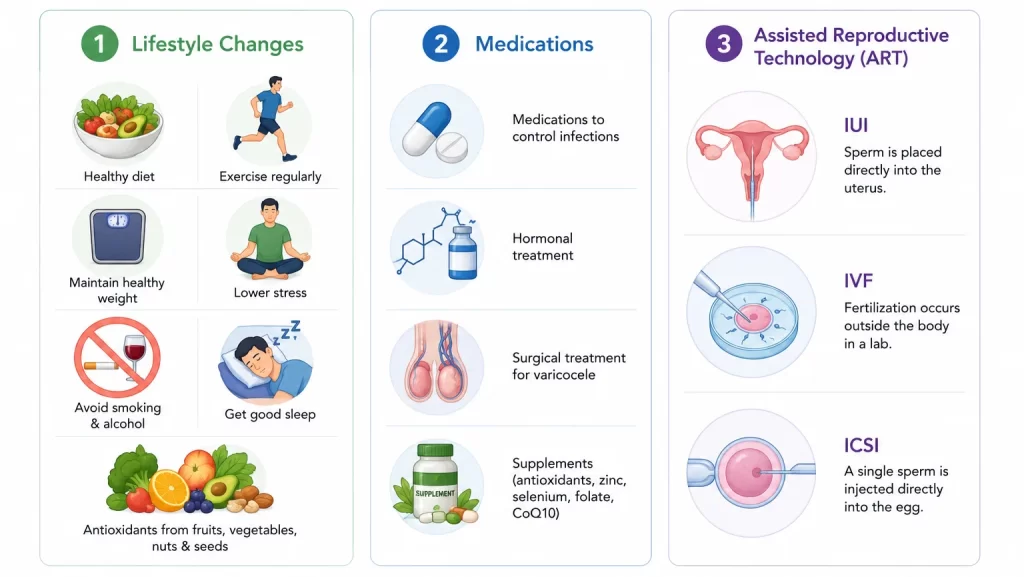
Your abnormal sperm treatment depends on the cause and your overall fertility. We suggest that you consider lifestyle changes, medications, or even assisted reproductive technology.
1. Lifestyle Changes
Lifestyle changes are recommended by us and may include:
- A balanced diet
- Work out regularly to stay fit
- Keep yourself at the right weight
- Lower stress
- Stay away from smoking and alcohol
- Get a good sleep
- Take antioxidants from vegetables and fruits, nuts, and seeds, which are also helpful for your sperm health. Protecting sperm quality early may also help preserve future fertility.
2. Medications
In case there are any problems with your sperm that cause any diseases, they can be managed by:
- Giving you medication to control infections
- Hormonal treatment may be given where necessary
- If there is a varicocele, surgical treatment may be considered
- In addition, you are provided with dietary supplements such as antioxidants, zinc, selenium, folate, and coenzyme Q10
3. Assisted Reproductive Technology (ART)
There are some difficulties during a natural conception; in such cases, we recommend:
- IUI (Intrauterine insemination): Introduction of the sperm directly into your partner’s uterus.
- IVF (In vitro fertilization): Here, fertilization is carried out externally, in the lab.
- ICSI (Intracytoplasmic Sperm Injection): Direct injection of sperm into the eggs.
Understanding the difference between fertility treatments can help couples choose the most suitable option based on their condition.
Can abnormal sperm fertilize an egg?
We mostly heard, “Doctor, can abnormal sperm be able to fertilize an egg?” Yes, abnormal sperm can still fertilize an egg, but not in all cases.
Imagine you are planting seeds in soil. Some seeds are broken or misshapen, but if a few healthy seeds are there, they can still grow into a plant. Sperm work in a similar way. Even if many abnormal sperm are present, the healthy ones can still fertilize the egg.
Embryo quality and development after fertilization also play an important role in pregnancy success. But if too many sperm are damaged, it becomes hard to fertilize the egg.
That’s why it is required to consult your fertility specialist to understand your sperm health and give treatments based on your needs.
Final Thoughts: Supporting Better Sperm Health for Your Fertility Journey

At Puja IVF Center in Patna, we understand the concerns associated with male fertility. Dr Puja Kumari listens to your concerns and diagnoses your situation correctly, recommending the best treatments for you. If you have any sperm health-related concerns, with the proper help, you can improve reproductive health and move closer to parenthood.
FAQs
1. Can abnormal sperm still lead to pregnancy?
Yes, pregnancy is still possible even if some sperm are abnormal. If healthy sperm are present with good motility and count, natural conception may still happen. In some cases, fertility treatments like IUI, IVF, or ICSI may improve the chances of fertilization.
2. How do doctors identify abnormal sperm?
Abnormal sperm are identified through a semen analysis. This test checks sperm count, motility, morphology (shape), semen volume, and other factors that affect fertility.
3. Is 4% sperm morphology normal?
Yes. According to WHO guidelines, 4% normal sperm morphology is considered within the normal range when using Kruger’s strict criteria. Fertility also depends on sperm count and motility, not morphology alone.
4. What are the signs of unhealthy sperm?
Unhealthy sperm usually do not cause obvious symptoms. However, fertility problems, abnormal semen color, unusual odor, testicular pain, swelling, or changes in semen consistency may indicate an underlying issue.
5. How can I check if my sperm is healthy?
The most reliable way is through a semen analysis performed at a fertility clinic or laboratory. This test evaluates sperm count, shape, movement, and semen quality.
6. Can low sperm motility still result in pregnancy?
Yes, pregnancy is still possible with low sperm motility, especially if sperm count and morphology are healthy. Treatments like IUI or IVF with ICSI may help improve conception chances in severe cases.