
Understand the IVF embryo transfer procedure, types, pain, precautions, success rate & recovery. Doctor guidance from PujaIVf in Patna.

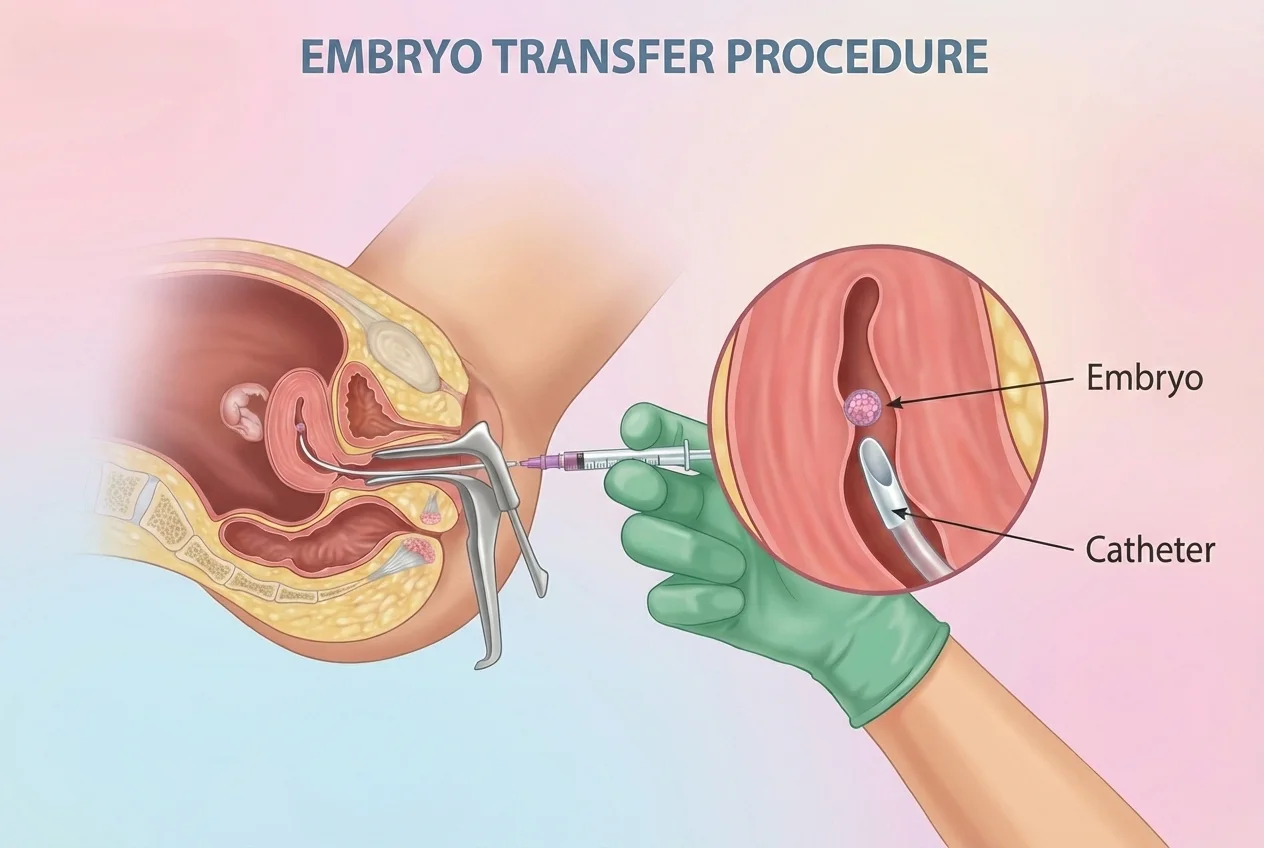
The Embryo Transfer Procedure is the most hopeful step of IVF treatment. As the most trusted IVF doctor in Patna, let us explain it simply: we gently place a healthy embryo into the mother’s womb. This helps the pregnancy to begin naturally.
In the IVF embryo transfer procedure, timing, embryo quality and the endometrial lining matter most. At Puja IVF Patna, this step is done with full care, precision and emotional support. We are aware how this is that very moment couples wait for with their whole heart!
Types of Embryo Transfer
There are different types of embryo transfer based on medical need.
- A blastocyst transfer is done on day five for better implantation.
- Some couples need a single embryo transfer to reduce risk, while others may require multiple embryo transfer.
- Fresh Embryo Transfer happens soon after IVF fertilisation.
- Often in case two, an embryo is frozen and kept for later pregnancy planning. In that case, embryo transfer is done after embryo thawing. That is called Frozen Embryo Transfer (FET).
- At Puja IVF Fertility Centre, embryo grading and the implantation window guide the best choice for each patient.
Embryo Transfer Procedure – Step by Step
The Embryo Transfer Procedure is simple, safe and done without surgery:
Step 1 – First, we prepare the uterus by checking the endometrial lining thickness. A mock transfer may be done earlier to understand the uterine path.
Step 2 – On the day of transfer, embryo loading is carefully done in a thin soft catheter. The patient lies comfortably, similar to a routine check-up. A speculum is placed gently and catheter placement is done under ultrasound-guided transfer for accuracy. The embryo is placed inside the uterus at the perfect spot.
Step 3 – This step is part of the IVF embryo transfer procedure, and it takes only a few minutes. No stitches, no anesthesia and no hospital stay are needed. After transfer, luteal support medicines help the embryo settle. Then begins the emotional two-week wait, when implantation may happen naturally inside the womb. In IVF treatment steps, many patients are surprised when they realise that the query – ‘is embryo transfer painful’ – is mostly a fear, not reality.
Is Embryo Transfer Painful?
Many patients ask, is embryo transfer painful? The honest answer is no. Most women feel only mild pressure, like a simple examination. The process is smooth because of ultrasound guidance and soft instruments. At Puja IVF in Patna, Bihar, we ensure comfort, calm surroundings and expert handling so anxiety stays low. For most women, the question – is embryo transfer painful – becomes a relief when they experience it themselves.
Positive Signs After Embryo Transfer
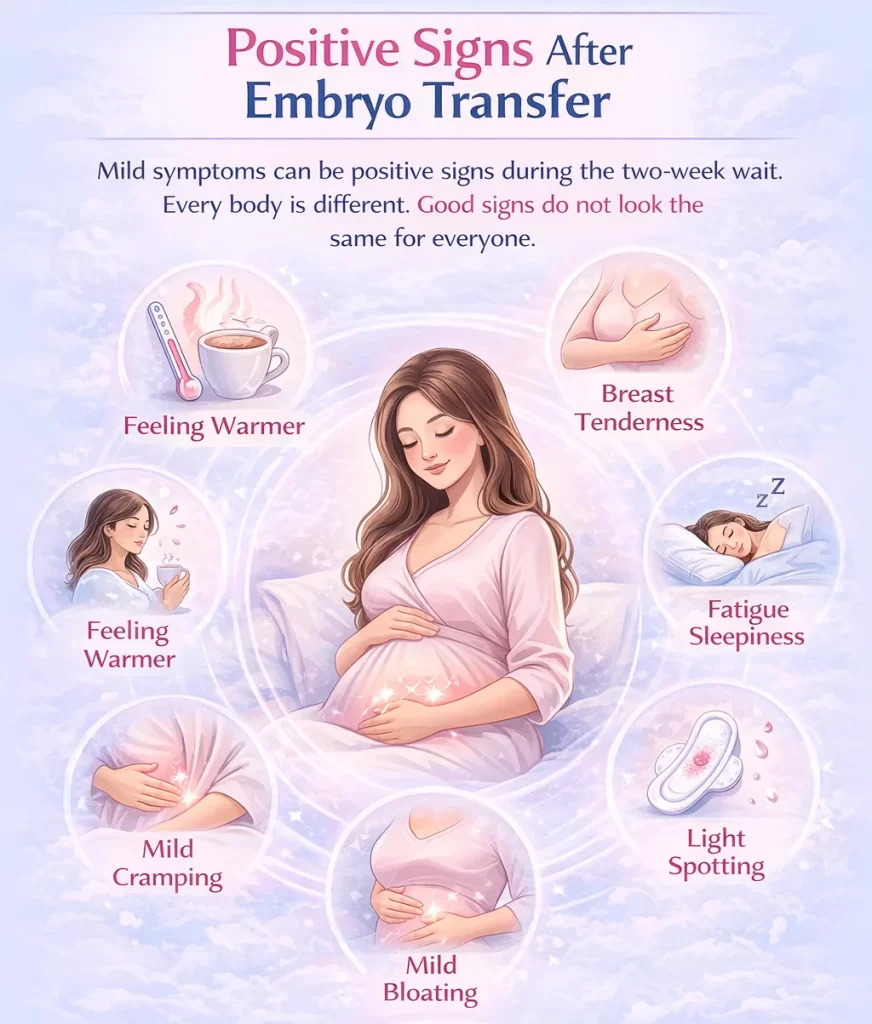
Doctors look for positive signs after embryo transfer during the two-week wait. Mild cramping, light spotting, breast heaviness and slight fatigue are normal signs. These symptoms or indications may suggest implantation is happening. However, every body is different. At our Patna Fertility Centre, we guide patients calmly, because positive signs after embryo transfer do not look the same for everyone and silence can also mean success.
Negative Signs After Embryo Transfer
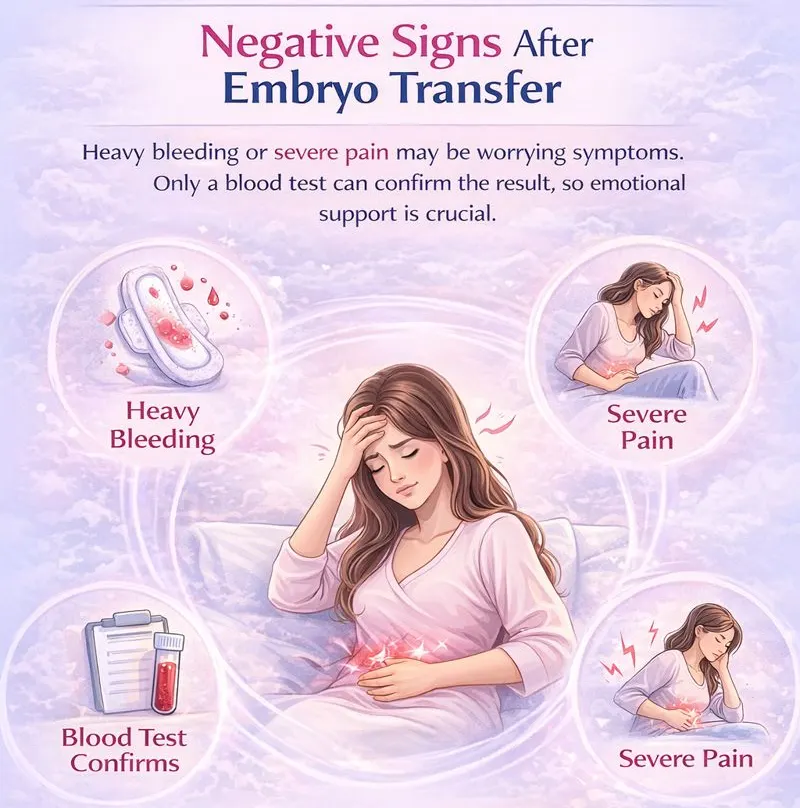
The negative signs after embryo transfer may include period-like bleeding or severe pain. Sometimes symptoms appear due to medicines, not failure. As doctors, we advise not to panic. Even with negative signs after embryo transfer, only a blood test confirms the result. Emotional balance is very important during this phase.
When to Take the Pregnancy Test After Embryo Transfer
Doctors advise waiting at least 12–14 days before testing. Testing too early can give wrong results due to hormone medicines. At Puja IVF in Patna, we help you during this period so that anxiety stays low and results stay accurate.
After Embryo Transfer Precautions
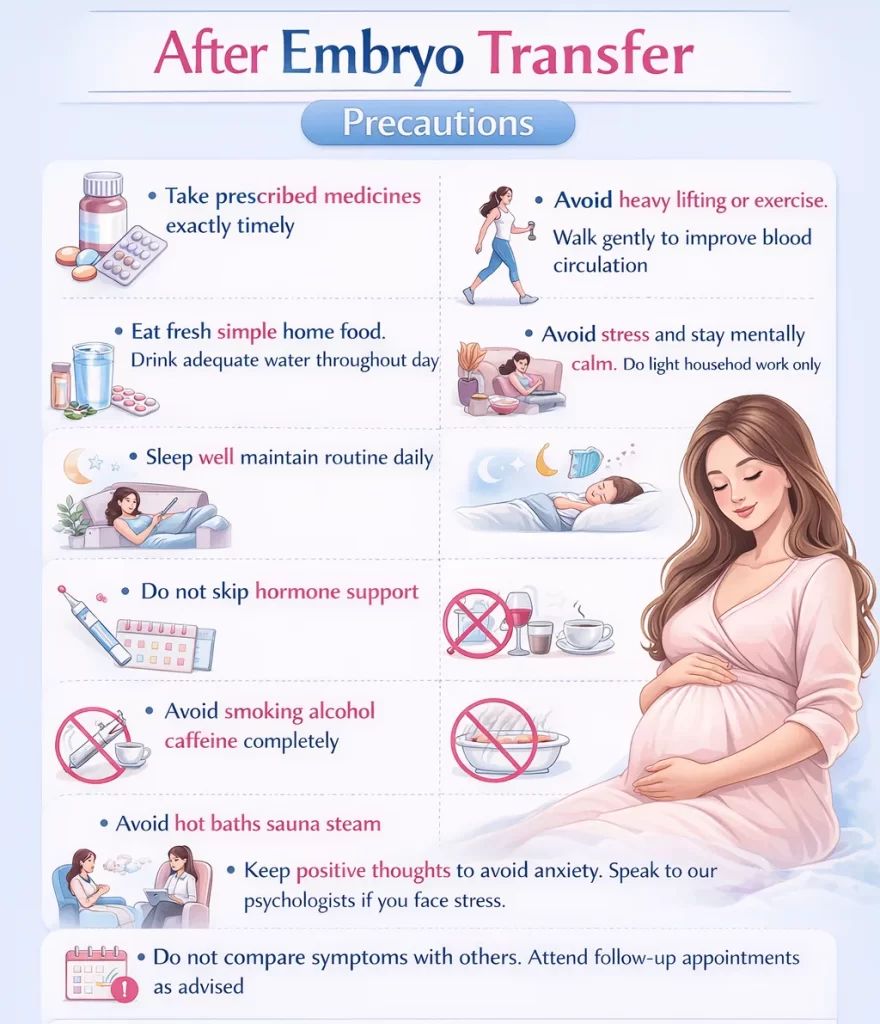
Carefully following after embryo transfer precautions helps improve outcomes. At Puja IVF Fertility Centre, we explain these precautions in simple language so patients feel confident at home and not scared or confused.
- Take prescribed medicines exactly timely
- Avoid heavy lifting or exercise. Walk gently to improve blood circulation
- Follow Indian IVF diet chart. Drink adequate water throughout day
- Avoid stress and stay mentally calm. Do light household work only
- Sleep well maintain routine daily
- Do not skip hormone support
- Avoid smoking alcohol caffeine completely
- Avoid hot baths sauna steam
- Keep positive thoughts to avoid anxiety. Speak to our psychologists if you face stress.
- Do not compare symptoms with others. Attend follow-up appointments as advised
- Call the doctor if you have severe pain. Choose an experienced IVF care team ONLY
Embryo Transfer Success Rate
The embryo transfer success rate depends on the woman’s age primarily. And then comes the embryo quality, uterus health also. At Puja IVF, advanced techniques, careful embryo selection and personalized treatment improve outcomes. We are sharing some global success rates below:
- 34-36 % IVF birth rate per embryo transfer
- 41 % pregnancy rate under age 35 after embryo transfer
- 40 % fresh embryo transfer birth success
- 32 % frozen embryo pregnancy rate globally
While no doctor can promise pregnancy, our transparent approach helps couples understand their real embryo transfer success rate with honesty and care.
Do’s and Don’ts After Embryo Transfer
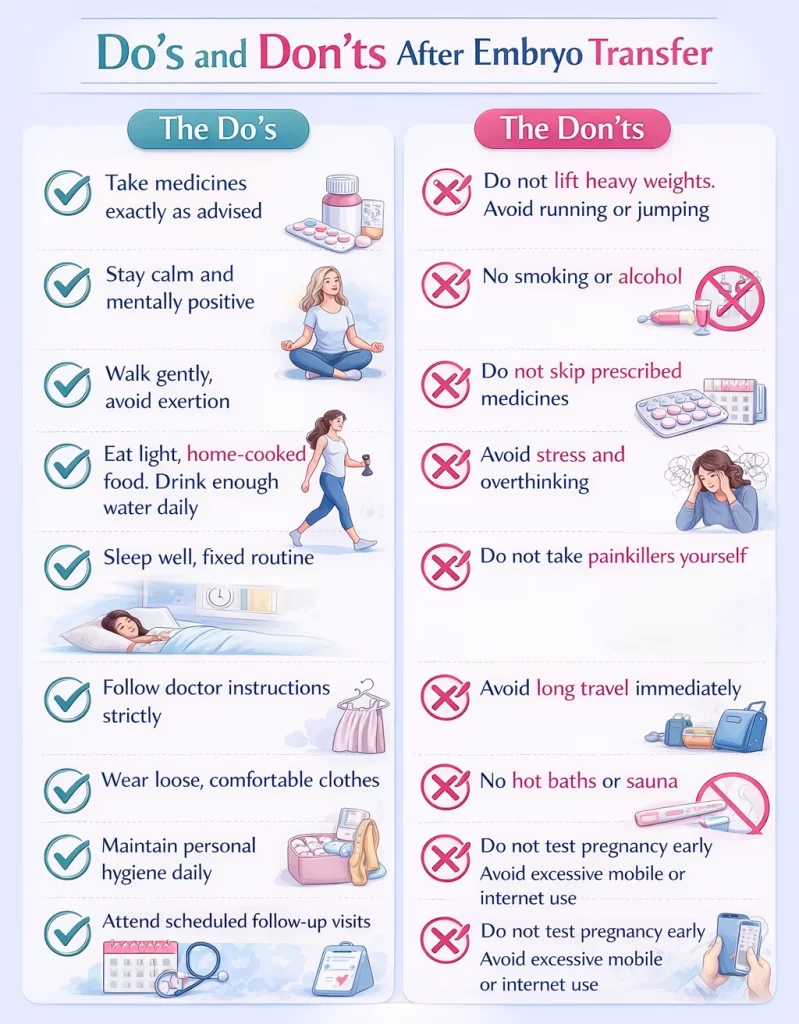
These steps are part of after embryo transfer precautions we insist on. A calm mind supports the body better than bed rest alone.
The Do’s
- Take medicines exactly as advised
- Stay calm and mentally positive
- Walk gently, avoid exertion
- Eat light, home-cooked food. Drink enough water daily
- Sleep well, fixed routine
- Follow doctor instructions strictly
- Wear loose, comfortable clothes
- Maintain personal hygiene daily
- Attend scheduled follow-up visits
The Dont’s
- Do not lift heavy weights. Avoid running or jumping
- No smoking or alcohol
- Do not skip prescribed medicines
- Avoid stress and overthinkingit effect IVF Success
- Do not take painkillers yourself
- Avoid long travel immediately
- No hot baths or sauna
- Do not test pregnancy early
- Avoid excessive mobile or internet use
Anxious About Having a Child? Come to Us!

The Embryo Transfer Procedure is a medical step and beyond that it is also an emotional milestone. At Puja IVF Fertility Centre in Patna, Bihar, every IVF embryo transfer procedure is handled with the latest tech and science. We have vast global expertise and experience. With the right care, guidance and realistic understanding of embryo transfer success rate, hope and success rate always remains strong.
FAQs
1) Is bed rest necessary after embryo transfer?
No. Studies show that prolonged bed rest does not improve implantation rates. A calm routine with light activity supports blood circulation and emotional balance better than strict bed rest.
2) Are you awake during embryo transfer?
Yes. Embryo transfer is done while the patient is fully awake. It is a quick procedure performed under ultrasound guidance, and many patients can even watch the process on the screen.
3) How long does the embryo transfer procedure take?
The actual embryo transfer takes only a few minutes. Including preparation and rest time, the entire process usually takes less than 30 minutes.
4) How many days after embryo transfer does implantation occur?
After a blastocyst (day-5) transfer, implantation usually happens within 1 to 5 days.
After a day-3 embryo transfer, implantation may take 3 to 7 days.
5) How many days after embryo transfer will pregnancy be confirmed?
Pregnancy can be confirmed through a blood test 12 to 14 days after embryo transfer. Testing earlier may give false results due to hormone medications.
6) How many injections are required after embryo transfer?
After embryo transfer, hormone support injections or medicines may continue for 10–14 days or longer, depending on individual treatment plans. These help support implantation and early pregnancy.
7) What is the 14-day rule after embryo transfer?
The 14-day waiting period refers to the time doctors ask patients to wait before taking a pregnancy test. This allows implantation and hormone levels to stabilize for accurate results