Confused about what to eat during IVF? Discover an Indian IVF diet chart, foods to avoid, and lifestyle tips to support treatment success.

Renu is a 32-year-old woman from a small village in Bihar. She came to Puja IVF Patna in 2025. She was facing fertility issues. We inquired about their lifestyle, because her reports indicated mal-nutrition along with other things that needed an IVF.
On asking, we found out that she often skipped meals, drank very little water and ate mostly fried/processed food from the market, when she could not cook. Then she began IVF treatment with Puja IVF Fertility Centre.
We explained to her that food is not only for hunger. It gives strength to the body, builds good blood and supports the womb/child. With a proper, personalised IVF diet plan, her overall health gradually improved, leading to a successful pregnancy. Today, she is a happy and healthy mother, enjoying motherhood with her little child.
Key Diet & Lifestyle Tips to Boost IVF Success Naturally
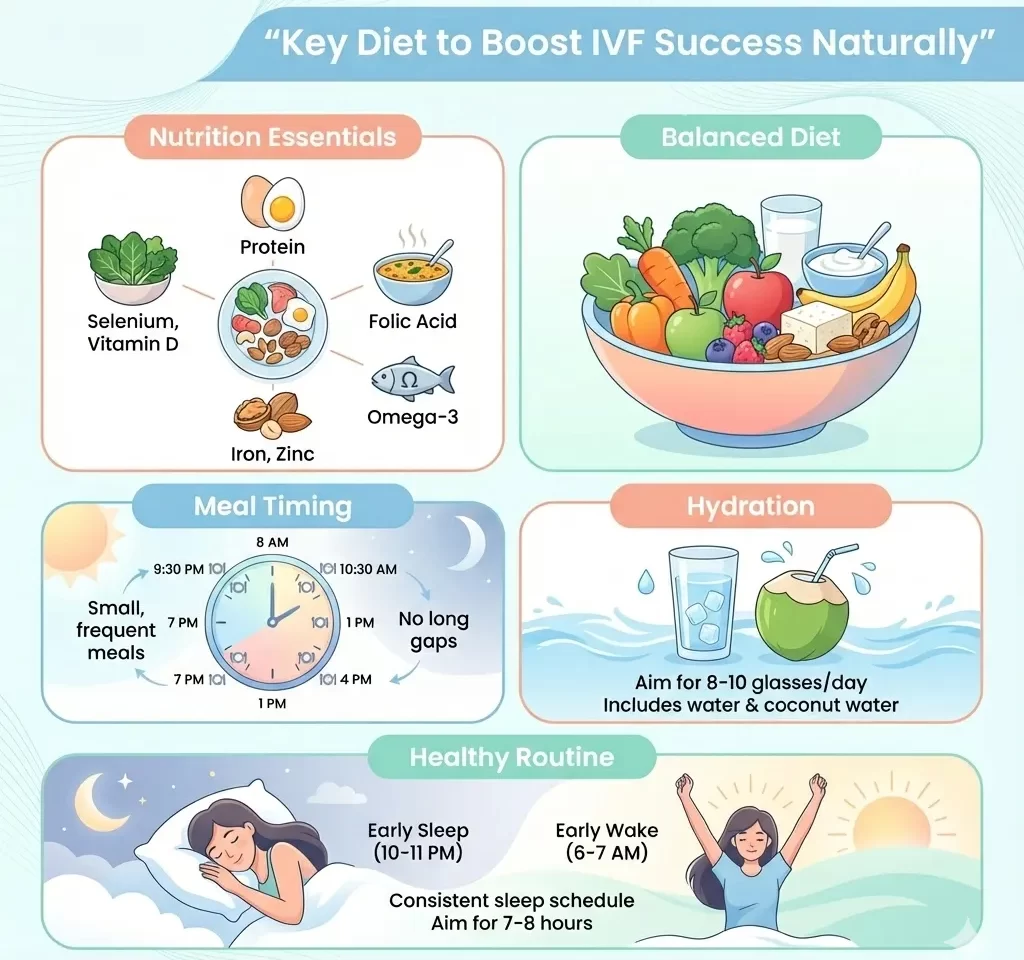
During IVF, the body requires extra care. A well-planned IVF diet plays an important role in maintaining hormonal balance and supporting egg and uterine health, in line with the National Institutes of Health (NIH) healthy diet guidelines.
- Keeps hormones balanced
- Creates healthy eggs
- Improves the lining of the uterus.
When body, mind and food stay balanced, the IVF process becomes smoother. Thus, you have to follow this holistic plan for IVF Success:
A nutritious diet supports the body at every stage of IVF, especially when aligned with a clear understanding of the complete IVF treatment process.
- Foods rich in Protein, Folic Acid, Omega-3 Fatty Acids, Iron, Zinc, Selenium and Vitamin D.
- Have more vegetables, fruits, milk, curd, along with paneer and nuts.
- No long gaps between meals.
- Drink enough Water and Coconut water for Hydration.
- Sleep early and wake early.
IVF Diet Chart – What to Eat for Better Results
A simple Indian-style IVF Diet Chart helps women know what to eat every day. Following is one of the best foods to eat during IVF treatment routines for women in villages and as well as cities:
| TIME OF THE DAY | DIET FOR IVF SUCCESS |
| Breakfast | Eat one bowl of khichdi or poha with vegetables or two rotis with dal. Include one fruit from bananas, apples or carrots. After some time, take a glass of warm milk or yoghurt if the milk doesn’t suit you. It is a complete diet, avoid Tea or Coffee |
| Mid-Morning | If hunger strikes in the day, avoid chips etc. Instead go for almonds, walnuts, sunflower seeds or pumpkin seeds. These give omega-3s, vitamin E and calcium. Together they help in healthy egg development and hormonal balance. |
| Lunch | Two rotis or a small bowl of rice with dal alongwith green vegetables, curd and salad = a complete meal. Include leafy vegetables at least 3–4 times a week. They give Iron, Folic Acid and other important vitamins. |
| Evening Snack | Take fruits, coconut water, roasted chana or a small bowl of sprouts. This helps keep energy steady. Supports healthy blood flow. |
| Dinner | Eat light food early. A bowl of dal, vegetable curry, roti or khichdi is good. Avoid heavy, fried or market food. A proper IVF Diet Chart supports the body’s natural healing and keeps digestion strong. |
| Full-Day Hydration | Drink at least 2–2.5 litres of water daily. Good hydration supports hormone movement . |
Foods to Avoid During IVF Treatment
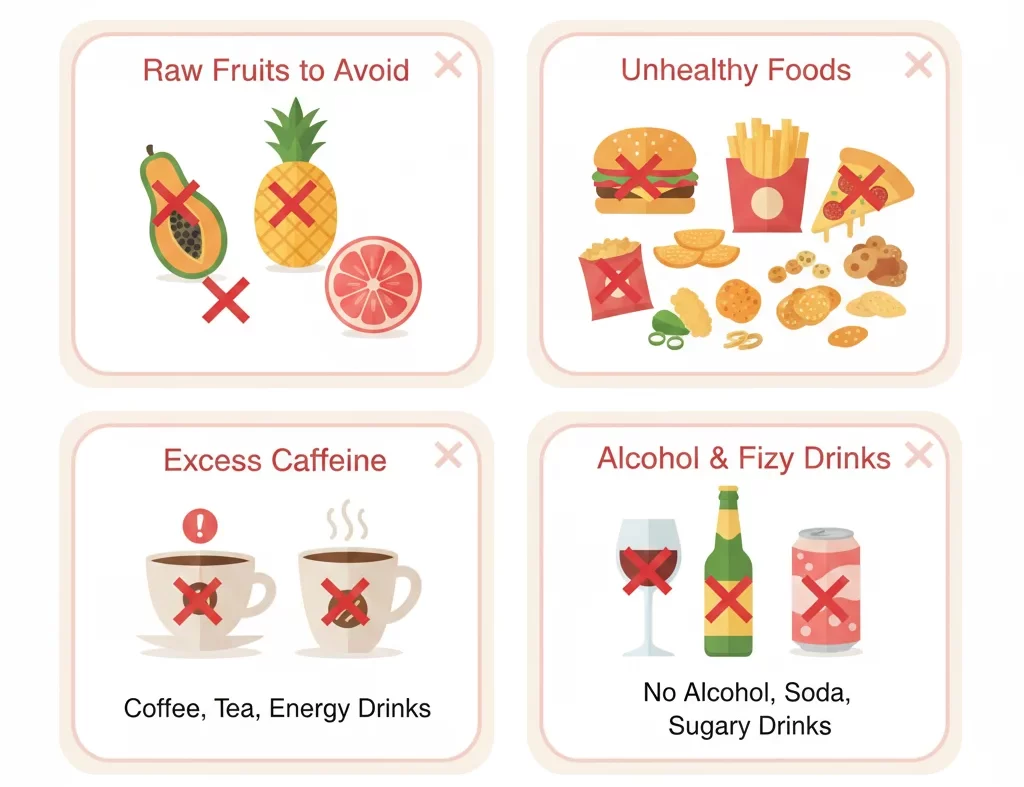
Certain foods can lower the chances of pregnancy because they harm the hormones. Plus, weakens the uterus lining by increasing swelling. At Puja IVF, when we guide you on the best food to eat during IVF treatment, we also ask you to avoid the following
- Raw papaya, pineapple and grapefruit.
- Junk, fried or processed foods, especially from outdoors.
- Too much caffeine (tea or coffee)
- Alcohol or carbonated drinks
After Embryo Transfer Diet Chart for Higher Implantation
Once the embryo is placed in the womb, the body needs calmness and gentle food. A correct after embryo transfer diet chart supports implantation.
- Eat home-cooked meals.
- Follow the same diet chart as we have listed above.
- But, avoid constipation by eating papaya-free + other fibre sources such as carrots and apples.
- Do not lift heavy things. Walk slowly.
Lifestyle Tips to Improve IVF Success — Stress, Sleep & Routine
Lifestyle is as important as food. When one faces fertility issues, family pressure or financial worries lead to stress. You must talk these out openly with your spouse/partner or counselors at Puja IVF, Patna.
Stress affects hormones and reduces IVF success. And to cut down stress you must always listen to calming music, indulge in Yoga as well as go for slow walks in nature.
If you are looking for a deeper understanding of how lifestyle changes, medical care, and natural methods work together, you may also find our detailed guide on How to Overcome Female Fertility Problems, Naturally and Medically helpful.
A 7–8 hours daily sleep is necessary, so avoid using mobile phones late at night. The radiation is harmful for the embryo.
Light exercise as advised by us, will ensure the right body weight. Remember, a positive routine, stable mind and the right IVF Diet together support better success rates.
Indian Diet Plan for IVF Success
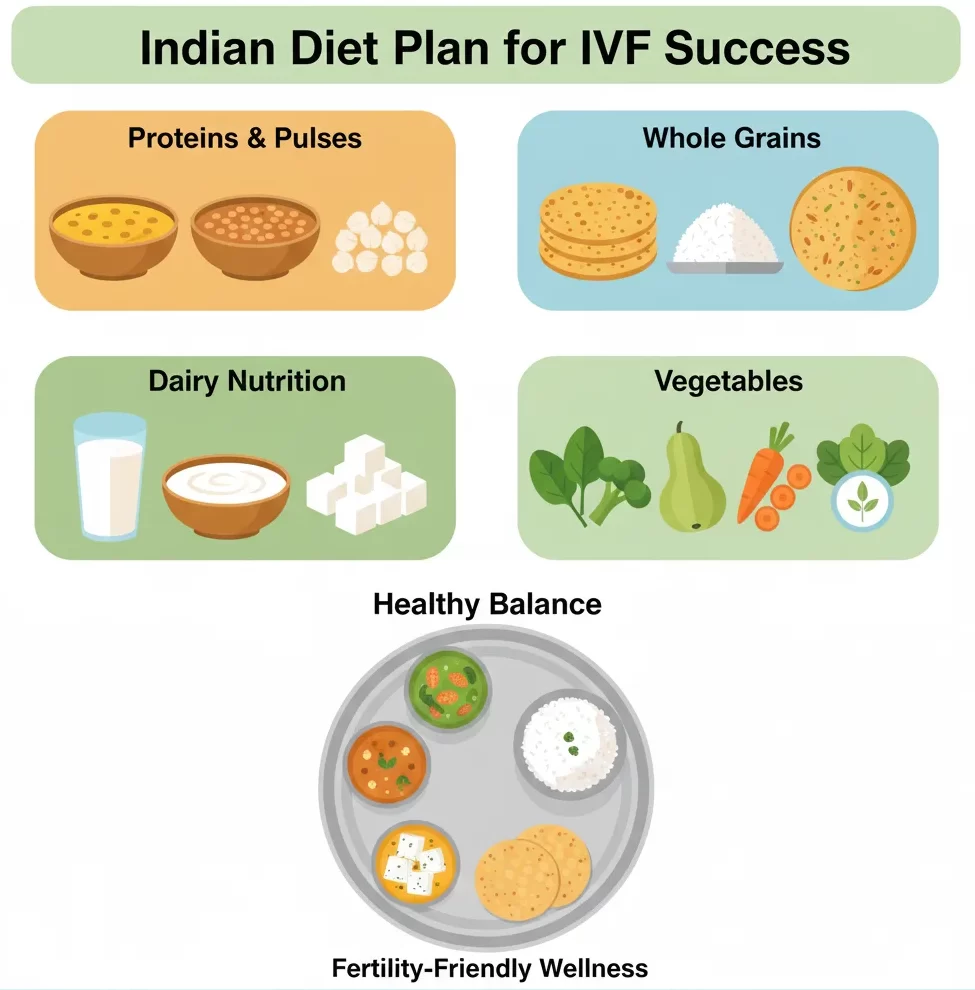
The Indian diet has always been considered the best diet among the world, be it IVF or any other health journey. A good Indian diet plan for IVF success is simple and affordable.
- Includes dal, roti, rice, milk, curd, green vegetables, paneer, etc healthy elements.
- Snacks have to be zero processed food and only nuts, fruits and sprouts.
- Suits the Indian climate and every body type.
- Women can easily follow this at home without buying costly imported foods.
When to Start Diet & Lifestyle Changes?
Puja IVF, Patna, will always suggest you to start a core Indian diet plan for IVF success at least 2–3 months before IVF treatment. This helps the eggs develop well and makes the womb healthy. Even if a woman has already started injections, she can still begin these changes.
Many couples begin improving their diet and daily routine even before meeting a fertility specialist, which is why being prepared for your first IVF consultation is equally important.
Diet During IVF Injections and Hormonal Treatment
During injections, hormones increase and the body may feel heavy or tired. Braised following the diet chart above, you have to ensure you eat meals on time. This helps reduce bloating and keeps energy steady.
Why Come to Puja IVF Fertility Centre for Your IVF Diet Plan In Patna
A clear IVF Diet Chart and a gentle after embryo transfer diet chart can greatly support IVF success. At Puja IVF, we ensure that not just an expert diet chart is provided to you, but we also help motor your health changes from time to time and suggest small changes when required to ensure high IVF Success. If you have queries, do connect with us today!
Along with diet planning and medical care, many couples also seek clarity on treatment planning, including IVF cost in Patna.
If you have queries, do connect with us today!
FAQs
1) How early should I start following an IVF diet plan?
Ideally, you should begin dietary and lifestyle changes at least 2–3 months before IVF treatment. This gives the body enough time to improve egg quality and prepare the uterus for implantation.
2) Does drinking more water really help during IVF?
Yes. Proper hydration supports hormone circulation, reduces bloating caused by medications, and helps maintain a healthy uterine environment, making it an important part of IVF care.
3) Are supplements necessary during IVF, or is food enough?
Food is the foundation, but some women may need supplements like folic acid, vitamin D, or iron based on medical advice. Supplements should always be taken under a doctor’s guidance during IVF.
4) Should IVF diet be personalised for every woman?
Yes. Every woman’s body, medical history, and hormone levels are different. A personalised IVF diet plan guided by fertility specialists helps address individual nutritional needs more effectively.