
When you see the words “pus cells in semen” on a fertility report, it is easy to worry that something is seriously wrong. But as a fertility doctor, I first say: don’t let that one line frighten you. Pus cells usually mean white blood cells are present in your semen, and their presence can have …

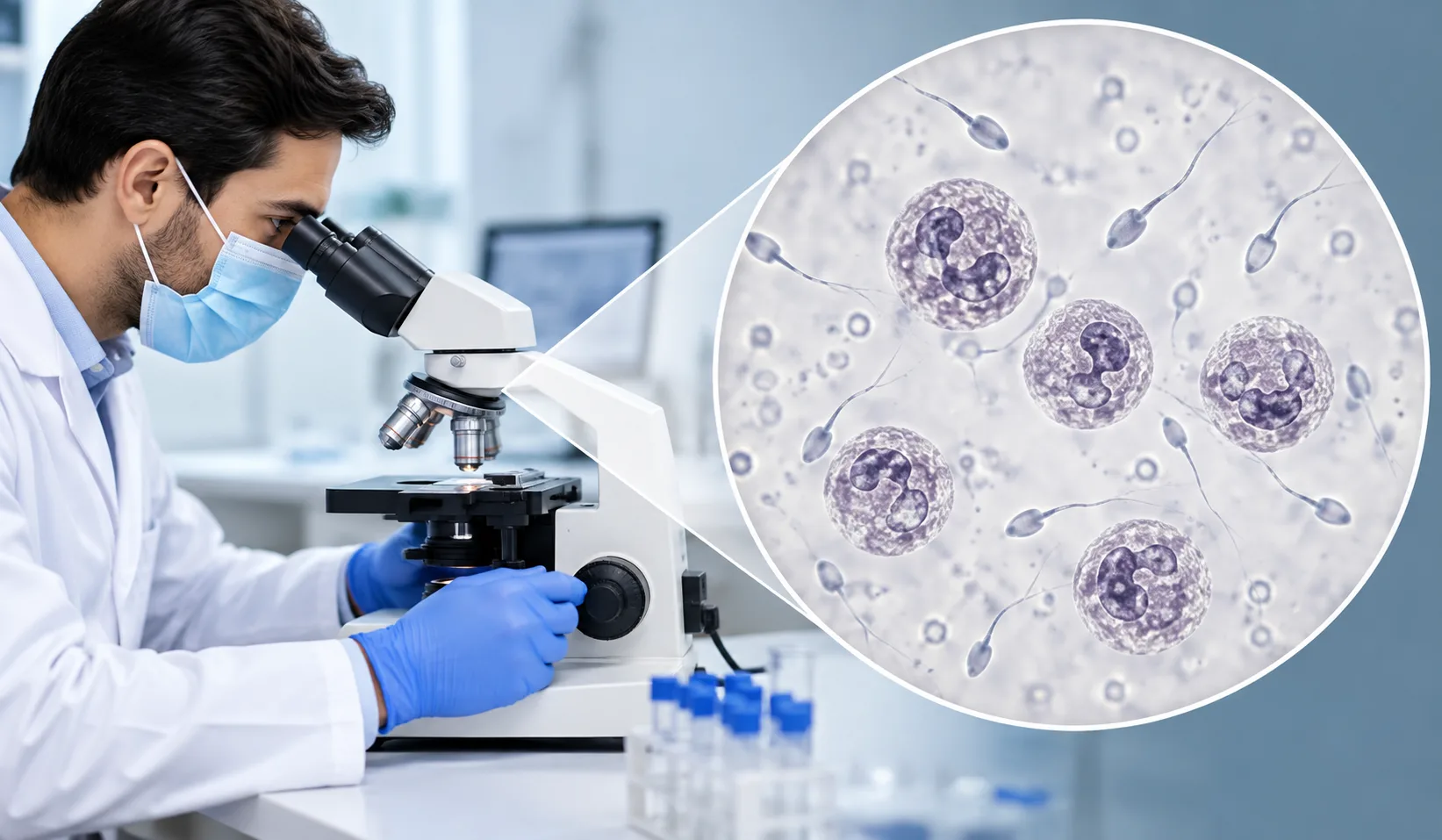
When you see the words “pus cells in semen” on a fertility report, it is easy to worry that something is seriously wrong. But as a fertility doctor, I first say: don’t let that one line frighten you.
Pus cells usually mean white blood cells are present in your semen, and their presence can have several explanations. Sometimes they are linked to inflammation or an infection; sometimes, the finding needs a little more investigation before we know what it means.
If you and your partner are trying to conceive, the real question is not simply,
“Are pus cells present?” but “Why are they there, and are they affecting sperm health?”
Let’s understand it together.
What Are Pus Cells in Semen?
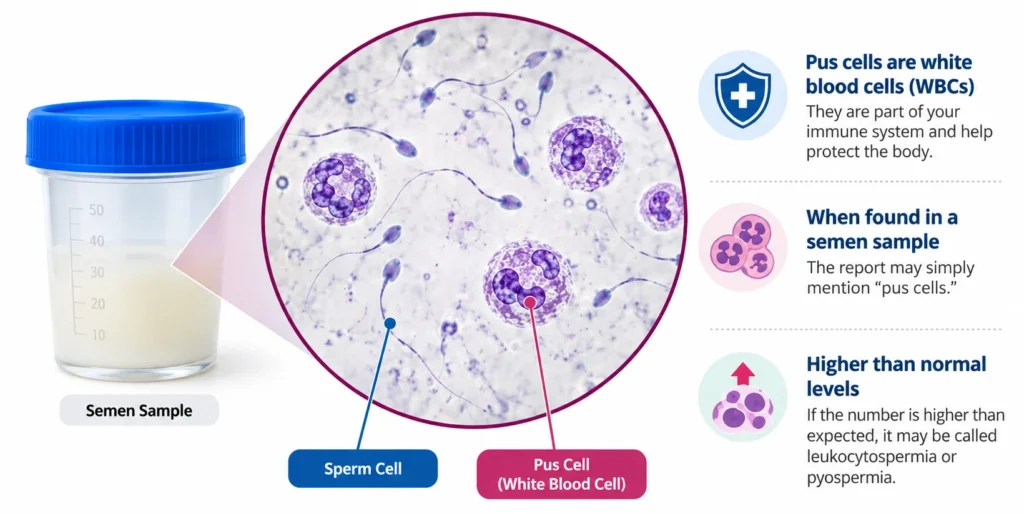
Pus cells in semen are white blood cells (WBCs), also called leukocytes. These cells are part of your immune system and help protect the body.
When they are found in a semen sample, the report may simply mention “pus cells.” If the number is higher than expected, we may call it leukocytospermia or pyospermia.
In my practice, I would not look at this finding alone. I would consider the number of cells along with the other semen parameters to understand what the report is really telling us about sperm health.
Pus cells are just one of several findings that may be considered when evaluating male fertility, along with sperm count, motility, and morphology. These factors are also discussed in the context of male infertility treatment and its possible causes.
What Is the Normal Range of Pus Cells in Semen?
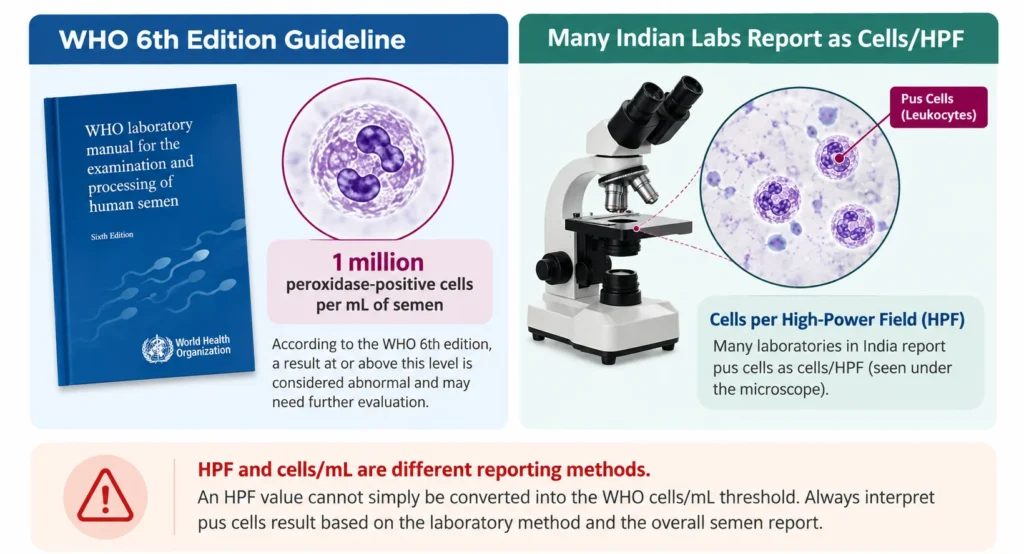
The WHO 6th edition uses 1 million peroxidase-positive cells per mL of semen as a threshold of clinical significance. A result at or above this level is considered abnormal and may need further evaluation.
But what if your report gives the result as cells/HPF instead of cells per mL?
However, this should not be confused with the way many Indian laboratories report pus cells as cells per high-power field (HPF). These are different reporting methods, so an HPF value cannot simply be converted into the WHO cells/mL threshold.
This is why pus cells normal range in sperm should always be understood according to the laboratory method and the overall semen report.
Pus Cell in Semen Analysis: What Does the Result Mean?
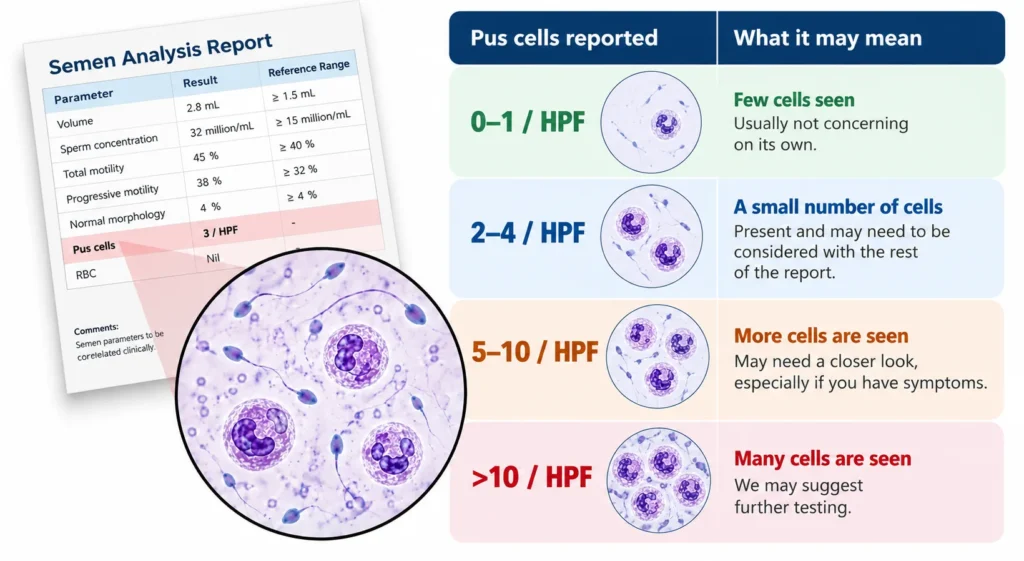
A semen report may show only a few pus cells, while another may show a higher number. This difference matters because an occasional cell is not interpreted in the same way as persistently increased white blood cells.
But what does each result actually mean for you?
Here is a simple way to understand commonly reported pus-cell findings:
| Pus cells reported | What it may mean |
| 0–1/HPF | Few cells seen; usually not concerning on its own. |
| 2–4/HPF | A small number of cells are present and may need to be considered with the rest of the report. |
| 5–10/HPF | More cells are seen and may need a closer look, especially if you have symptoms. |
| >10/HPF | Many cells are seen, and we may suggest further testing. |
What Causes Pus Cells in Semen?
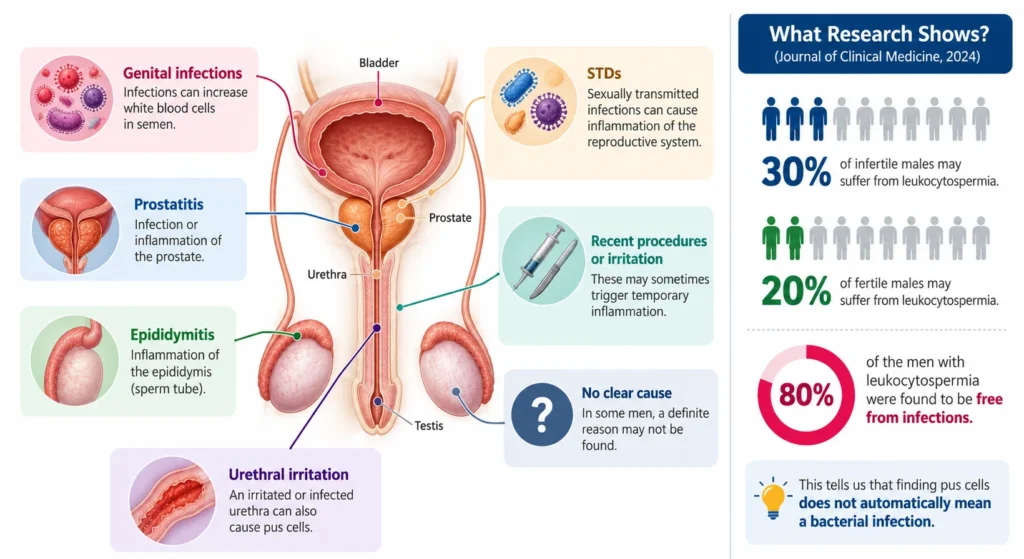
The presence of pus cells in semen analysis can be caused by various factors, such as:
| Possible causes | What it may mean |
| Genital infections | If someone is suffering from infections, the amount of white blood cells in the semen can increase. |
| Prostatitis | Due to infection or inflammation of the prostate, the pus cells can appear in the semen. |
| Epididymitis | This is the condition in which the epididymis (sperm tube) becomes inflamed and increases the white blood cells. |
| Urethral irritation | An irritated or infected urethra can also be responsible for pus cells. |
| STDs | Some infections that appear during sexual intercourse can cause inflammation of the reproductive system. |
| Recent procedures or irritation | These may sometimes trigger temporary inflammation. |
| No clear cause | In some men, a definite reason may not be found. |
A 2024 study published in the Journal of Clinical Medicine revealed that:
- Around 30 % of infertile males may suffer from leukocytospermia, as compared to around 20 % of fertile males.
- About 80% of the men with leukocytospermia were found to be free from infections in these studies.
This tells us that finding pus cells does not automatically mean a bacterial infection.
Can Pus Cells in Sperm Affect Fertility or Pregnancy?
Yes, pus cells in sperm may be an indication of low sperm quality, particularly when there is inflammation, since white blood cells can promote oxidative stress that negatively affects sperm motility, movement, and DNA.
“Can pus cells cause infertility, or can pus cells in sperm affect pregnancy?”
We understand why couples worry about this. Pus cells alone do not mean infertility. We first identify the cause and then check whether it is actually affecting sperm health or your chances of pregnancy.
The choice between fertility procedures depends on several factors, including sperm health, the female partner’s fertility, and the couple’s medical history. Understanding the difference between IVF and IUI can provide useful context when discussing treatment options.
If you have been trying to conceive without success, knowing when to see a fertility specialist can help you understand when a detailed fertility evaluation may be appropriate.
A 2024 study published in the Journal of Assisted Reproduction & Genetics has reported comparable results in a sample of 5,435 IVF–ICSI cycles of couples suffering from leukocytospermia and others.
| Fertility outcome | With leukocytospermia | Without leukocytospermia |
| Live birth rate | 62.3% | 63.0% |
| Clinical pregnancy rate | 73.3% | 74.9% |
IVF outcomes can also vary according to several clinical factors, including age, embryo quality, and aspects of reproductive health. These are among the factors affecting IVF success rate.
So, if pus cells are found in a semen report, we should look at the cause and overall sperm health.
How Are Pus Cells in Semen Diagnosed?
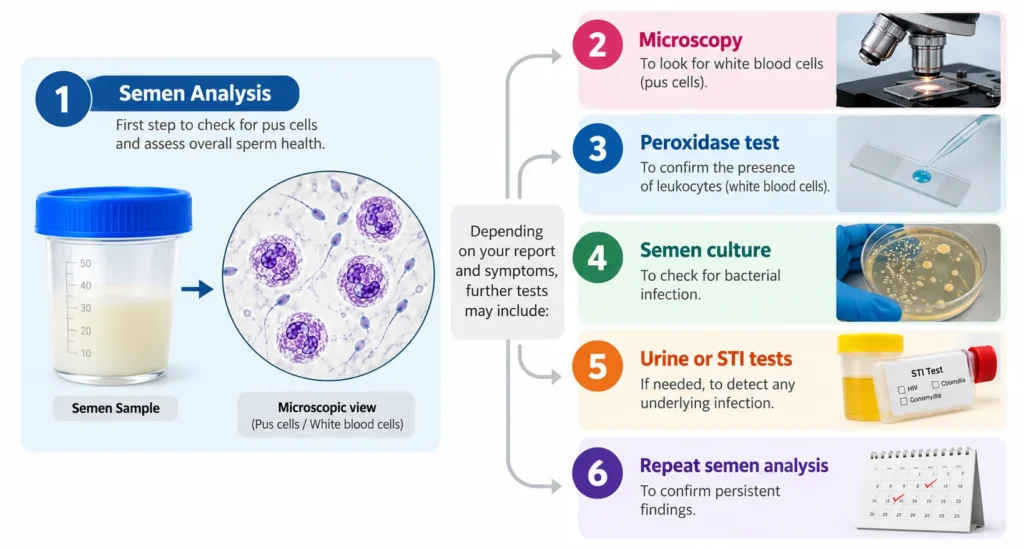
We usually start with a semen analysis to check for pus cells and assess sperm health.
Depending on your report and symptoms, further tests may include:
| Test | Purpose |
| Microscopy | To look for white blood cells |
| Peroxidase test | To confirm leukocytes |
| Semen culture | To check for infection |
| Urine or STI tests | If needed |
| Repeat semen analysis | To confirm persistent findings |
Pus Cells in Semen Treatment
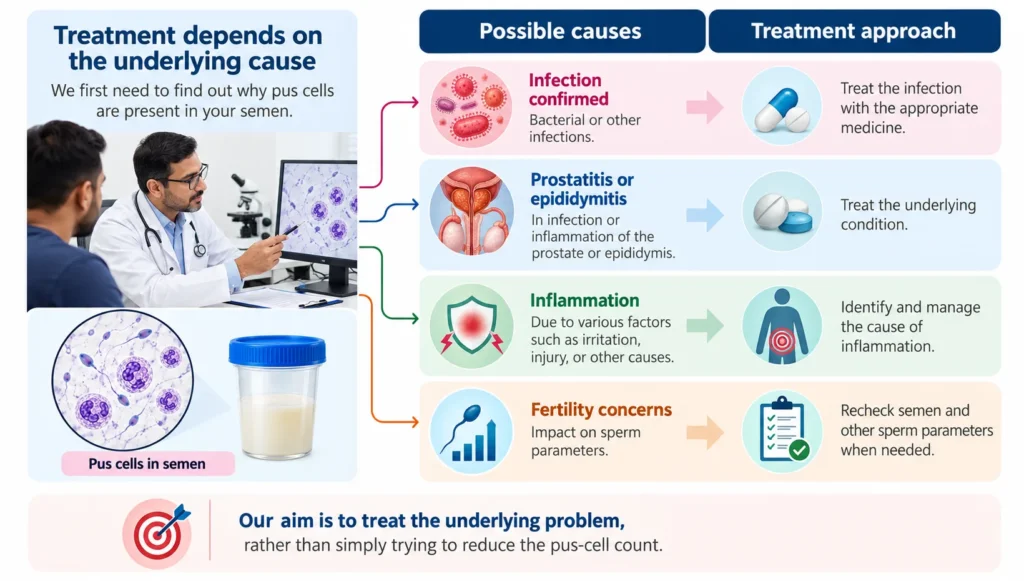
When it comes to pus cells in semen treatment, we first need to know why they are present.
Based on this, treatment may include:
| Causes | Possible Approaches |
| Infection confirmed | Treat the infection with the appropriate medicine |
| Prostatitis or epididymitis | Treat the underlying condition |
| Inflammation | Identify and manage the cause of inflammation |
| Fertility concerns | Recheck semen and other sperm parameters when needed |
Our aim is to treat the underlying problem, rather than simply trying to reduce the pus-cell count.
When Should You See a Doctor?
It is advisable for you to consult a doctor in case your sperm test indicates high pus cells on a regular basis.
Contact your doctor if you are experiencing any of the following:
- Painful or burning sensation while urinating
- Swelling or pain in testicular areas
- Abnormal penile discharge
- Fever along with any genital symptoms
- Trouble conceiving
- High pus levels in the sperm report despite treatment
Final Thoughts: Pus Cells in Semen: What Next?

A fertility report can feel overwhelming when you come across an unfamiliar finding like pus cells in semen. But one number or one line does not define your fertility. What matters is understanding the reason behind the finding and what it means for you as a couple.
For couples who need assisted reproductive treatment after a fertility evaluation, understanding the IVF treatment process can help them become familiar with the different stages involved.
At Puja IVF Centre, Patna, Dr Puja Kumari takes time to understand your concerns, review the reports carefully, and guide you with a treatment plan based on your individual needs.
FAQs
1. Can pus cells in semen cause infertility?
High levels of white blood cells in semen may be associated with oxidative stress and changes in sperm quality, potentially affecting fertility in some men. However, pus cells alone do not mean infertility. A complete fertility assessment, including sperm count, motility, morphology, and relevant medical history, helps determine their significance.
2. How do I know if my sperm is infected?
You cannot confirm a sperm or semen infection by appearance alone. Symptoms such as painful urination, burning during ejaculation, pelvic discomfort, unusual discharge, or testicular pain may indicate an infection or inflammation. Some men have no symptoms. A doctor may recommend semen analysis, a semen culture, urine testing, or other investigations when appropriate.
3. Can pus cells affect sperm motility?
Yes. Elevated white blood cells can release reactive oxygen species that may contribute to oxidative stress. This can damage sperm cells and affect their ability to move properly. However, the impact varies, and not every man with elevated pus cells has reduced sperm motility.
4. How long does it take for pus cells in semen to return to normal?
There is no fixed recovery period. It depends on the underlying cause, whether treatment is required, and how the body responds. If an infection is treated, your doctor may recommend follow-up testing to assess whether the elevated count has improved.
5. Can pus cells in semen affect sperm morphology?
Elevated pus cells may be associated with oxidative stress, which can potentially damage sperm cells and affect their structure. However, an elevated pus cell count does not automatically mean abnormal sperm morphology. A semen analysis is needed to evaluate sperm shape.