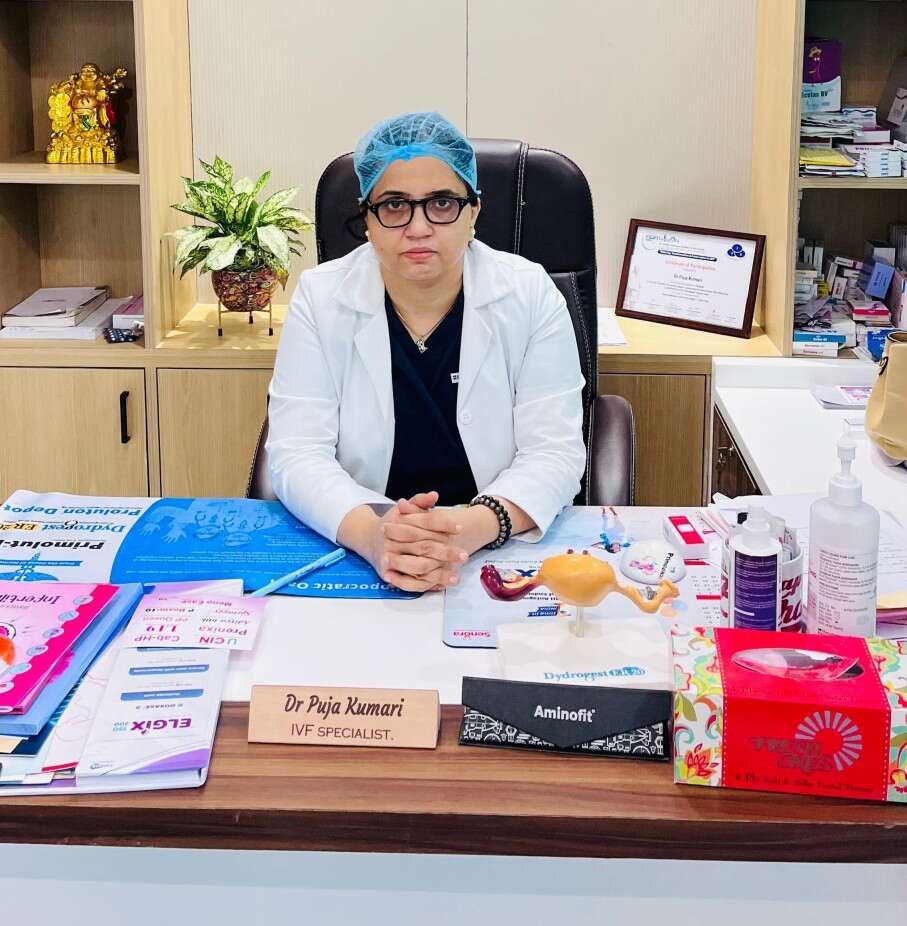
When two women undergo IVF, do they have similar outcomes? The answer is no, but why? Age is the most crucial factor determining the chances of success of IVF. But what are your chances of IVF success at the age of 25, 30, 35, or 40? In this guide, Dr Puja Kumari, an experienced fertility …
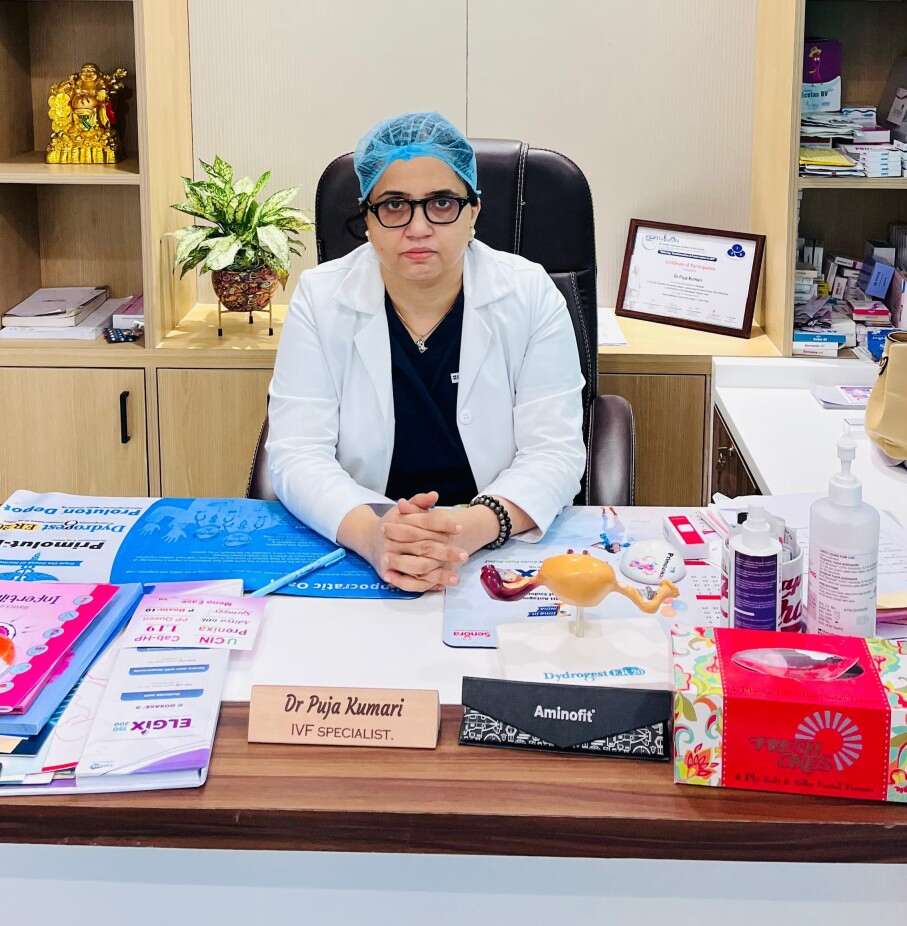

When two women undergo IVF, do they have similar outcomes?
The answer is no, but why?
Age is the most crucial factor determining the chances of success of IVF. But what are your chances of IVF success at the age of 25, 30, 35, or 40?
In this guide, Dr Puja Kumari, an experienced fertility doctor, explains IVF success rates by age.
What Is the IVF Success Rate?
The IVF success rate is defined as the probability of either getting pregnant or having a live child following IVF treatment. We may measure success as a clinical pregnancy, implantation or live birth rate, so reported percentages can differ.
The IVF success rate in India is 30-50%. The outcome of IVF treatment can vary with age, infertility cause, embryo quality, ovarian reserve and other individual factors.
So, let’s discuss the details of IVF success rates in detail as per different age groups.
Several factors beyond age can influence IVF outcomes, including egg and sperm quality, embryo development, ovarian reserve and uterine health, as discussed in factors affecting IVF success rate.
IVF Success Rates by Age: 25, 30, 35 and 40
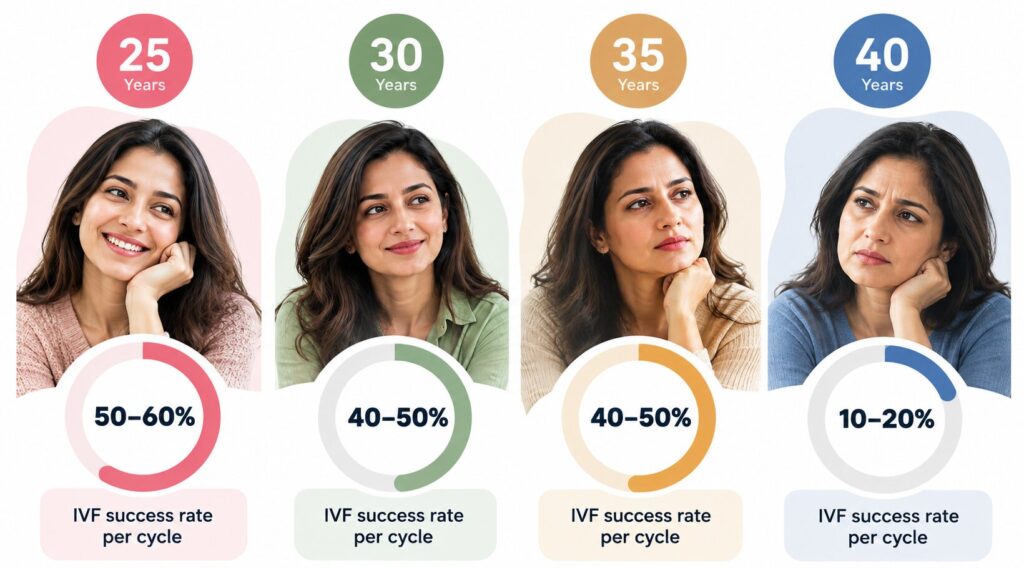
The table below shows the IVF success rate per cycle according to age:
| Age group | Approximate IVF success rate per cycle |
| IVF success rates under 30 | 50–60% |
| IVF success rates under 35 | 40–50% |
| IVF success rates above 40 | 10–20% |
Now, let’s look at IVF success at 25, 30, 35 and 40 and understand what each age can tell us about egg quality and overall fertility.
For women considering fertility preservation before age-related changes become more pronounced, egg freezing is one option that may be discussed with a fertility specialist.
IVF Success Rate at 25
As a 25-year-old, you are expected to have better-quality eggs. This can help create a healthy embryo without problems related to chromosomes as a result of ageing.
But being young does not guarantee that you are fertile. There are other factors that we can consider during IVF treatment.
If pregnancy has not occurred despite trying, the appropriate time to seek evaluation depends on age, medical history and other fertility factors; when to see a fertility specialist can help explain these considerations.
| Takeaways: Younger age gives you an advantage, but overall reproductive health matters too. |
For women considering fertility preservation before age-related changes become more pronounced, egg freezing is one option that may be discussed with a fertility specialist.
IVF Success Rate at 30
By around 30, many women still have good egg quality and ovarian function. If you are considering IVF at this age, we look at your AMH level, antral follicle count, sperm quality and how your embryos develop.
| What should you keep in mind? A good ovarian reserve and high-quality eggs may provide you with an advantage, but every individual case of fertility treatment is different. |
IVF Success Rate at 35
At about age 35, we focus on egg quality, as with increasing age, there is an increased likelihood of genetic abnormalities in the eggs or embryos that can impact implantation and chances of miscarriage.
| Does this mean IVF cannot work after 35? Not at all. Many women have successful IVF around 35 years. Your individual egg and embryo quality still matter. |
IVF Success Rate at 40
Around 40, fewer eggs may be collected during IVF, so fewer embryos may be available for transfer. We may discuss options such as embryo genetic testing or donor eggs based on your individual situation.
| What matters most? Your ovarian reserve, embryo development and previous IVF response help guide treatment decisions. |
How Age Affects IVF Success
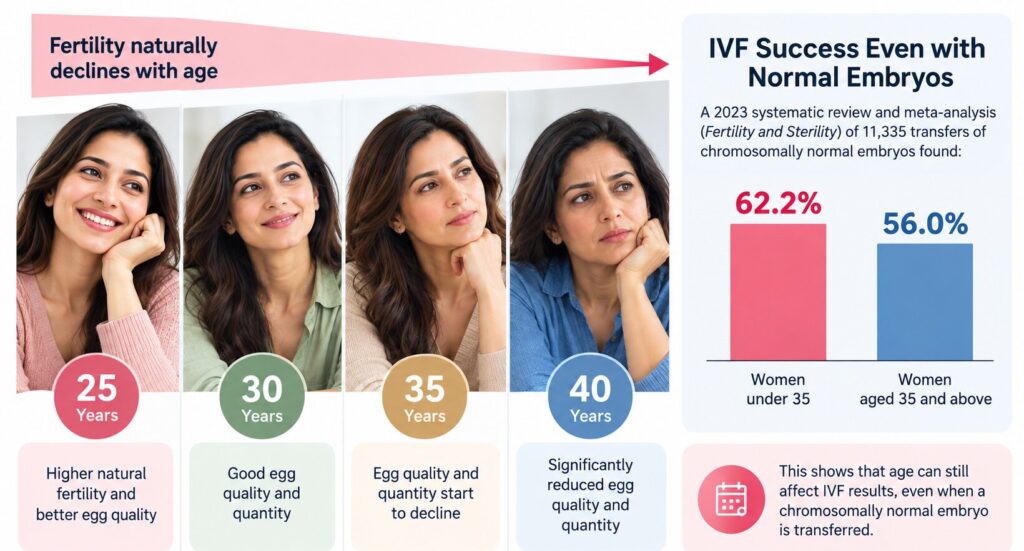
As we know, fertility decreases with age. The quality and quantity of your eggs decline with increasing age. Therefore, it is more likely that some of these eggs may develop into embryos that have an abnormal number of chromosomes.
A 2023 systematic review and meta-analysis, published in Fertility and Sterility, looked at 11,335 transfers of chromosomally normal embryos. The ongoing pregnancy or live birth rate was about 62.2% in women under 35, compared with 56.0% in women aged 35 and above.
This tells us that age can still affect IVF results, even when a chromosomally normal embryo is transferred.
Does AMH Affect IVF Success at Different Ages?
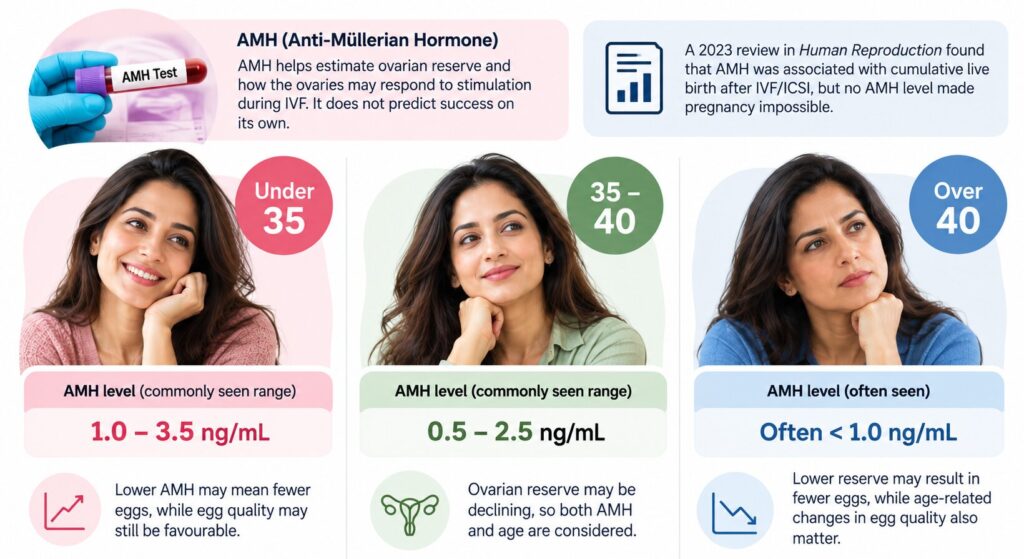
Yes, AMH can affect IVF treatment, but it does not predict success on its own. A low AMH level can indicate reduced ovarian reserve, but it does not by itself determine whether pregnancy is possible, as discussed in low AMH and pregnancy.
AMH gives doctors an idea about ovarian reserve and how the ovaries may respond to stimulation.
A level around 1.0–3.5 ng/mL is often considered a commonly seen range, although the interpretation depends on age, laboratory and individual fertility profile.
| Age | AMH level | What it may mean for IVF |
| Under 35 | 1.0–3.5 ng/mL | Lower AMH may mean fewer eggs, while egg quality may still be favourable |
| 35–40 | 0.5–2.5 ng/mL | Ovarian reserve may be declining, so both AMH and age are considered. |
| Over 40 | Often <1.0 ng/mL | Lower reserve may result in fewer eggs, while age-related changes in egg quality also matter. |
A 2023 review in Human Reproduction found that AMH was associated with cumulative live birth after IVF/ICSI, but no AMH level made pregnancy impossible.
Therefore, a low AMH does not automatically mean IVF will fail.
IVF Success Rates by Age and Number of Embryos
Age is essential; however, the quantity and quality of the embryos prepared for transfer also play an important role in determining an individual’s path towards a successful IVF procedure.
The stage at which an embryo is transferred can also be considered, including whether a 5-day blastocyst transfer is appropriate for the treatment plan.
Embryos may be transferred at different stages of development, including the blastocyst transfer stage when an embryo reaches day 5 or 6 of development.
- When embryo quality is high, single embryo transfer is usually recommended to reduce the likelihood of twins while maximising the chances of conception.
- Transferring multiple embryos could lead to a higher success rate of pregnancy; however, this option also increases the risks of multiple pregnancies and other complications.
The embryo transfer procedure is the stage in which the selected embryo is placed into the uterus.
Other Factors That Influence IVF Success
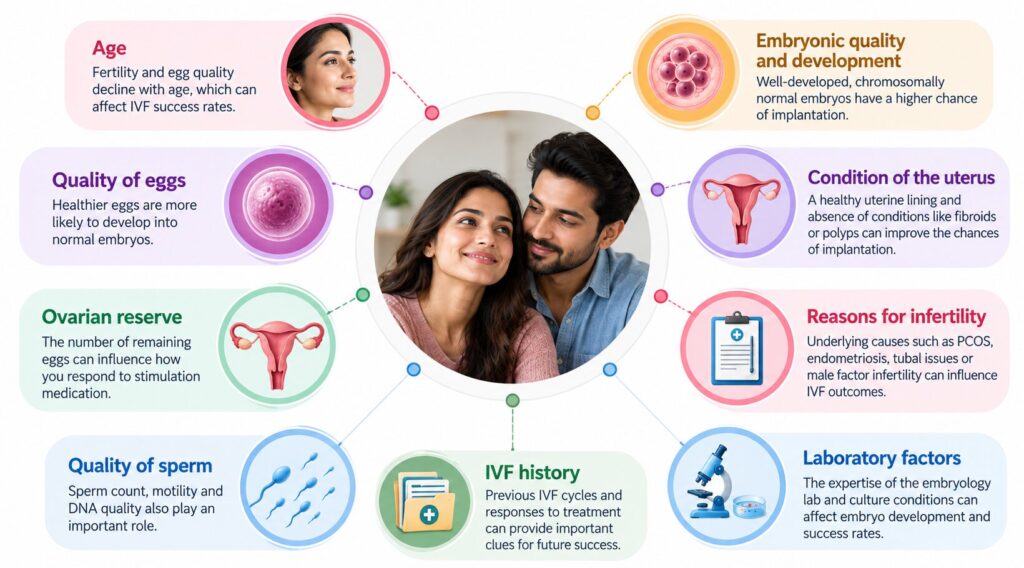
Age plays a crucial role, but there are other factors that affect the outcome of IVF:
- Quality of eggs
- Embryonic quality and development
- Ovarian reserve
- Quality of sperm
- Condition of the uterus
- Reasons for infertility
- IVF history
- Laboratory factors
Can IVF Be Successful on the First Attempt?
Yes, pregnancy is possible during the first IVF cycle. However, the IVF success rate in first attempt varies for every couple, and achieving a pregnancy does not always lead to a live birth. The failure of the first IVF cycle does not mean that there won’t be success in future cycles.
“An IVF is a process, not a single event. The first cycle tells us how your body responds and how we can plan the next step.” – Dr Puja Kumari
How to Make IVF Successful the First Time
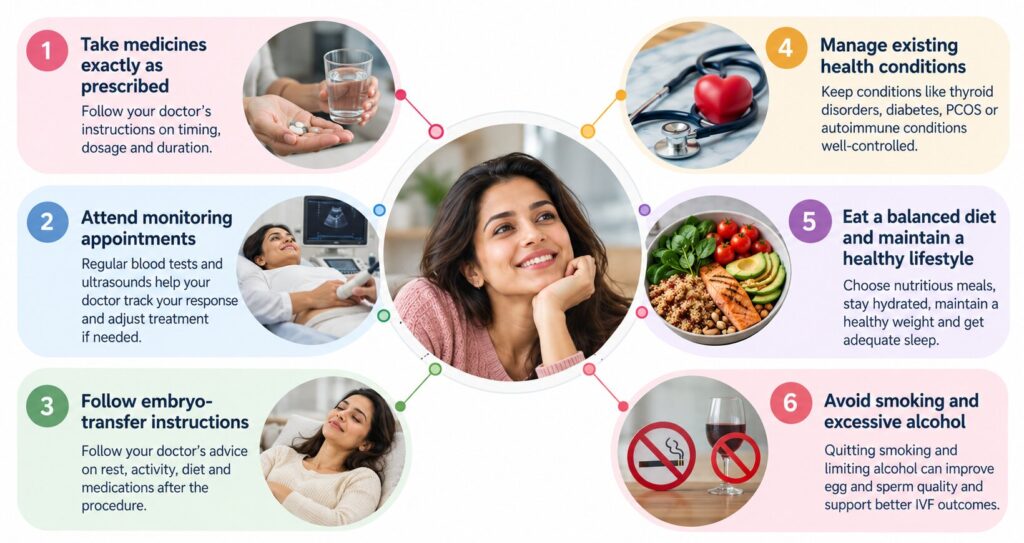
There is no guaranteed way to make IVF successful the first time, but you can support your treatment by:
- Taking medicines exactly as prescribed
- Attending monitoring appointments
- Following embryo-transfer instructions
- Managing existing health conditions
- Eating a balanced diet and maintaining a healthy lifestyle
- Avoiding smoking and excessive alcohol
After the procedure, following the recommended dos and don’ts after IVF embryo transfer can help patients understand which activities and precautions may be relevant during recovery.
Final Words: Taking the Next Step in Your IVF Journey

Every IVF journey carries hope, questions and sometimes fear. Age can influence your chances, but it does not define your story. At Puja IVF center in Patna, each step is planned around your individual needs, from evaluation to embryo transfer and follow-up.
Dr Puja Kumari looks at your age, ovarian reserve and fertility profile to understand what may influence your IVF success rate.
FAQs
1. At what age is IVF most successful?
IVF success rates are generally higher at younger ages, particularly when using a woman’s own eggs. Women under 35 often have better IVF outcomes because egg quality and ovarian reserve tend to be more favourable. However, age is only one factor, and individual IVF success can vary based on embryo quality, sperm quality, ovarian reserve and other fertility factors.
2. How many attempts does IVF usually take?
There is no fixed number of IVF attempts that applies to everyone. Some patients become pregnant during their first cycle, while others require additional cycles or frozen embryo transfers. Age, ovarian reserve, embryo quality, sperm quality and the response to previous treatment can all influence the number of attempts needed.
3. At what stage do most IVF failures occur?
IVF can fail at different stages, including fertilisation, embryo development, implantation or early pregnancy. Implantation is an important stage because the embryo must successfully attach to the uterine lining for pregnancy to continue. Egg and embryo quality, uterine factors and age can all influence this process.
4. What to eat before embryo transfer?
Before embryo transfer, focus on a balanced diet with adequate protein, vegetables, fruits, whole grains and healthy fats. Staying hydrated and continuing prescribed prenatal vitamins or supplements can also be appropriate when recommended by your doctor.
5. Do IVF babies look different?
No. IVF does not change the basic way a child’s inherited physical characteristics are determined. When an embryo is created using the intended parents’ own egg and sperm, the child inherits genetic material from both parents just as in natural conception.