
The two-week wait after embryo transfer brings up dozens of small questions you probably never thought you'd need to ask. Can I climb stairs? Is it okay to eat this? Should I test today or wait a few more days? We hear these questions from our patients almost every day at Puja IVF. So we …

The two-week wait after embryo transfer brings up dozens of small questions you probably never thought you’d need to ask. Can I climb stairs? Is it okay to eat this? Should I test today or wait a few more days?
We hear these questions from our patients almost every day at Puja IVF. So we put together the ones that come up most, along with what to expect from testing and when a symptom is worth a call to your fertility team.
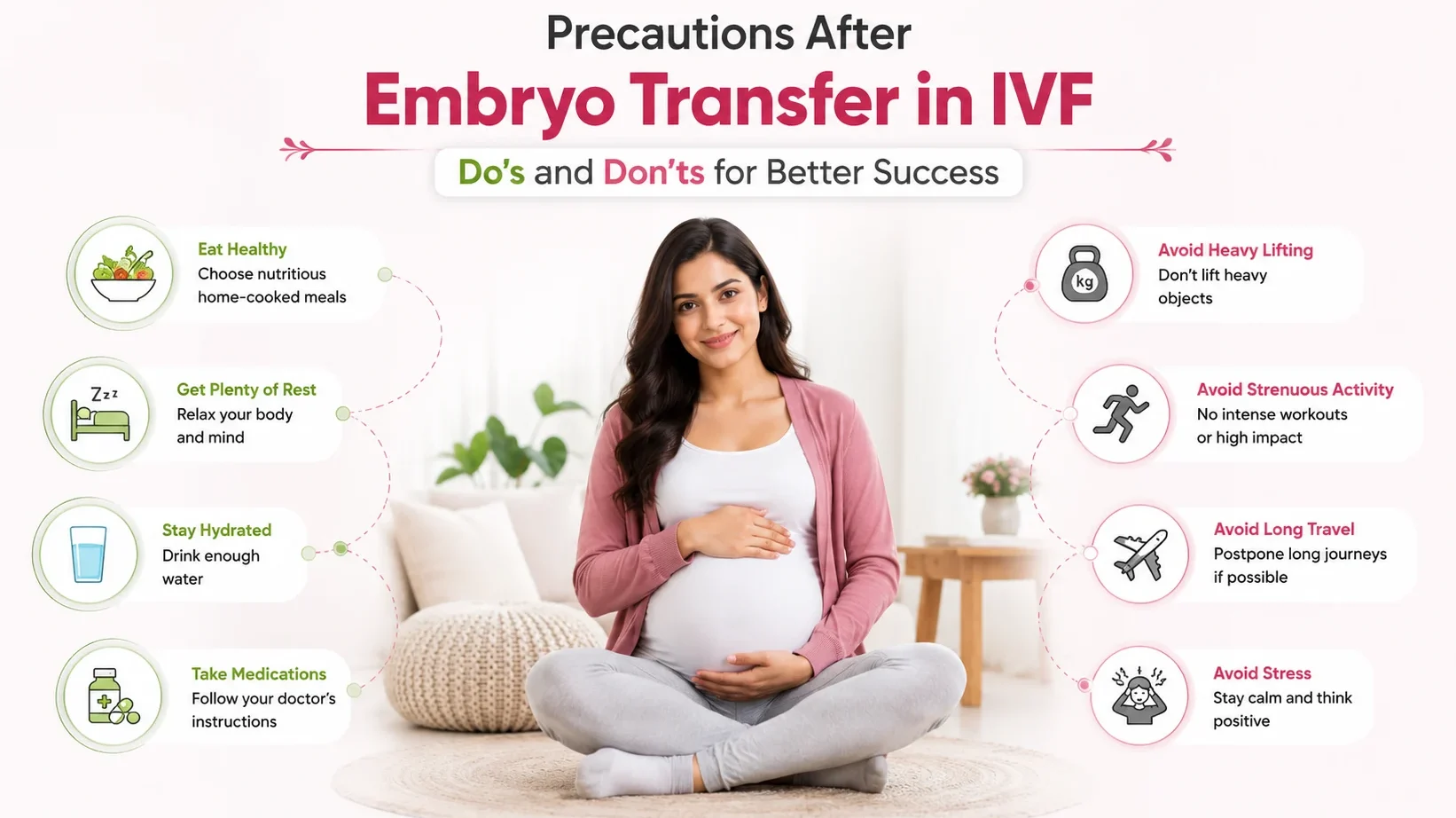
You do not need complete bed rest after embryo transfer. Light walking and your normal daily routine are fine unless your doctor tells you otherwise.
Eat a balanced, home-cooked diet with plenty of fruits, vegetables, and protein, and keep taking your medications exactly as prescribed, especially progesterone. Skip heavy lifting, strenuous exercise, alcohol, and unwashed or raw food.
If you’d like the full breakdown of precautions and how they connect to miscarriage risk, that’s covered in detail in our guide on precautions after embryo transfer to reduce miscarriage risk during IVF.
Implantation also depends on several factors affecting IVF success rate, many of which are set before the transfer even happens.
Managing Anxiety During the Two-Week Wait
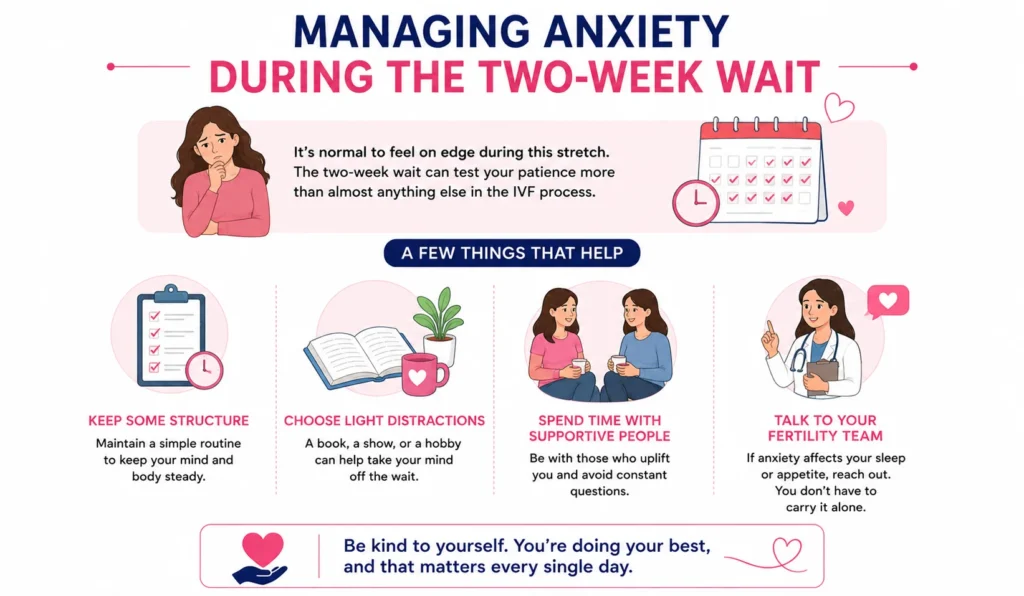
It’s normal to feel on edge during this stretch. Many patients tell us they replay every twinge, every missed symptom, wondering what it means. That kind of watching and waiting is exhausting, and there’s no way around the fact that the two-week wait tests your patience more than almost anything else in the IVF process.
A few things help. Keep some structure in your day rather than sitting and waiting for symptoms to appear. Light distractions — a book, a show, time with people who don’t ask “any news yet?” every hour — can make the days feel less heavy. If anxiety is affecting your sleep or appetite, it’s worth mentioning to your fertility team as well; you don’t have to carry it alone.
“Patients often ask me if stress will ruin their chances. I tell them stress is uncomfortable, but it’s not something you need to add guilt to. Focus on getting through each day, not controlling every outcome.”
— Dr Puja Kumari
If you’d like to understand the research behind this, our piece on stress and IVF success goes into more depth on what the evidence actually shows.
Common Questions Patients Ask
Diet & Digestion
Can I eat sattu after embryo transfer?
Yes. Sattu is a good source of protein and fibre and does not harm the implantation process.
Can I eat banana after embryo transfer?
Yes, bananas are safe and can help with the constipation many patients notice during this stage.
If you’d like more meal ideas for this stage, our guide on the best foods to eat during IVF treatment covers it in more detail. For food-safety guidance, you can also refer to the CDC’s recommendations for safer food choices during pregnancy, which advises avoiding undercooked meat, eggs and seafood, unpasteurized milk and dairy products, and unwashed fruits and vegetables.
Why does constipation happen after embryo transfer?
It’s usually the effect of progesterone slowing down your intestinal movement, not a sign of anything wrong.
Is gas or bloating after embryo transfer normal?
Yes, mild bloating or gas is common. Progesterone slows your bowel movements, and ovarian stimulation can add to the bloating too.
Hygiene & Daily Routine
Can I take a shower after embryo transfer?
Yes. Use warm, not hot, water and avoid long exposure to extreme temperatures.
Can I wash my hair after embryo transfer?
Yes, washing your hair has no impact on implantation.
Can I use an Indian toilet after embryo transfer?
Yes. The squatting position will not cause the embryo to dislodge.
Can I climb stairs after embryo transfer?
Yes, normal stair climbing is fine. It’s the same kind of everyday movement as walking, and your body is built to handle it.
Rest & Recovery
How many days of rest are needed after embryo transfer?
You usually don’t need bed rest for several days. Rest on the day of transfer itself, then continue normal light activity afterward if your doctor agrees.
Is a headache after embryo transfer normal?
Yes, a mild headache can happen and is often linked to hormonal medication, stress, or dehydration.
Myths vs. Facts About Embryo Transfer Aftercare
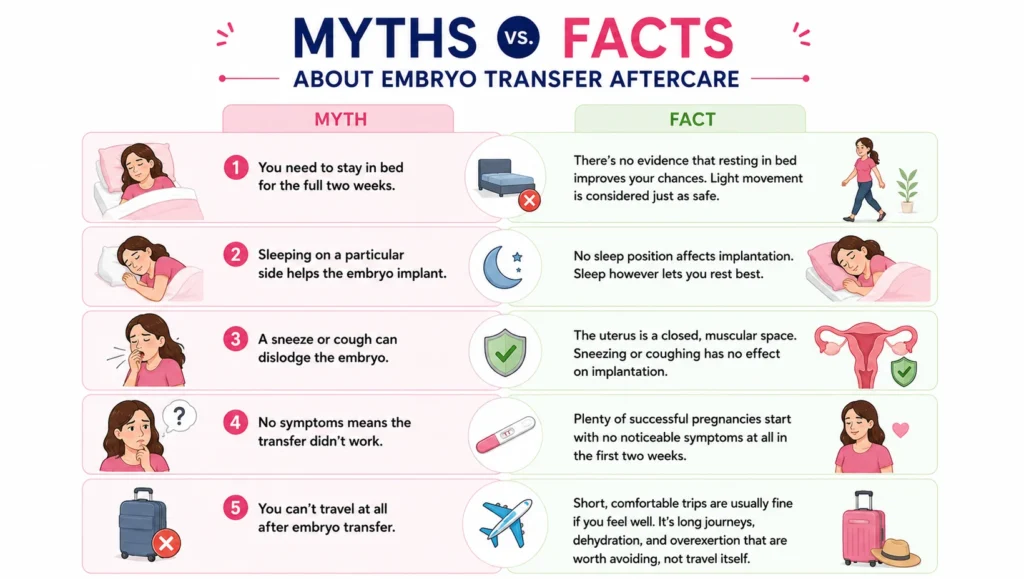
There’s no shortage of advice floating around after embryo transfer, and not all of it holds up. Here are a few things we hear often, and what’s actually true.
Myth: You need to stay in bed for the full two weeks.
Fact: There’s no evidence that resting in bed improves your chances. Light movement is considered just as safe. The American Society for Reproductive Medicine (ASRM) guideline found good evidence not to recommend bed rest after embryo transfer
Myth: Sleeping on a particular side helps the embryo implant.
Fact: No sleep position affects implantation. Sleep however lets you rest best.
Myth: A sneeze or cough can dislodge the embryo.
Fact: The uterus is a closed, muscular space. Sneezing or coughing has no effect on implantation.
Myth: No symptoms means the transfer didn’t work.
Fact: Plenty of successful pregnancies start with no noticeable symptoms at all in the first two weeks.
Myth: You can’t travel at all after embryo transfer.
Fact: Short, comfortable trips are usually fine if you feel well. It’s long journeys, dehydration, and overexertion that are worth avoiding, not travel itself.
When Should You Take a Pregnancy Test?
After a day-5 blastocyst transfer, most IVF clinics schedule a β-hCG blood test around 9 to 11 days later. After a day-3 embryo transfer, testing usually happens around 11 to 14 days later.
Testing too early can be misleading. A low hCG level at that point might still rise into a positive result later, so an early negative isn’t always final. On the other hand, a positive result soon after transfer can sometimes reflect the hCG trigger shot still in your system rather than a new pregnancy.
This kind of early positive that doesn’t hold is sometimes a biochemical pregnancy, which is worth understanding beforehand so it doesn’t catch you off guard.
Signs to Watch For
After embryo transfer, it’s common to notice:
- Mild cramping
- Breast tenderness
- Bloating
- Tiredness
Some women also notice light pink or brown spotting, which can be implantation bleeding. According to ASRM, implantation generally happens between days 5 to 7 after fertilization, and this kind of spotting is usually light, without clots, and gone within a day or two.
When to Contact Your Doctor
Reach out to your fertility specialist if you notice:
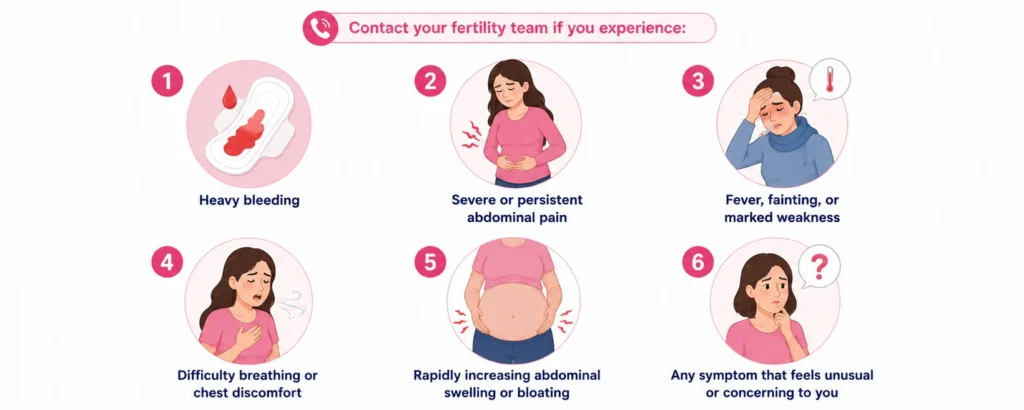
- Heavy bleeding
- Severe or persistent abdominal pain
- Fever, fainting, or marked weakness
- Any symptom that feels unusual or concerning to you
You don’t have to wait for your scheduled appointment to ask. If you’re unsure whether an activity, food, or symptom is normal, it’s always fine to check in early.
Final Thoughts

The two-week wait is full of small questions, and there’s no such thing as a silly one. Take your medicines, eat well, stay gently active, and reach out whenever something feels off. If you’re just getting started with treatment, our complete guide to IVF treatment at Puja IVF Fertility Centre walks through what to expect from your first consultation onward.
FAQs
1. What are the two types of embryo transfer?
Embryo transfer is either fresh, done a few days after egg retrieval in the same cycle, or frozen, where an embryo from an earlier cycle is thawed and transferred later. Our guide on fresh vs. frozen embryo transfer breaks down how the two compare.
2. Can I eat curd after embryo transfer?
Yes, curd is fine and can actually help settle digestion, which is useful given how often progesterone causes bloating.
3. Can I eat paneer after embryo transfer?
Yes, paneer is a good source of protein. Just make sure it’s fresh and properly cooked or pasteurized.
4. Which fruits should I avoid after embryo transfer?
Most fruits are fine. We usually suggest going easy on unripe papaya and large amounts of pineapple, and washing all fruit well before eating.
5. Which vegetables should I avoid after embryo transfer?
Nothing needs to be cut out entirely. Wash vegetables thoroughly, cook them well, and go easy on raw sprouts or salads to lower the risk of foodborne illness.
6. How long can I walk after embryo transfer?
Short, comfortable walks of 15 to 20 minutes are fine and even encouraged. It’s long or fast-paced walks we’d ask you to hold off on for the first few days.
7. Is bending okay after embryo transfer?
Gentle bending, like picking something up off a low shelf, is fine. What we ask patients to avoid is repeated heavy bending or straining, not everyday movement.