
“You can go home now. Take care of yourself. We will see you in two weeks.” These are the final words when you leave home after embryo transfer. At this time, you have excitement, hope and many doubts. Can I climb stairs? Should I stay in bed? Is it okay to sleep on my side? …


“You can go home now. Take care of yourself. We will see you in two weeks.”
These are the final words when you leave home after embryo transfer. At this time, you have excitement, hope and many doubts.
Can I climb stairs?
Should I stay in bed?
Is it okay to sleep on my side?
What if I cough or sneeze?
Even daily activities, when you do, just feel like a risk. And you have a question: “What precaution should I take after embryo transfer?”
As a fertility specialist, I reassure my patients that you cannot control every part of the pregnancy process. Let’s look at practical, evidence-based precautions after embryo transfer to support your IVF journey.
Why the First Two Weeks After Embryo Transfer Matter

The first two weeks after embryo transfer are called the “two-week wait (TWW)”. It is a long and emotional journey for many couples. This is a very significant time period when the embryo and your body achieve cooperation to maintain pregnancy.
The following table shows what takes place during the first 14 days after embryo transfer.
| Time Period | What You Can Expect |
| Days 1-3 | Embryo is getting attached to the uterine lining; the implantation process has begun |
| Day 4-8 | Implantation process continues. If it is successful, the embryo produces pregnancy hormone hCG |
| Day 9-14 | The level of hCG keeps increasing. The beta-hCG takes place to confirm pregnancy |
In some cases, rising hCG levels may still require careful interpretation because of the possibility of a biochemical pregnancy.
Essential Precautions After Embryo Transfer
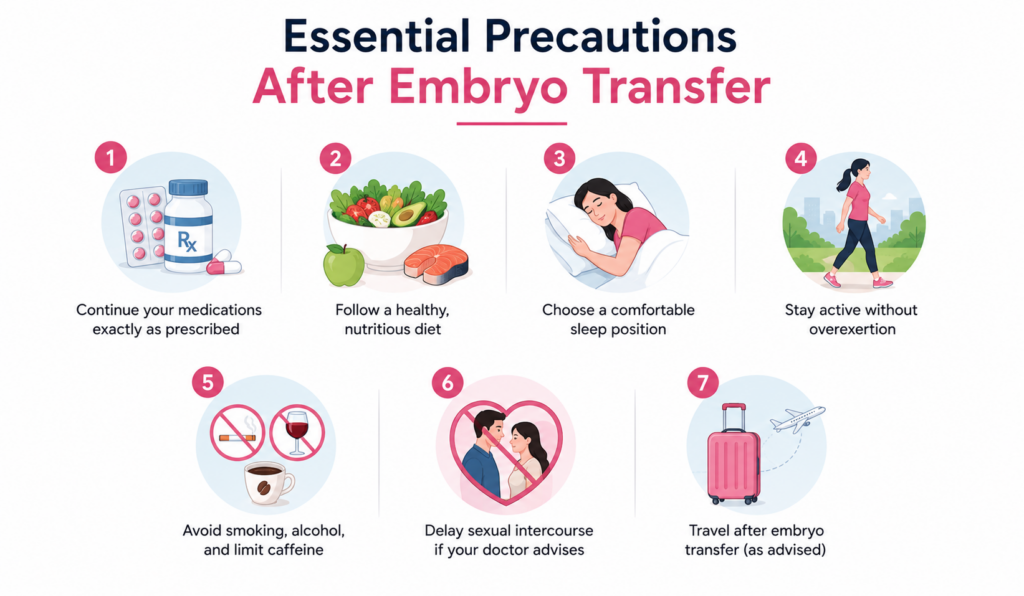
Here are the precautions you should follow after an embryo transfer.
1. Continue Your Medications Exactly as Prescribed
The use of medication after embryo transfer is important for the hormonal support needed for implantation as well as for successful IVF. Take progesterone or other medicines as per your IVF schedule. Don’t stop your medication even if you test positive on the home pregnancy test.
2. Follow a Healthy Diet After Embryo Transfer
We advise our patients to take a fresh, homemade diet after embryo transfer that is nutritious and easy to digest. Make sure you are eating a lot of fresh fruits, vegetables, protein, whole grains and also healthy fats. You can also explore foods commonly recommended in our guide to the best foods to eat during IVF treatment. Avoid eating raw or uncooked food, unprocessed dairy products, junk food and sugar-laden drinks.
3. Choose a Comfortable Sleep Position After Embryo Transfer
Many patients worry that sleeping position affects the embryo, but this is a common myth. Important is sleep timing; take 7 to 9 hrs of sleep for better hormonal balance. Sleeping on your left or right side, or on your back, is generally considered safe. Consult your healthcare provider about whether you have any sleep-related issues.
4. Stay Active Without Overexertion
Maintaining physical activity after the embryo transfer process is an essential step. If you feel good, you can go for short walks. You can carry on with activities such as cooking, working on a computer, or doing housework. You should avoid running, jumping, and lifting heavy weights.
5. Avoid Smoking, Alcohol, and Limit Caffeine
According to ASRM (American Society for Reproductive Medicine), patients on fertility treatment should avoid smoking since it decreases the amount of blood circulation and also affects the implantation process. In addition, patients should totally avoid drinking alcohol and restrict their caffeine intake to about 200 mg per day (1-2 cups).
6. Delay Sexual Intercourse if Your Doctor Advises
It is advisable to avoid sexual intercourse for a short period after an embryo transfer until the pregnancy test is carried out. This allows the embryo time to implant itself, and may also help in avoiding any possible uterine contractions or irritations.
7. Travel After Embryo Transfer
Most women can travel safely after an embryo transfer if they feel well, but it is better to avoid long trips in the first few days whenever possible. In case of travel, remember to stay hydrated, continue your medication on time, and get some rest if possible.
Can These Precautions Prevent IVF Miscarriage?
No. None of the above precautions can prevent IVF miscarriage. Also, some women thought that if they bed rest after embryo transfer, this could give good outcomes. This is not true.
A 2022 study published in the journal JBRA Assisted Reproduction found that routine bed rest after embryo transfer did not improve live birth rates compared with gentle movement.
Following your treatment plan and maintaining healthy habits gives your pregnancy the best possible start. Other medical and biological factors can also influence outcomes, including several factors affecting IVF success rate. So what can cause IVF miscarriage? Let’s look at some factors that affect it.
Common Reasons for Miscarriage After IVF
Here are some common reasons for miscarriage after IVF:
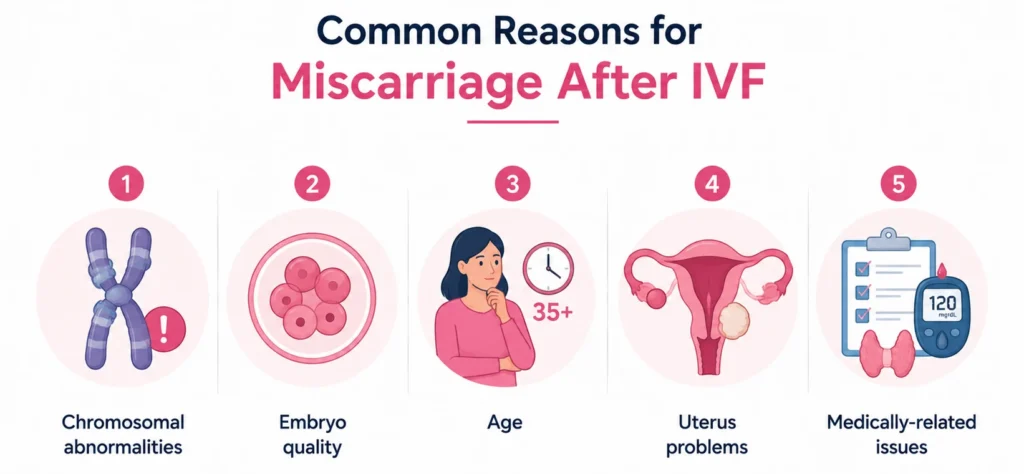
| Chromosomal abnormalities | This is the most common cause of first-trimester miscarriage, accounting for approximately 50–60% of cases |
| Embryo quality | Some embryos do not develop normally, even if they are successfully implanted, due to poor egg quality |
| Age | Women above 35 years old are more likely to have chromosomal abnormalities that result in miscarriages |
| Uterus problems | Abnormalities within the uterus such as fibroids, polyps, or thin endometrium can affect the process of implantation |
| Medically-related issues | Some medical issues, such as thyroid or diabetes and others may raise the chance of miscarriage if they remain uncontrolled |
Embryo development and quality are also influenced by the stage at which embryos are transferred, such as during a 5-day blastocyst transfer.
Signs of Miscarriage After IVF: When Should You Worry?
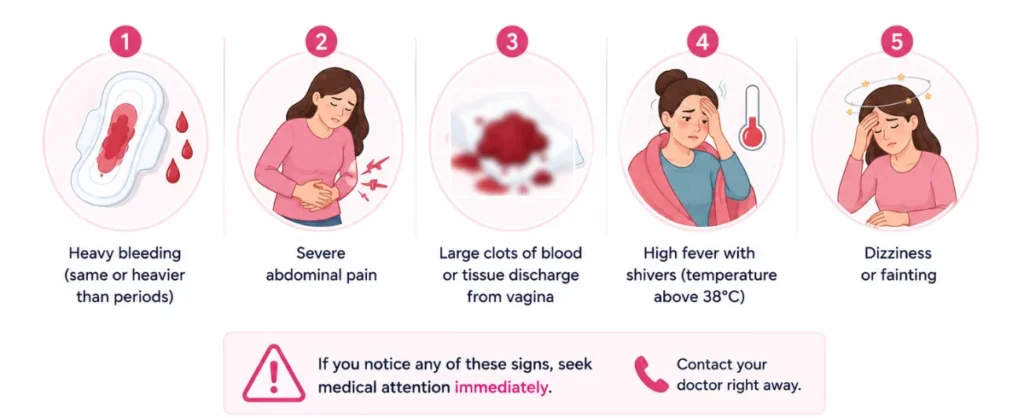
It is natural for you to notice every small change after an embryo transfer. Mild cramps, light spotting, or even having no symptoms at all can be normal in early pregnancy.
However, some symptoms require urgent medical intervention and are as follows:
- Heavy bleeding that is the same or heavier than your periods
- Severe abdominal pain
- Large clots of blood or tissue discharges from your vagina
- High fever accompanied by shivers with a temperature above 38ºC
- Dizziness or fainting
When Should You Contact Your Fertility Specialist?
You don’t have to wait for your scheduled appointment if you have questions after your embryo transfer. Contact your fertility specialist if you accidentally miss a medication dose, are unsure whether an activity, food, or medicine is safe, or need guidance about your recovery.
If your pregnancy test is negative or you are feeling anxious about your symptoms, your fertility team can explain the next steps and answer your concerns.
If you’re planning to start IVF treatment or would like to discuss your fertility concerns before beginning your journey, you can also check our upcoming free IVF camps in Bihar, where our fertility specialists provide consultations and guidance.
Final Thoughts: Supporting You Beyond Embryo Transfer

Your IVF process is not completed after the embryo has been placed in your womb. The way you care after this is also important. At Puja IVF Center in Patna, our experienced fertility specialist, Dr Puja Kumari, provides personalised IVF treatment plans, advanced embryo transfer techniques, a modern embryology laboratory, transparent communication, and compassionate pregnancy support.
If you’re planning treatment, you may also find our complete guide to IVF treatment at Puja IVF Fertility Centre helpful. We are committed to guiding you with expert, patient-focused care from your first consultation through early pregnancy monitoring.
FAQs
1. Is bed rest necessary after embryo transfer?
No. Current evidence suggests that routine bed rest after embryo transfer does not improve pregnancy or live birth rates. Most fertility specialists recommend gentle movement and returning to normal daily activities while avoiding strenuous exercise and heavy lifting.
2. Is miscarriage more common after IVF?
No. IVF itself does not significantly increase the risk of miscarriage. The risk mainly depends on factors such as maternal age, embryo quality, chromosomal abnormalities, and uterine health. Many women undergoing IVF have healthy pregnancies and deliveries.
3. Which weeks carry the highest risk of miscarriage?
The risk of miscarriage is highest during the first trimester, particularly in the early weeks of pregnancy. As the pregnancy progresses and a healthy heartbeat is confirmed on ultrasound, the likelihood of miscarriage generally decreases.
4. Can I become pregnant naturally after an IVF miscarriage?
Yes. Depending on the underlying cause of infertility, some women can conceive naturally after an IVF miscarriage. Your fertility specialist will recommend the most appropriate timing to try again after evaluating your recovery and overall reproductive health.
5. Can I travel after embryo transfer?
Most women can travel safely after embryo transfer if they feel well. If travel is necessary, stay hydrated, continue your medications on schedule, avoid strenuous activity, and take breaks during long journeys. If you have a high-risk pregnancy or specific medical concerns, discuss your travel plans with your fertility specialist first.
6. What are the most important days after embryo transfer?
The first 10 to 14 days, known as the two-week wait, are considered the most important. During this time, the embryo implants into the uterine lining and begins producing the pregnancy hormone hCG if implantation is successful.