In India, 27.5 million means approximately 15-20 % of couples face infertility. For those couple IVF is the last option that fulfils their dream with combine biology with technology. But why do success rates vary person by person? Understanding the factors affecting IVF success rate can help answer this question. In the past year, the …

In India, 27.5 million means approximately 15-20 % of couples face infertility. For those couple IVF is the last option that fulfils their dream with combine biology with technology. But why do success rates vary person by person? Understanding the factors affecting IVF success rate can help answer this question.
In the past year, the IVF success rate has been determined by age. Nowadays, factors affecting the IVF success rate do not depend only on age. Lifestyle, health issues, and mental health also change the outcome.
Each couple has a unique journey. Some are facing medical conditions, for others, making some minor changes in lifestyle making big difference. If you are new to this journey, you need guidance on IVF treatment that helps you know what to expect at every stage.
At Puja IVF, we believe success is not just numbers. For us, success means helping families to begin their journey with confidence and hope. IVF is more than science; it’s a journey of strength, kindness, and hope.
What is the IVF Success Rate and Why It Varies
IVF success rate is defined as the chances of a treatment per cycle that converts into postive preganncy or a healthy live birth.
In India, around 2 to 2.5 lakh IVF cycles are carried out every year. With a success rate of approximately 30-55 % per cycle. More than 8 million baby born through IVF worldwide since 1978.
Is this rate the same for every couple? The answer is no, because your biology decides your chances of success. Such as female egg quality, male sperm health, hormonal imbalance, embryo quality and other lifestyle factors. Also, advanced clinical and lab technology enhances the IVF treatment.
Since treatment planning often depends on multiple factors, such as how IVF costs and treatment choices are connected before beginning. We design a personalized treatment plan for each patient to improve the chances of success.
IVF Success Rate by Age
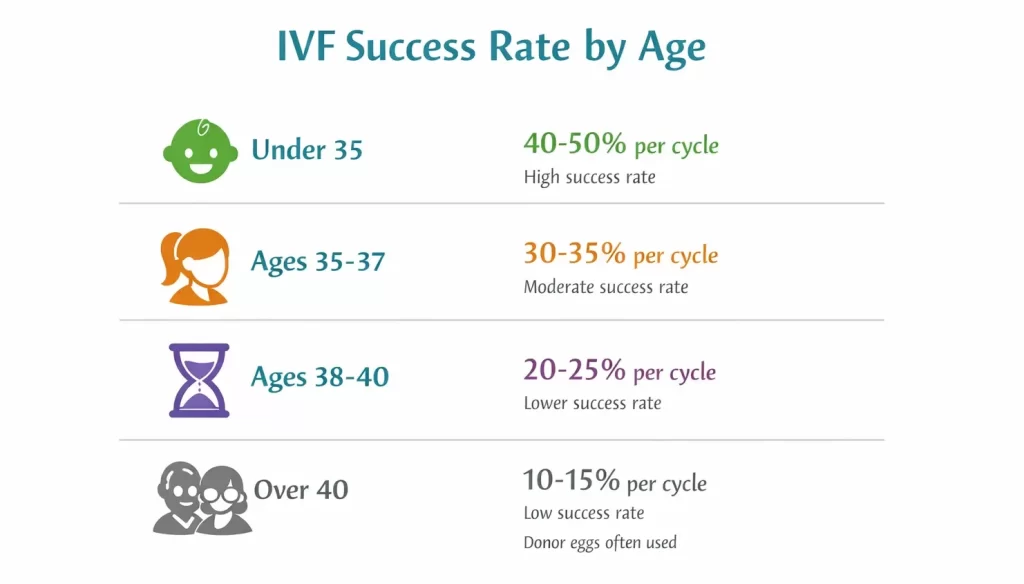
Age is one of the most common factors that affects fertility outcome. As women get older, egg quality and ovarian reserve decline over time.
IVF success rate by female age
As women get older, egg quality and ovarian reserve decline over time.
Here, egg quality means that for proper fertization there are 23 chromosomes required. If it is abnormal, egg quality may be compromised.
Ovarian reserve mean total number of eggs that contain healthy and unmmature egg, it reduce with age.
Research shows that IVF outcomes are better in younger women and decrease as age increases.
By understanding IVF success rate by age is essential to set realistic expectations and take the right decision on time.
- Under 35 years: This age group has a high chance of success. Success rates are around 40–50% per cycle. High egg quality and full egg supply boost embryo implanatation and pregnancies happen more often.
- 35-37 years: Rates fall around 30-35% due to the egg quality starts to be low.
- 38-40 years: Success becomes 20-25% as lower ovarian reserve can make implantation harder. And chromosome abnormalities increase in this age group.
- Over 40 years: Achieving a healthy pregnancy is more difficult as sucess rate drops around 10-15%. Many couples at this stage find success by using donor eggs.
IVF Success Rate by Male Age
Male age can affect IVF results, but not as strongly as female age. As men get older, sperm quality may slowly change.
- Under 35 years: Highest success, often above 40–50%, with healthy sperm quality.
- 35–40 years: Success rate around 40–42%. Female age plays a bigger role here.
- Over 40years: Pregnancy rates drop to about 26%, with a higher chance of miscarriage due to sperm DNA changes.
Since your biological clock is a major factor affecting IVF success rate, early consultation is the best way to plan a path that works for you. If you are considering treatment, prepare well for your first IVF consultation, to ask the right questions and know all the factors that you should consider.
Health Factors Affecting IVF Success
Why does a fertility specialist advised full health check-up before starting IVF or IUI treatment? When you know your health factors, you can take the right steps before starting treatment.
- PCOS is a condition that can make your periods irregular and affect your hormones. This sometimes makes IVF less effective. Many women prefer to first understand common female fertility problems and the available medical and lifestyle approaches before starting IVF.
- Women with endometriosis have a reduced uterus capaicty to carry embryos.
- Your thyroid helps regulate the hormones that support pregnancy. When it’s not balanced, fertility can be affected.
- For IVF to work well, the uterus needs a healthy lining for embryos to attach and grow.
- Healthy embryos come from both sides. That’s why Male infertility, sperm count, shape, and movement are so important.
- A regular hormone supports good egg development, fertilization i and implantation. That all are key steps in IVF.
Do you have any condition among these? Fertility can feel confusing, but speaking with a specialist makes the path clearer and easier.
Lifestyle Impact on IVF Success
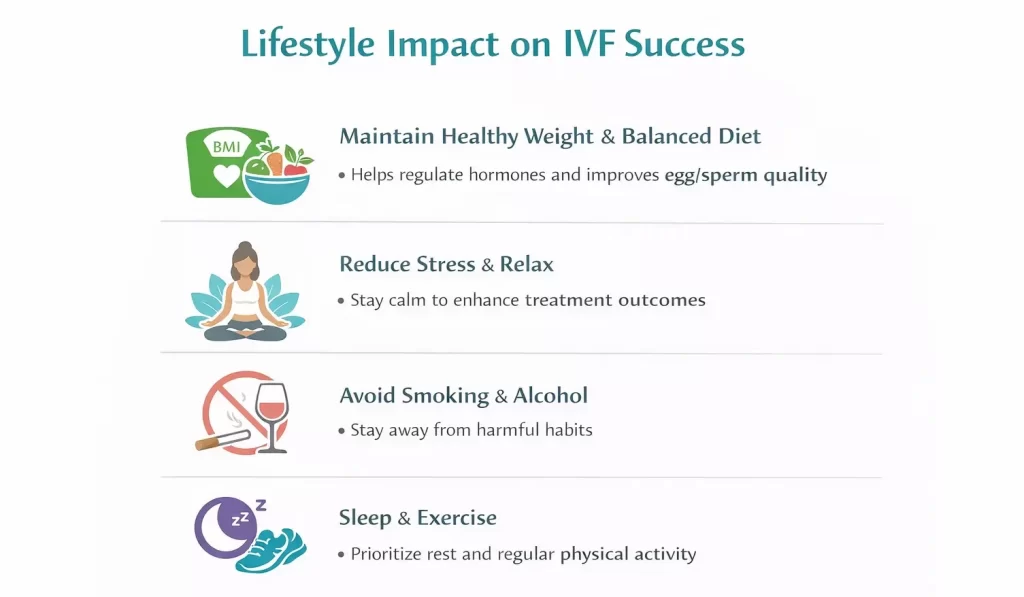
Along with medical care, your lifestyle changes boost your fertility and IVF treatment. It is a reversible factor means you can control and reverse it.
- A healthy weight and BMI help your hormones to stay normal and increase medicine response in body.
- Taking a balanced IVF diet is important for a successful treatment outcome. Fruits, green vegetables, vitamins and proteins affect egg and sperm function.
- Stress can make it harder for your body to respond to IVF, and that why you need to manage stress. Simple relaxation exercises bring calm and improve your chances.
- Keep away from smoking and alcohol, it harm fertility in men.
- Taking care of yourself with enough sleep and regular exercise makes a big difference for your health.
Every healthy choice you make during IVF helps create the perfect home for your future child.
How to Make IVF Successful the First Time
To increase your chances, knowing how to make IVF successful is a start, with proper preparation for IVF treatment. This journey is a team effort between your healthcare professionals providing treatment, and your healthy choices support it.
Understanding key stages like the embryo transfer procedure also helps patients feel more prepared and confident about improving their chances of success.
IVF Success Tips to Improve Your Chances:
- Follow your doctor’s advice and take regular medicine.
- Taking good quality prenatal vitamins and keep healthy weight helps your body prepare for IVF.
- Be sure to follow up on visits to track your progress.
- Your mindset matters; positivity and relaxation help your body welcome the process.
Ready to Take the Next Step? Connect With Our Team

IVF success is based on advanced technology, skilled specialists, and supportive care. Clinics with strong laboratory standards, individualized treatment plans, and careful embryo culture techniques give patients the best chance of positive outcomes.
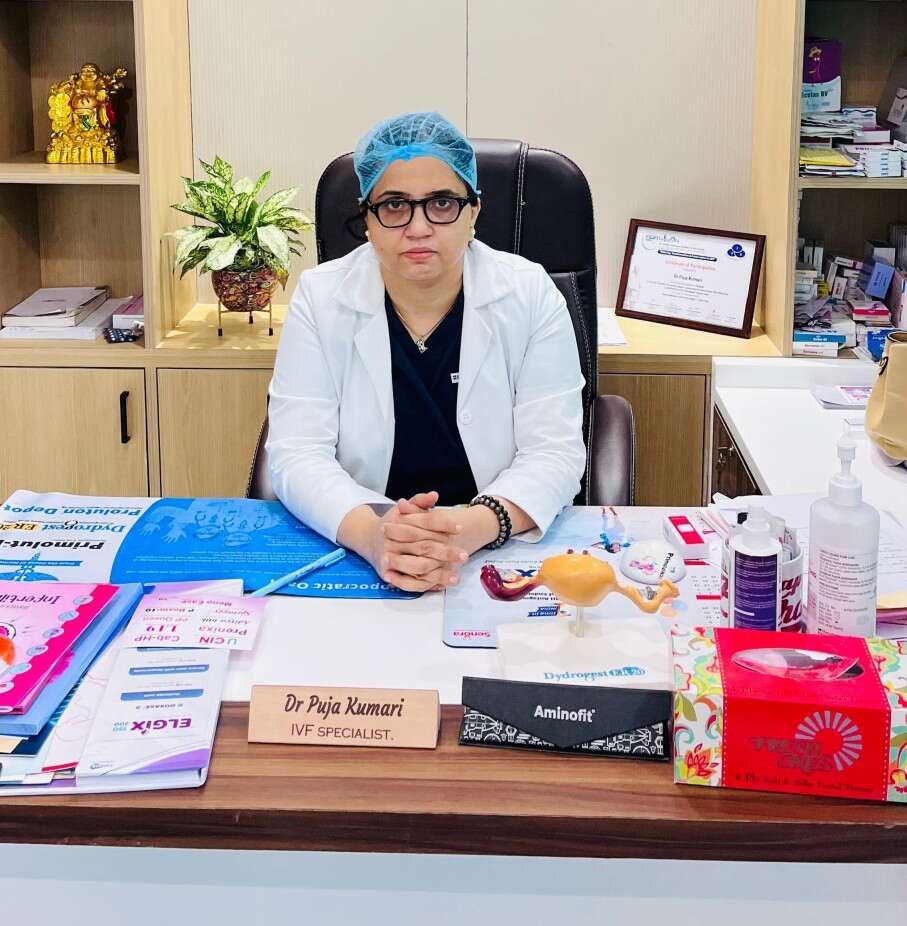
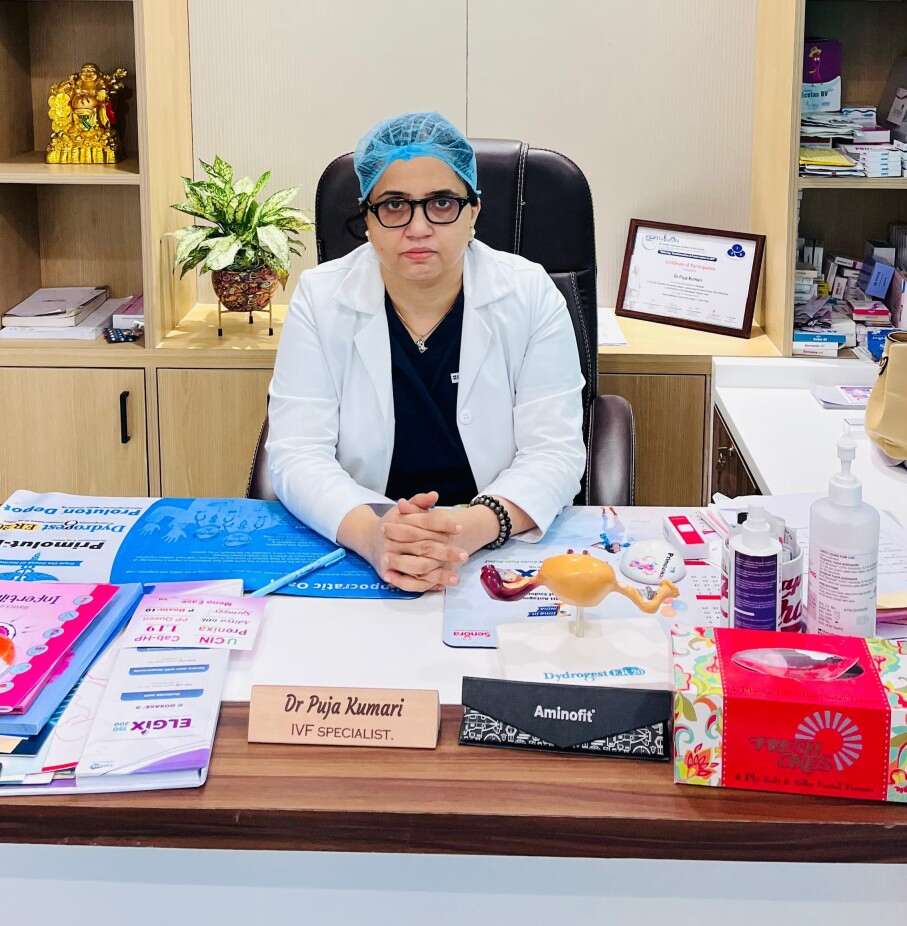
Factors like age, health, and lifestyle also play a role, making timely guidance essential. Facilities such as Puja IVF in Patna, led by Dr Puja Kumari, provide personalized care and supportive guidance. With expert support and realistic expectations, couples can move forward confidently on their fertility journey.
FAQs
1. What is the biggest reason IVF fails?
One of the most common reasons IVF fails is poor embryo quality, often caused by chromosomal abnormalities. As age increases, egg quality declines, which can reduce implantation chances. Other factors include uterine health, hormonal imbalance, and lifestyle habits.
2. Can stress cause IVF to fail?
Stress alone is not always the direct reason IVF fails, but high stress levels can affect hormone balance and overall well-being. Relaxation techniques, proper sleep, and emotional support may help the body respond better to treatment.
3. When do most IVF miscarriages happen?
Most miscarriages after IVF occur during the first trimester, especially within the first 6–8 weeks. The risk usually decreases significantly after completing 12 weeks of pregnancy.
4. How long should I rest after embryo transfer?
Complete bed rest is usually not required. Most specialists recommend light activity on the day of transfer and normal gentle routine afterward while avoiding heavy exercise or stress.
5. What are good signs after embryo transfer?
Some women may notice early signs such as mild cramping, light spotting, breast tenderness, fatigue, or increased tiredness. However, symptoms vary, and the pregnancy test remains the only reliable confirmation.