
A young couple sitting across my consultation table asks, “We have been trying for almost 2 years...why is pregnancy not happening? I explained to them calmly that infertility is a medical condition, it's not a failure. In India, infertility is not only related to women-centric issues, but it is now fairly balanced. Recent reports claimed …

A young couple sitting across my consultation table asks, “We have been trying for almost 2 years…why is pregnancy not happening? I explained to them calmly that infertility is a medical condition, it’s not a failure.
In India, infertility is not only related to women-centric issues, but it is now fairly balanced. Recent reports claimed that approximately 40-50% challenges are due to male-related issues.
Since male factors contribute to a large percentage of infertility cases, understanding common causes and available male infertility treatment options can help couples decide the right next step early in their journey.
In the last two decades, advanced fertility treatments have offered new hope to couples who are facing infertility. But the question is, which treatment is best for us? Can we start with IUI or IVF? What exactly is ICSI?
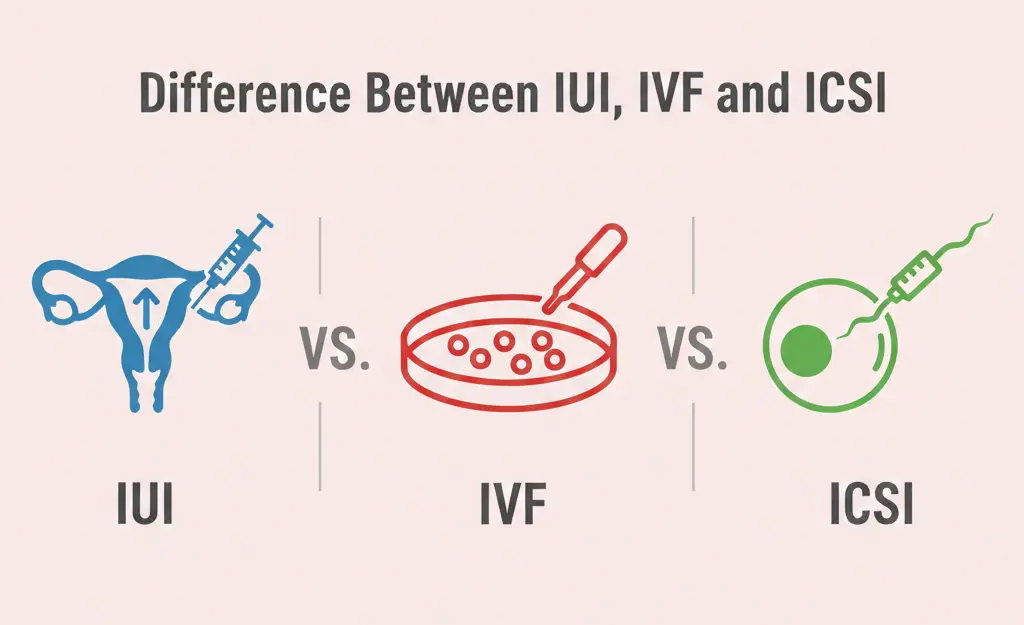
At Puja IVF, we help couples solve their confusion regarding what is the difference between IUI, IVF and ICSI.
What Is IUI Treatment?
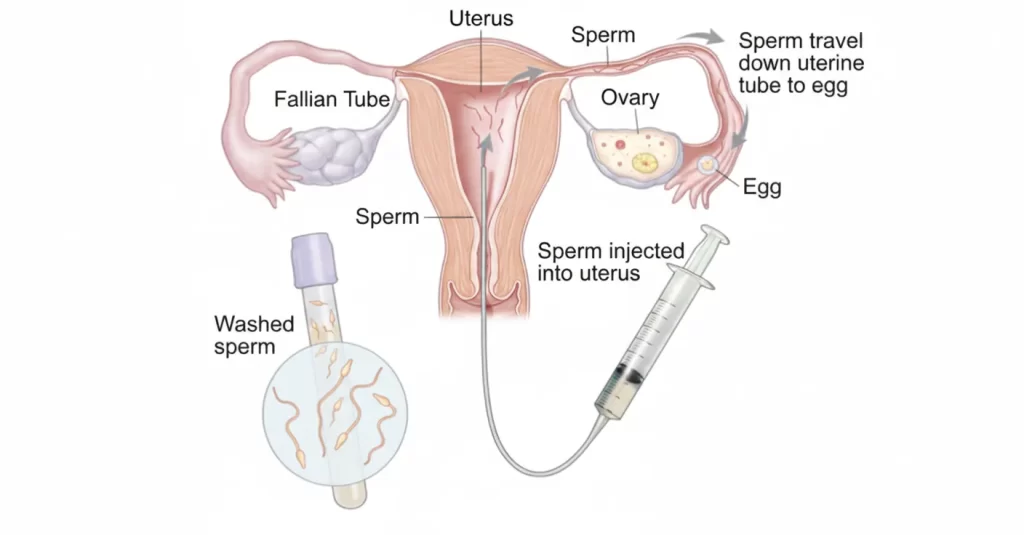
IUI (Intrauterine Insemination) is a simple fertility treatment that helps sperm to reach the egg more easily.
Many Couples are unaware of what IUI is and how it works. IUI or Intrauterine insemination, also referred to as artificial insemination. The goal of the procedure is increase the chance of conception by allowing sperm into the uterus.
Normally, sperm have to travel a long distance inside the woman’s body to reach the egg. In IUI, doctors make this journey shorter by placing healthy sperm directly into the uterus at the right time, usually during ovulation, when the chance of pregnancy is highest.
When we say “abnormal count “, it means there is an abnormality based on three things: Is there enough sperm? Are they swimming effectively in the right direction? Do they look like they should be able to enter an egg? The success of IUI depends on all these factors to achieve fertilization.
The IUI process is often recommended as an early fertility option because it is minimally invasive and follows a structured treatment approach based on ovulation timing.
As per the World Health Organisation (WHO) guidelines, a normal sperm count is at least 15 million per millilitre (ml) of semen.
How IUI Works:
- A semen sample is collected from the male partner
- The sperm sample is “washed” in our lab at Puja IVF
- We filter the sample until we find the strongest and healthiest sperm
- The procedure is done when the woman is ovulating
- Through a thin, flexible tube, this concentrated “super sample” is directly injected into the uterus
What is IUI Used For, and why choose IUI?
Doctors may suggest IUI in these situations:
- Slight problems with sperm count or movement
- Unexplained infertility occurs when tests look normal, but pregnancy has not happened
- Irregular periods or mild hormone imbalance
- Cervical mucus issues that block sperm from reaching the egg
- As an early option before moving to IVF
In short, IUI helps increase the chances of pregnancy by giving healthy sperm a better starting point. Because it is done without any anaesthesia and at a low cost, and takes 5 to 10 minutes.
Now that we understand IUI, let’s explore IVF.
What Is IVF Treatment?
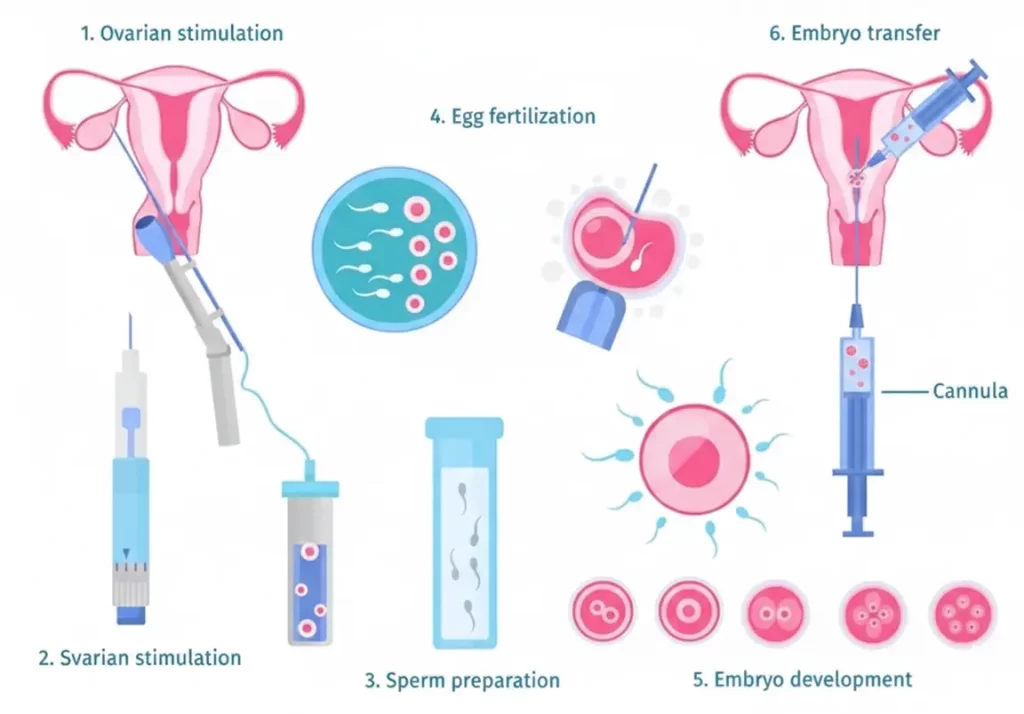
IVF (In Vitro Fertilization) is an advanced fertility treatment to help couples when pregnancy is difficult to achieve naturally.
In simple words, IVF means that the egg and sperm are combined outside the body in our advanced laboratory. Once a healthy embryo forms, it is placed into the uterus to help the pregnancy happen.
You have heard of IVF as a top fertility treatment. But what does it really involve in the procedure?
The Step-by-Step Procedures:
- We give some medicine to help your ovaries produce a few more eggs than usual
- We gently collect eggs using the needle
- In our lab, the egg and sperm are combined for fertilization
- Once a healthy embryo is created, it is placed in the uterus
Many couples feel more confident once they understand the complete IVF treatment process, IVF cost, and know what to expect during each phase of treatment.
Who is IVF for?
- Blocked fallopian tubes
- Women dealing with endometriosis
- Women’s age is over 35
- Previously failed IUI
It is currently the most effective form of fertility treatment. It provides a clear, scientific route for couples who have been struggling for years.
In short, IVF gives couples a scientific and carefully monitored way to improve their chances of pregnancy when other methods have not worked.
What Is ICSI Treatment?
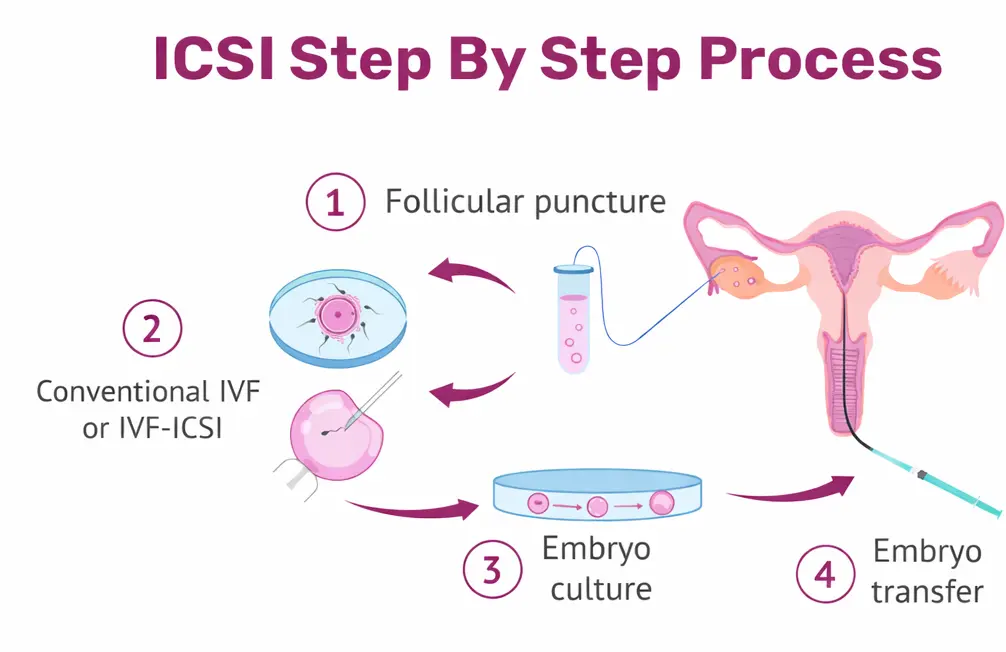
ICSI (intracytoplasmic sperm injection) is performed as part of the IVF procedure, especially when there are male fertility problems. But what is ICSI treatment in simple terms?
In regular IVF, eggs and sperm are placed together in a lab and fertilization happens naturally. In ICSI, the doctor helps the process by injecting one healthy sperm directly into the egg.
How it Works:
- The first few steps are exactly like IVF
- With the help of a microscope, we find the single healthiest sperm
- Rather than wait for the sperm to enter the egg alone, we inject one sperm into the middle of the mature egg
Why Use ICSI?
It is the ultimate solution for male infertility, including low sperm count and poor sperm motility.
The Big Benefit: Just One
In simple words, ICSI helps fertilization happen by directly placing a single healthy sperm into the egg, making it a strong option for many male infertility cases. The most amazing part? One healthy sperm is all you need to turn parenthood dreams into reality.
What Is the Difference Between IUI and IVF?
These differences help couples to build confidence in how IUI and IVF are different.
| Features | IUI | IVF |
| How it works | Help sperm to reach the egg | Egg & sperm meet in the lab |
| Fertilization | The uterus | In a lab |
| Procedure complexity | Quick & easy | More steps & doctor visits |
| Time | Done in minutes | Takes a few weeks |
| Cost | Affordable | High cost |
| Success rate | Lower | Higher |
| Best for | Simple or mild issues | Complex issues or older age |
IUI vs IVF Success Rates
When discussing the IUI vs IVF success rate, first understand that results may be different by age, overall health and other causes of infertility.
We usually show that the IUI success rate ranges from 10-20% per cycle depends on ovulation and sperm health. In IVF, the success rate is around 40-60% because fertilization happened in a controlled lab. Although the IVF pregnancy success rate also decreases with age.
According to a 2025 clinical study on IUI outcomes, pregnancy and live birth rates were significantly higher when total progressive motile sperm count was above 5 million, while very low counts were linked to poor outcomes. In this case, IVF give good outcomes.
What Is the Difference Between ICSI and IVF?
Both treatments have the same step initially; the only difference is during the lab procedure.
| Features | ICSI | IVF |
| How it happen | A single sperm is injected into an egg | Egg and sperm are placed together and allowed to undergo fertilization |
| Sperm Needed | Only need one healthy sperm | Need a good amount of sperm |
| Best For | Male infertility cases | General infertility cases |
| Previous treatment history | Recommend after previous IVF failure | First advanced treatment option |
| Sucess | Similar (depends on egg quality) | High (depends on age) |
ICSI vs IVF Success Rates
Both treatments have outstanding success rates. ICSI fertilizes about 70–80% of injected eggs, which means 7 to 8 out of every 10 eggs are successfully fertilize with it.
A clinical study found that ICSI provides a highly effective solution for male infertility by achieving approx 45% pregnancy rate through the direct injection of a single sperm into an egg.
Regardless of whether fertilization happens through IVF or ICSI, embryo transfer remains one of the most important stages influencing pregnancy success.
Thinking About Your Next Step Toward Parenthood? Let’s connect

Every fertility journey is very different; being supported & guided helps improve your chances of becoming pregnant.
At the Puja IVF centre in Patna, Dr Puja Kumari focuses on identifying the root causes of infertility to create a treatment plan tailored to each couple’s needs. By combining updated reproductive technology with a more patient-centred approach, the goal is to ensure you feel informed and supported rather than just another case number.
Preparing well before your first fertility consultation can make discussions clearer and help the doctor create a more personalised treatment plan.
FAQs
1. Is ICSI better than IUI?
ICSI and IUI are different treatments used for different fertility problems. ICSI is usually recommended for severe male infertility and offers higher fertilization rates, while IUI is a simpler and more affordable first step for mild infertility cases.
2. Is IUI 100% successful?
No, IUI is not 100% successful. On average, the success rate is around 10–20% per cycle and depends on factors like age, sperm quality, ovulation timing, and overall fertility health.
3. Is ICSI more successful than IVF?
ICSI mainly improves fertilization rates, especially when male infertility is present. However, pregnancy and live birth rates are often similar between IVF and ICSI when there are no male-factor problems.
4. Which is more costly — IVF or ICSI?
ICSI is usually more expensive than traditional IVF because it involves advanced laboratory techniques and specialized equipment.
5. How many IUI cycles are usually recommended?
Most fertility specialists suggest trying 3 cycles of IUI before considering advanced treatments like IVF or ICSI.