
Learn the IUI procedure step by step, including process, safety, success rate, cost, do’s & don’ts after IUI. Doctor-explained guide.

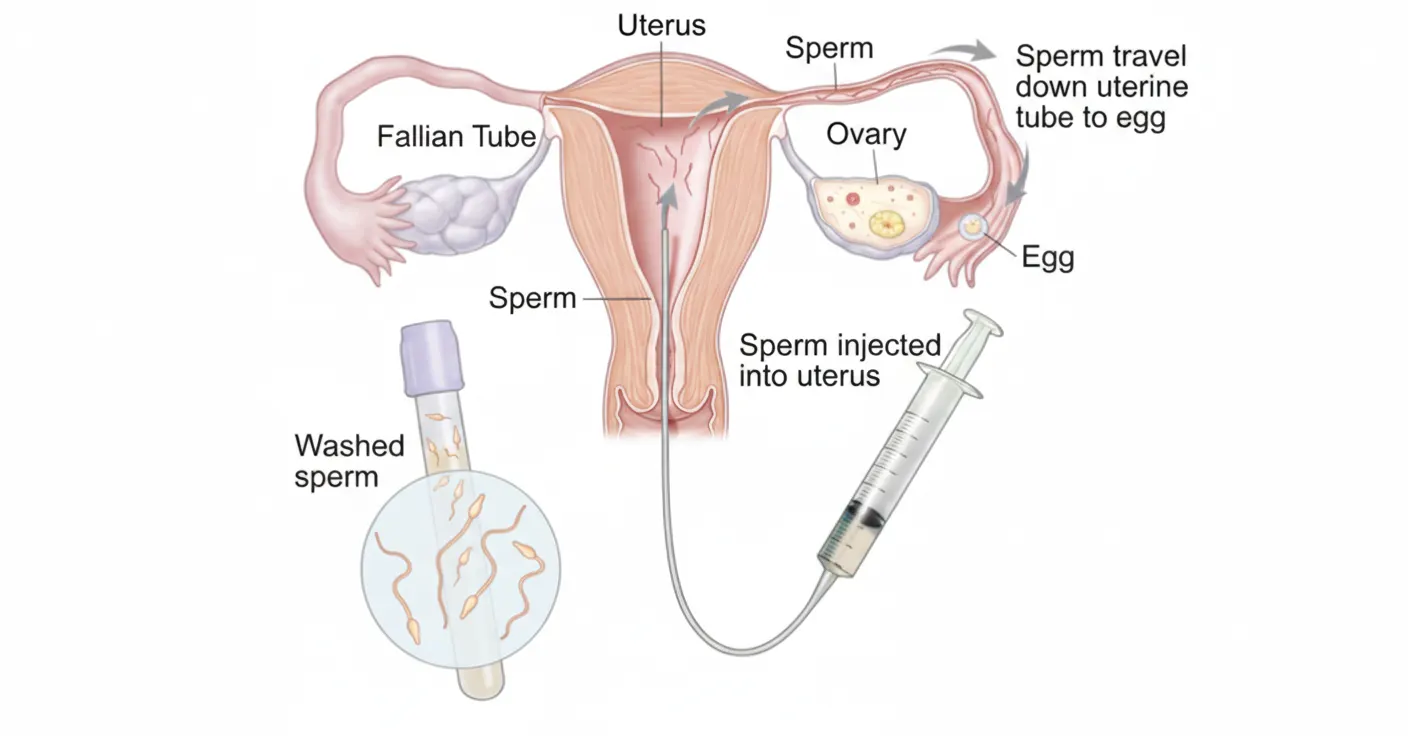
When women do not get pregnant as planned/thought, then most of the couples usually feel scared and confused. At Puja IVF in Patna, we understand that pain. As a doctor, we see this every day. One simple and trusted fertility option is the IUI procedure. It is gentle, affordable and commonly used in India. In simple words, IUI treatment procedure helps sperm reach the egg at the right time. We will now explain the process in detail, so that you feel safe and informed.
What Is IUI Treatment?
The IUI procedure means placing healthy sperm directly inside the uterus. This is called the intrauterine insemination process. Before this, the sperm is cleaned through sperm washing so only strong sperm are used. Doctors closely watch egg growth using follicle monitoring and ovulation tracking.
This treatment is part of basic fertility treatment steps. In India, IUI is often the first option for infertile couples, before moving to advanced treatments like IVF. But first, you need to understand the difference between IUI and IVF before choosing the right treatment.
IUI Treatment Procedure – Step-by-Step
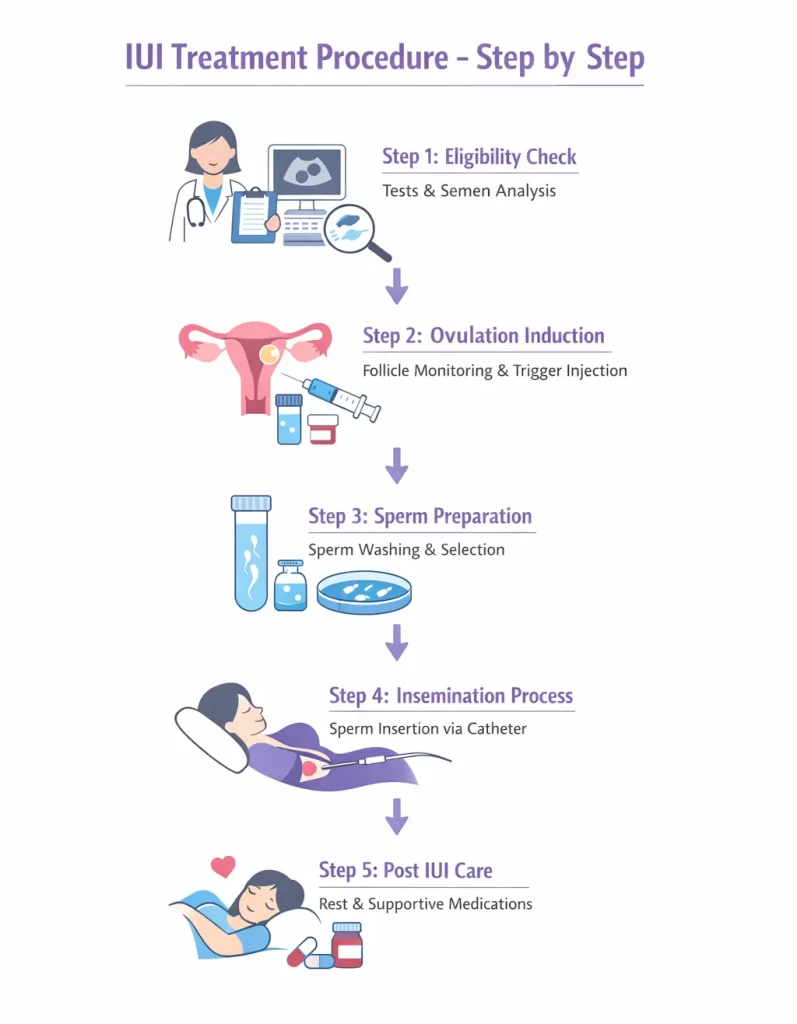
Let us explain the IUI procedure step by step in simple words.
Step 1 – At our fertility centre in Patna, first, we check if the woman is suitable for IUI treatment. For instance, in case of severe tube blockage, very low sperm count or advanced age, IUI is usually not recommended. This is called IUI eligibility. Blood tests and scans are done. The husband’s semen is also tested.
This helps us understand whether the issue is male infertility or Female infertility or may be others like cervical factor infertility or unexplained infertility.
Step 2 – Next comes ovulation induction. Tablets or injections help the ovaries make one or two good eggs. We carefully do follicle monitoring using ultrasound. This tells us when the egg is ready. When the egg reaches the right size, a trigger injection is given. This releases the egg at the correct time.
Step 3- On the IUI day, semen is collected. It goes through semen preparation and sperm washing in the lab. Weak and dead sperm are removed. Only active sperm remain. This increases the chances of the woman’s pregnancy after IUI.
Step 4 – Now comes catheter insemination. A thin soft tube is gently passed through the vagina into the woman’s uterus. The prepared sperm is slowly released. This is the actual IUI treatment procedure. It takes only a few minutes. And do not worry, there are no stitches. Thus, no long rest period is there for the lady.
Step 5- After this, the inseminated woman rests for a short time. Medicines are given for post IUI care to support pregnancy. This phase is called the waiting period. Doctors also explain possible IUI treatment risks and common IUI failure reasons, so couples are mentally prepared. This full IUI process day by day is safe and carefully planned for Indian couples.
Who Is the Right Candidate for IUI?
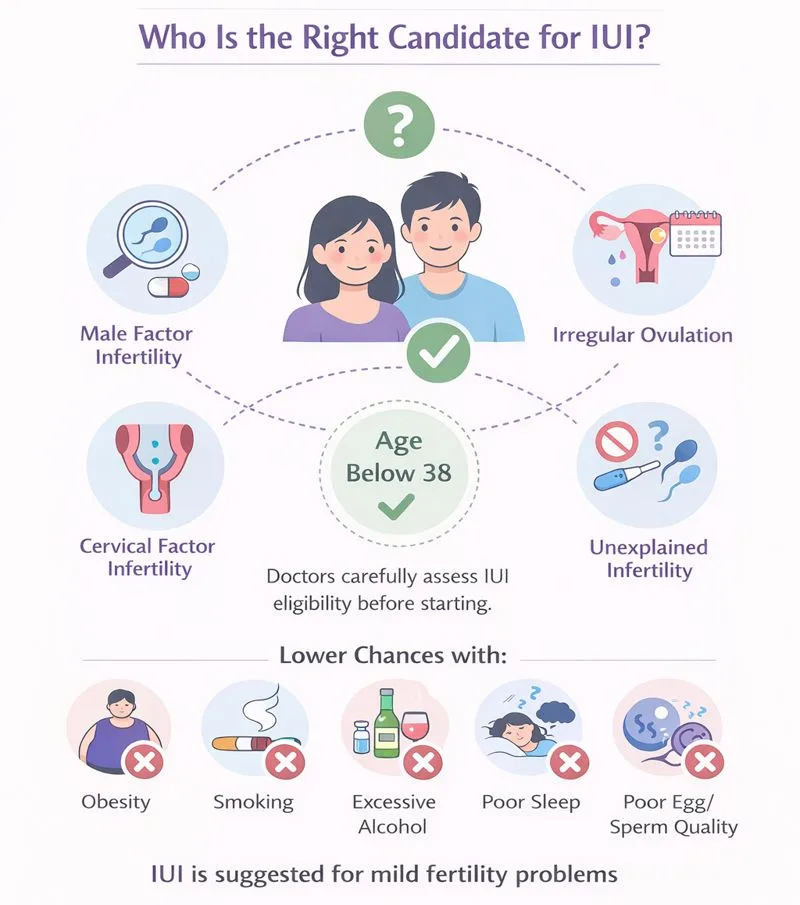
The IUI procedure works best when there are mild fertility problems. This includes male factor infertility, irregular ovulation or cervical factor infertility. Couples with unexplained infertility also benefit. Women below 38 years respond better. Doctors assess IUI eligibility carefully before starting.
In India, doctors suggest IUI before IVF because it is affordable and emotionally easier for first-time treatment seekers. Smoking, alcohol, obesity and lack of sleep can reduce chances of success. So IUI is not recommended for people with such intoxication habits.
Is Embryo Transfer Painful? Is IUI Safe?
Many couples confuse IUI with IVF. In IUI, there is no embryo transfer. Still, people worry. Fear is natural. The IUI procedure feels like a mild period cramp for a few seconds. There is no cutting or anesthesia. Compared to IVF, IUI vs IVF shows IUI is much simpler. It is also less stressful for the body and mind.
Also, the IUI procedure pain lasts only for a few seconds. There is no long-term harm. It is a safe medical process when done correctly. In 2025, Indian fertility clinics report IUI as one of the safest fertility treatments with very low complication rates.
IUI Procedure Success Rate – What to Expect
Doctors at our IVF Centre in Patna explain realistic expectations clearly.
- The IUI procedure success rate depends on age, egg quality and sperm health.
- In India, 2025 clinic data shows a 10–20% IUI success rate per cycle for women under 35.
- Success may increase after 2–3 cycles. Most doctors advise trying 2–4 cycles before changing the treatment plan.
- In conditions like unexplained infertility, IUI shows better results than severe male issues.
- Even if one IUI cycle fails, it does not mean future IUI cycles will also fail. Please remember that patience matters.
- Success depends heavily on doctor experience and lab hygiene standards. Plus Stress and emotional health also influence outcomes. Understanding the impact of stress on fertility helps couples stay mentally prepared. That why you must trust Puja IVF, Patna which has the latest technology as well as the best IVF experts and staff.
We also believe in transparency. So let us state here that as of early 2026, average cost of IUI varies between ₹8,000 to ₹20,000 per cycle depending on the case, the city and clinic. Knowing the fertility treatment cost in Patna helps in better planning.
Do’s and Don’ts After IUI
Do’s After IUI
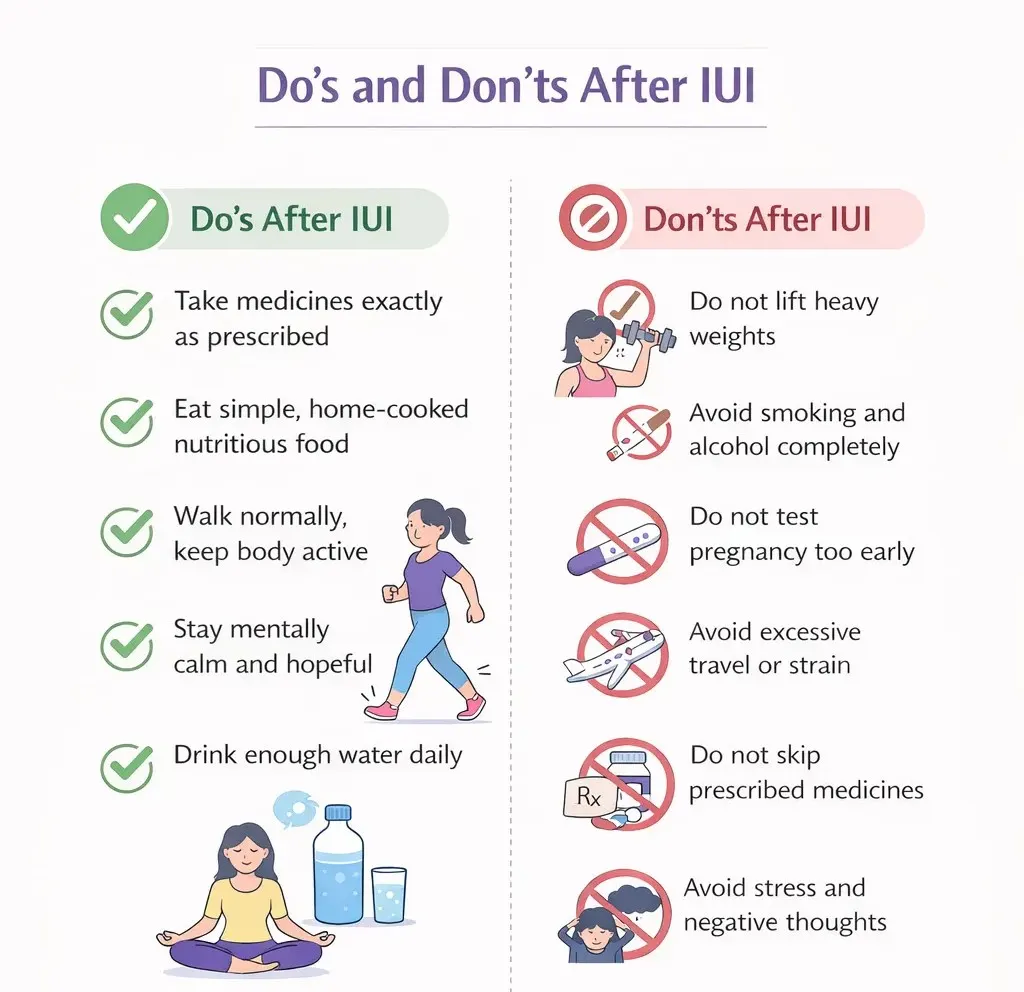
- Take medicines exactly as prescribed
- Eat simple, home-cooked nutritious food. A fertility-friendly diet supports hormonal balance after IUI.
- Walk normally, keep body active
- Stay mentally calm and hopeful
- Drink enough water daily
- Attend follow-up visits on time
Don’ts After IUI
- Do not lift heavy weights
- Avoid smoking and alcohol completely
- Do not test pregnancy too early
- Avoid excessive travel or strain
- Do not skip prescribed medicines
- Avoid stress and negative thoughts
Still Confused? Connect With Us

Infertility is not anyone’s fault. The IUI procedure gives hope with simplicity and safety. The IUI treatment procedure is gentle, planned and widely trusted in India. Understanding the IUI process day by day reduces fear. Even if success takes time, you are not alone. As doctors, we walk with you patiently, honestly and with care. And we do it step by step, until hope turns into happiness. If you wish to know more, You can attend our Free IVF camps In Patna, Bihar, or connect with our experts today…
FAQs
1) Is embryo transfer done in IUI?
No. Embryo transfer is not part of IUI. In IUI, washed sperm is placed directly into the uterus. Embryo transfer happens only in IVF treatment.
2) How successful is IUI on the first try?
The success rate of IUI on the first attempt is usually 10–20% per cycle, especially in women under 35 years. Success depends on age, egg quality, sperm health, and correct timing.
3) How many IUI attempts are recommended?
Doctors usually recommend 2–4 IUI cycles before moving to advanced treatments like IVF, depending on age and infertility cause.
4) When should I test for pregnancy after IUI?
Pregnancy testing should be done 14 days after IUI. Testing too early can give false results.
5) Is IUI better than IVF?
IUI is simpler, less expensive, and less invasive than IVF. Doctors usually suggest IUI first for mild infertility before IVF.
6) Which drink is best for implantation after IUI?
Pomegranate juice is considered one of the best drinks after IUI. It is rich in antioxidants, vitamin C, folate, and vitamin K, which may help improve blood flow to the uterus and support implantation. Fresh, unsweetened juice is recommended in moderation.