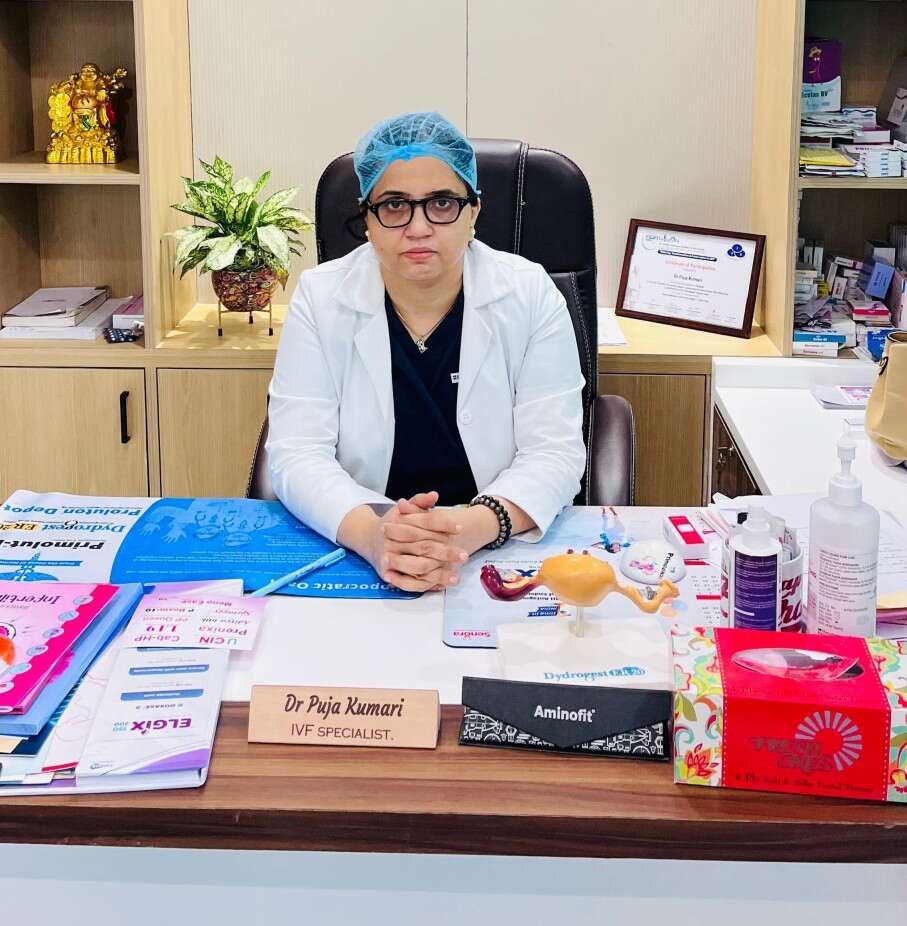
Why do I feel bloated, moody and tired? Why has my period become irregular? Do these signs tell me something is wrong with my body? These are common concerns many women face, unexpected changes in their bodies. So, it is important to understand why this occurs. These happen due to changes in your hormone levels, …
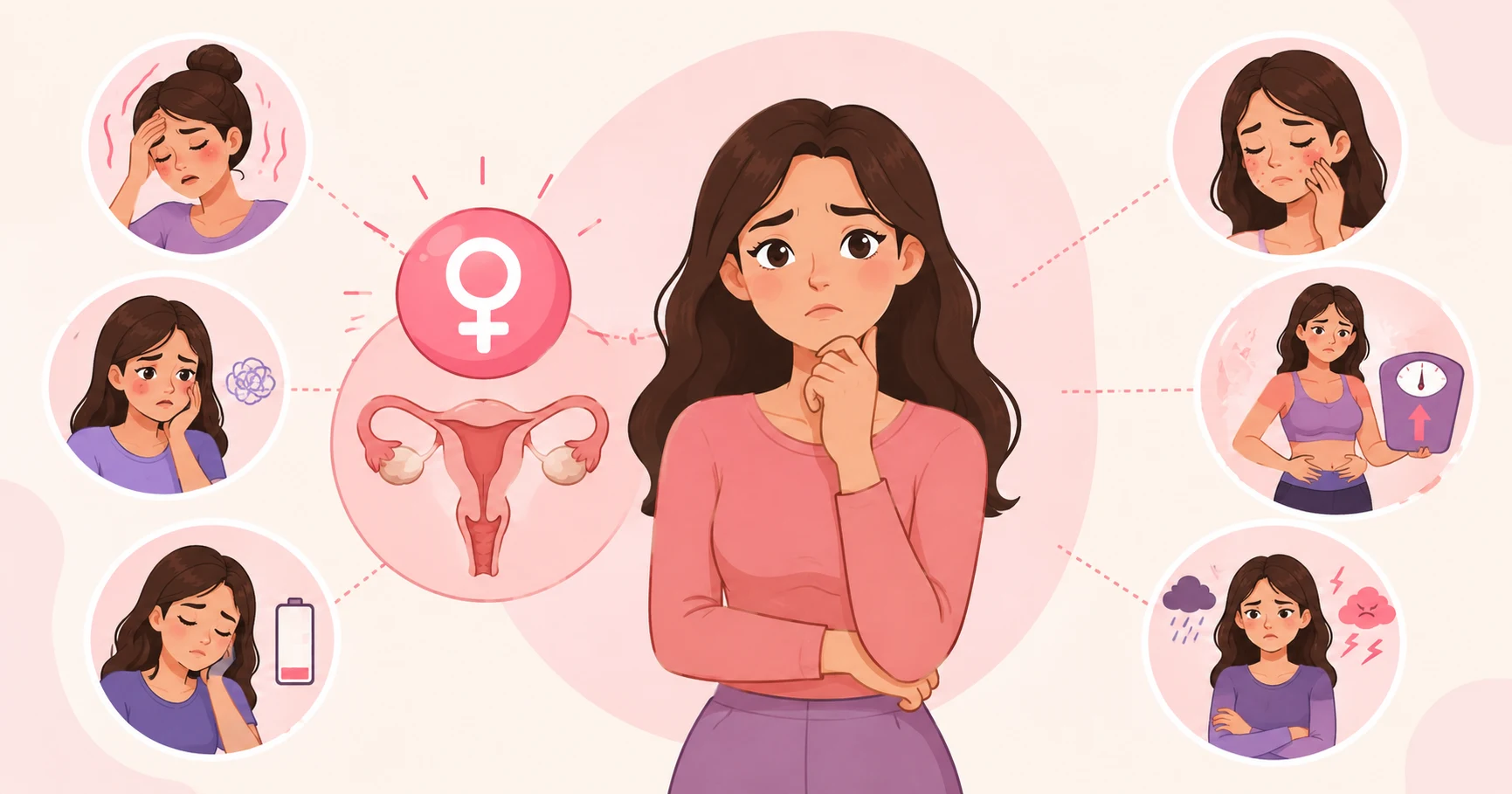
Why do I feel bloated, moody and tired? Why has my period become irregular? Do these signs tell me something is wrong with my body?
These are common concerns many women face, unexpected changes in their bodies. So, it is important to understand why this occurs. These happen due to changes in your hormone levels, mainly estrogen.
It is a vital hormone that maintains the function of the female body. But what happens when this level becomes high? High levels of estrogen in females disturb their reproductive health and overall well-being.
In this guide, we understand how you recognize signs of high estrogen, what causes this condition and how you balance estrogen through lifestyle changes and medical care.
What is Hyperestrogenism?
Hyperestrogenism happens when your estrogen levels are higher than normal.
But what is estrogen, and why do you need it?
Estrogen is a chemical messenger in your body. It guides your body for menstrual cycles, ovulation, and fertility.
Based on your age and your body’s needs, estrogen levels sometimes naturally rise or fall. This fluctuation in estrogen hormone is normal. Estrogen is also important for your heart and bone health.
Also, estrogen and progesterone work as teammates to maintain your hormonal stability. When estrogen levels are higher than progesterone levels, this leads to a hormone imbalance called estrogen dominance.
Are hyperestrogenism and estrogen dominance the same or different?
Both are relatively the same in that rise estrogen levels but differ in;
- Hyperestrogenism: Too much estrogen in your body
- Estrogen Dominance: Estrogen is higher than progesterone
But both conditions have almost the same symptoms. Let’s understand how high estrogen levels may appear in your body.
High Estrogen Symptoms in Females
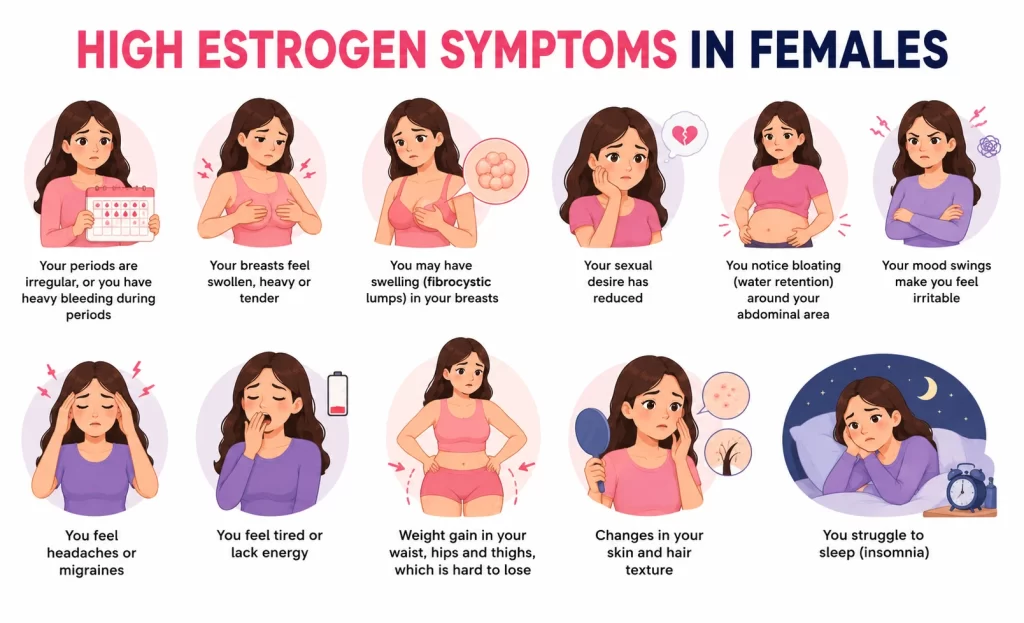
High estrogen symptoms in females can not be the same for everyone, it can vary person to person. The most common symptoms you may experience are:
- Your periods are irregular, or you have heavy bleeding during periods
- Your breasts feel swollen, heavy or tender
- You may have swelling (fibrocystic lumps) in your breasts
- Your sexual desire has reduced
- You notice bloating (water retention) around your abdominal area
- Your mood swings make you feel irritable
- You feel headaches or migraines
- You feel tired or lack energy
- Weight gain in your waist, hips and thighs, which is hard to lose
- Changes in your skin and hair texture
- You struggle to sleep (insomnia)
Understanding the possible cause helps you understand why these changes are happening.
Causes of High Estrogen in Females
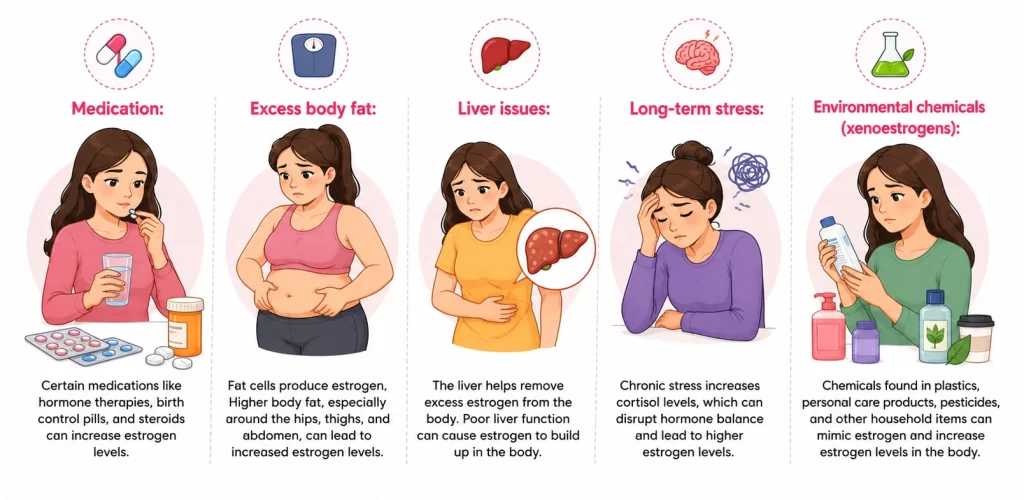
In your body, estrogen levels increase due to some factors that can be related to lifestyle or environment. Here are the common causes of high estrogen in females:
- Medication:
If you take any hormonal medication or birth control pills can increase estrogen levels.
- Excess body fat:
Your ovaries produce estrogen, but research claimed that fat tissue also makes estrogen in your body. Gaining weight means your body makes more estrogen.
- Liver issues:
The liver clears extra estrogen from your body to keep levels normal. But poor liver function disturbs that process, and estrogen builds up in your body.
- Long-term stress:
Long-term stress raises your cortisol levels. That can drop progesterone levels, leading to higher estrogen levels. Stress also has a broader impact on reproductive health, affecting hormonal balance in ways that go beyond cortisol alone.
- Environmental chemicals (xenoestrogens):
You may find these chemicals in plastics, pesticides, and some personal care and cleaning products. This can act like estrogen in your body and may affect your hormone balance.
How High Estrogen Affects Women’s Health
Normally, in your body, estrogen is important for egg release (ovulation). Progesterone rises after ovulation to support your pregnancy. But when estrogen rises compared to progesterone, it disturbs your ovulation and fertility. It may also be seen in conditions like PCOS.
Over time, high estrogen promotes excess tissue growth in your uterus, which can turn into a condition called uterine fibroids. Similarly, high estrogen causes growth of tissues outside your uterus, called endometriosis. This can affect about 1 in 10 women of reproductive age worldwide, causing pain and reproductive challenges. Women dealing with these conditions can explore both natural and medical approaches to overcoming female fertility problems.
How to Flush Out Excess Estrogen Naturally and Medically
Did you know your body clears extra estrogen on its own through the liver? But hyperestrogenism often blocks proper removal of excess estrogen.
So, how can you support your body’s own estrogen detox? This full guide covers ways to reduce high estrogen naturally and with medicine.
1. Natural Ways to Lower High Estrogen Levels in Females
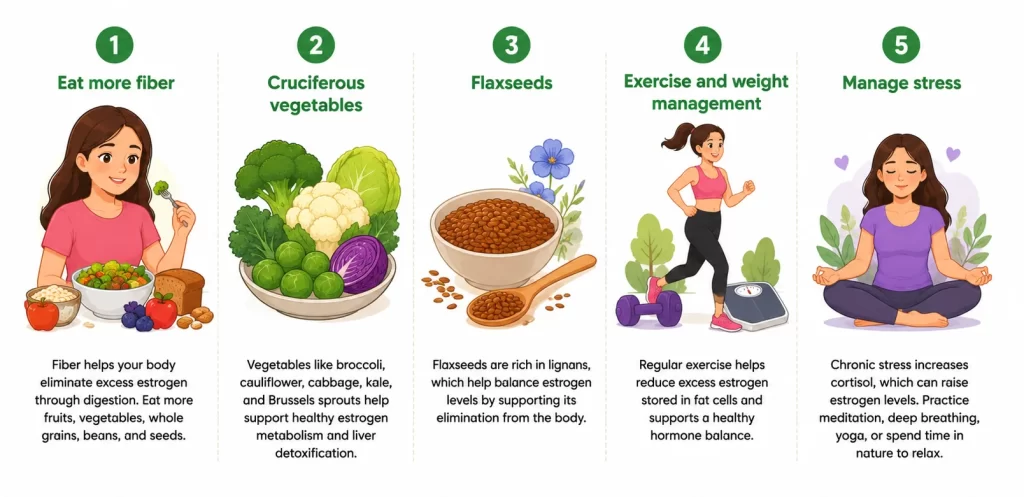
Following simple lifestyle habits helps you maintain your estrogen level in balance.
| Natural Approach | How it may help you |
| Eat more fiber | When you eat more fiber-rich foods, they bind with estrogen in your gut and help in the removal process. Fiber-rich foods you can take are whole grains, oats, beans, lentils, and fruits. |
| Cruciferous vegetables | Eating Broccoli, cabbage, and cauliflower contains indole-3-carbinol (I3C), a chemical that supports your liver’s metabolism of estrogen |
| Flaxseeds | Flaxseed is rich in lignans. As per the study, taking 1 or 2 tablespoons of flaxseed daily may help you to support balanced estrogen activity. |
| Exercise and weight management | Regular movement and maintaining a healthy weight may help you lower excess estrogen, which is associated with body fat |
| Manage stress | Lowering stress can help you balance progesterone level reduce hormone disruption |
Beyond these specific foods, your overall daily diet plays a meaningful role in keeping your hormones in balance. Natural approaches help to balance your estrogen level, but in some cases, medical care is required when you have any other underlying condition. Let’s understand how medical approaches help in hyperestrogenism.
2. Medical Treatment for High Estrogen in Females
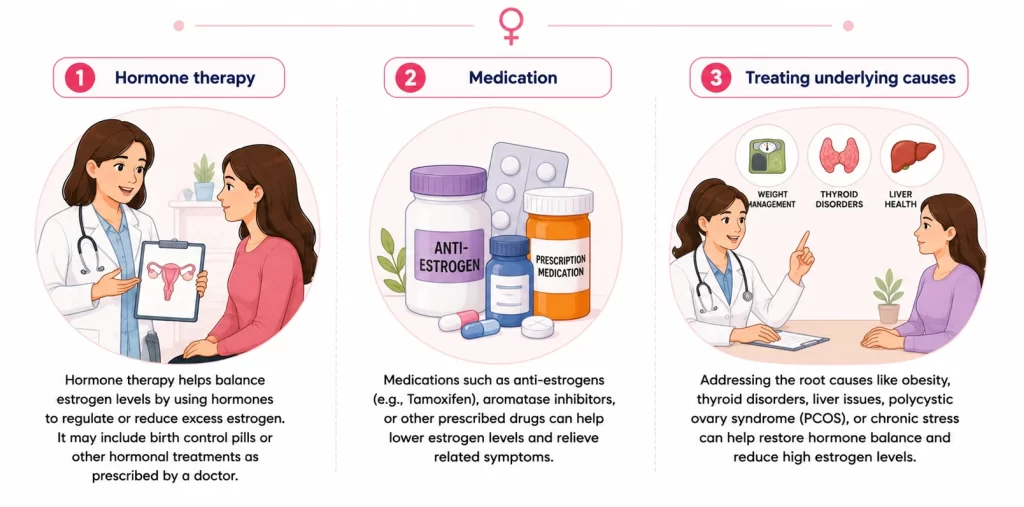
Here is how medical approaches help in hyperestrogenism:
| Medical Approaches | How it may help you |
| Hormone therapy | Hormone therapy keeps your estrogen and progesterone in a healthy balance |
| Medication | Based on your condition, we prescribe medication that lowers estrogen levels and reduces symptoms |
| Treating underlying causes | Managing PCOS or other hormone issues can help balance your hormones |
Hormonal health, including estrogen balance, is one of the key factors that can influence the outcome of fertility treatments.
Final Thoughts: The Path to Balanced Hormones and Better Reproductive Health

High estrogen levels impact your menstrual cycle, fertility, and overall wellness. Early check-ups and the right support help return your hormones to balance. A healthy lifestyle, timely treatment, and treating the root causes make your recovery smoother and faster.
If you notice any signs of these, meet our fertility expert, Dr Puja Kumari, at Puja IVF Center in Patna. We provide details personal evaluation through hormone tests, and create personalized treatment plans. These help control high estrogen, support fertility, and restore full hormone balance.
FAQs
1. What is the most common cause of high estrogen levels?
The most common causes include excess body fat (fat tissue produces estrogen), poor liver function, long-term stress, hormonal medications like birth control, and exposure to environmental chemicals called xenoestrogens found in plastics and pesticides.
2. How do I know if I have high estrogen?
Common signs include irregular or heavy periods, swollen or tender breasts, bloating, mood swings, reduced sex drive, difficulty sleeping, unexplained weight gain, and persistent fatigue. A blood test done by a healthcare provider is the most reliable way to confirm high estrogen levels.
3. Is high estrogen linked to PCOS?
Yes. High estrogen relative to progesterone can disturb ovulation and hormone balance, which is often seen in conditions like PCOS. Managing estrogen levels is an important part of addressing PCOS-related fertility challenges.
4. Which vitamins help reduce estrogen dominance?
Vitamins B6, B12, and B3 play a role in regulating hormones and supporting the liver’s ability to detoxify excess estrogen. Always consult a healthcare provider before starting supplements, especially if you suspect a hormonal imbalance.
5. What diseases are linked to high estrogen?
Persistently high estrogen is associated with uterine fibroids, endometriosis, PCOS, and in some cases, an increased risk of estrogen-sensitive cancers. Early diagnosis and treatment are important to prevent these complications.
6. How can I test my estrogen levels?
Estrogen levels are typically checked through a blood test ordered by a doctor. At-home urine tests are also available, but may not be as comprehensive. If you are experiencing symptoms of high estrogen, consulting a healthcare provider for a proper hormone panel is the most accurate approach.